5 min read
Stay updated with the latest - Click here to follow us on Instagram

Journalism of Courage



When the Chachras moved from the Middle East to Delhi,they brought along with them the flavours of the region. Their restaurant,Zaitoon,which means olive in Arabic,captures that essence
When Rita Chachra,a 20-year-old Punjabi bride from Delhi,moved to Kuwait in 1977 to join her husband Subhash Chachra,she was in for a shock: her mother-in-law would cook Arab food for dinner every day.
I hated hummus, she says. But she soon learnt to make all the Arab dishes her mother-in-law would cook,including many elaborate ones which are disappearing from many Arab households,such as kubbah,dolma and taawa.
Like her mother-in-law,who learnt to make Iraqi dishes from her neighbours in Basra,Iraq (where her husband had been living since 1936,running a business dealing in watches,before moving to Kuwait),Rita too started treating her children to Arab dinners every day. She feeds her grown-up children with Iraqi dishes even today,long after she and her family left Kuwait in 1990,following the Iraqi invasion,and returned to live in India.
We left the Middle East but our attachment to their food has lived on, says Rita,who has hummus every night now. Today,the third-generation Chachras (who fondly call themselves half-Arabs) want to spread their love for Arab cuisine among people in Delhi-NCR through their restaurant Zaitoon,aptly named after a crucial ingredient in Middle-eastern cuisine olive oil (olive is zaitoon in Arabic).
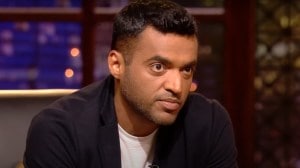
Ritas 26-year-old son Karan,a hotel management graduate who previously worked with Subway and Holiday Inn,opened Zaitoonits logo written in English script,with the dots and the curves giving it an Arabic touch at the DLF Place Mall in Saket eight months ago. Its second outlet opened at DT Mega Mall in Gurgaon last month. Both outlets are in the food courts,a better way to start than to go standalone,as most Indians are not well-aware of Arab cuisine, he says. Most Indians interested in Arab cuisine dont think of it beyond the shawarma, says Karan.
Sixty per cent of Zaitoons orders are for the chicken shawarma. This,despite its impressive range of Arab dishes,which we sampled recently at their Saket outlet. The chicken and mutton shawarmas were their juicy best,especially in the Lebanese pita bread (unlike the rolls which some restaurants offer),and the arayeses were a delicious surprise. The arayeses looks like pizza slices,but the resemblance ends there. An arayes has a crispy khubus (Lebanese bread) as its base and is topped with a layer of minced meat or chicken or dried zatar herbs (an Arabian spice),spring onions,parsley and sumac (an Arabian red spice. However,unlike the Indian red chilli,it isnt very spicy). For the Indian palate,though,theyve introduced an innovation: the paneer arayes,where cottage cheese and corn replace the mutton/ chicken/ zatar herb.
But the Chachras are careful not to Indianise their menu too much. The spices they use,says Karan,are imported from UAE,Kuwait and Iraq. The Baghdadi tikka uses eight spices,and comes from Baghdad. The Basrawi tikka,made in tomato base,uses 21 spices,and comes from Basra. Despite the large number of spices used,the tikkas are not too spicy.
Arab cuisine allows you to retain the flavour of the mutton or chicken,unlike the Indian tikkas,which dilute the meat flavours with their very sharp spices, says Rita,who gets up early in the morning and prepares all the marinades and dips used in cooking. We are small-scale now,so we are managing by ourselves, she says,even as they are looking for a place to open in the next few months.
The business,so far,has not been bad,says Karan modestly,and they have even begun catering. They catered to fests at Kamla Nehru College,and Amity University,he says. We dont have a target audience,we want everyone to eat our food, he says,which is why theyve launched the Rs 60-pocket- shawarmas,on the lines of McDonalds Rs 30 burgers,only a lot healthier, he says.
They have attracted a surprise audience Arab patients and their families who visit Max Hospital,which is a few metres away form the mall. And Subhash,who was fondly called Sabah when he was growing up in Basra,interacts with the Arab customers in his fluent Arabic.
Stay updated with the latest - Click here to follow us on Instagram