Journalism of Courage



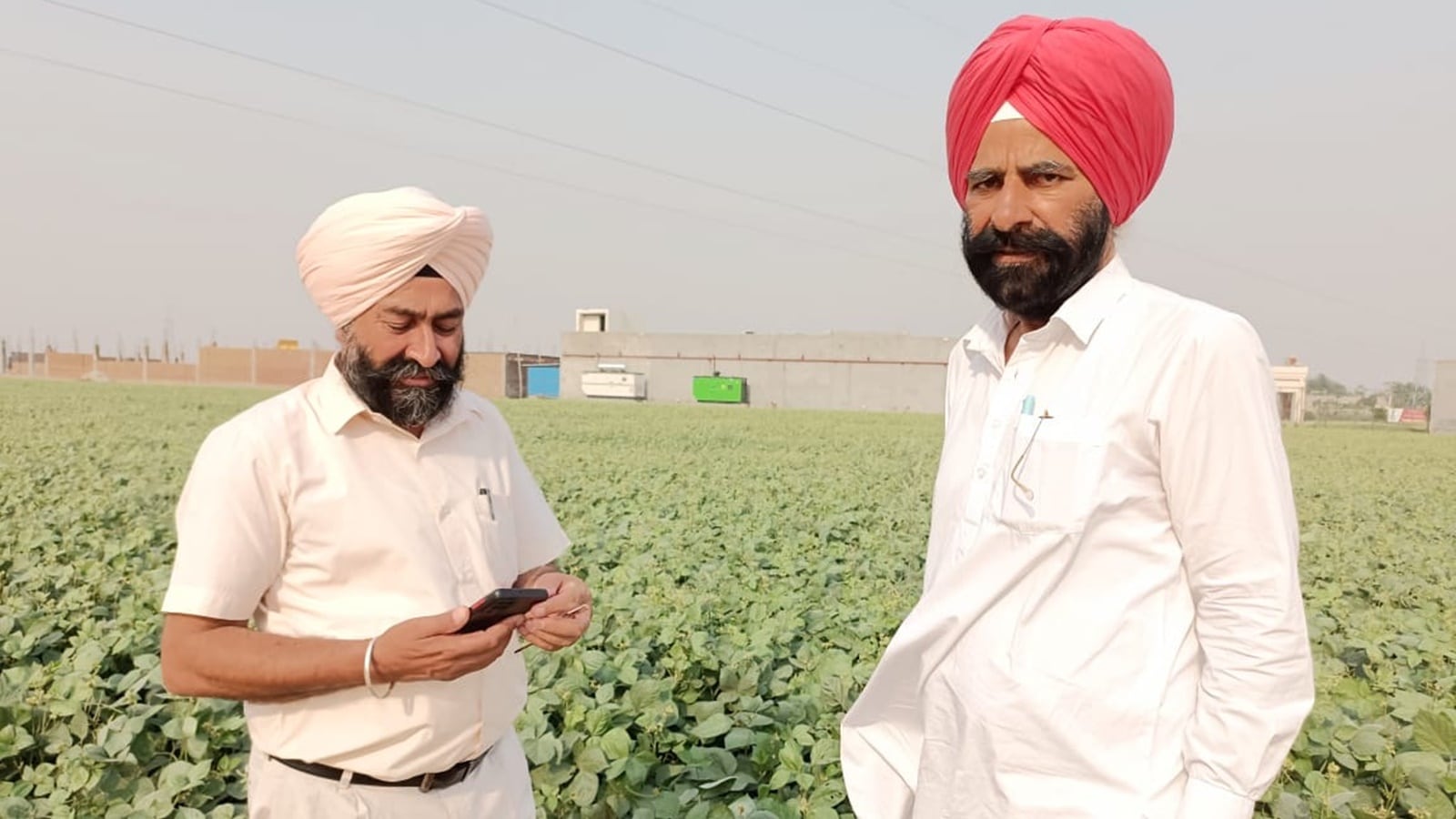 Rajma farmer Surinder Singh Randhawa shows his crop to agriculture experts.
“Punjabis live by their rajma chawal but the climate in the state doesn’t allow them to grow the legume…,” Surinder Singh Randhawa, who is in his mid 60s, says he couldn’t figure out a way to this problem for the longest time — until he finally fixed the last piece of the puzzle around 12 years ago.
Going against the advise of researchers at Punjab Agriculture University in Ludhiana, Randhawa, who belongs to Manawala Kalan village in Amritsar, first grew rajma or rajmash (kidney beans) on a small 3-marla plot (around 1.9% of an acre).
“Researchers at PAU and officials of the Punjab Agriculture Department had said that Punjab is not suited to grow rajma as the crop requires a cooler climate. Rajma is mostly grown in Jammu and Himachal Pradesh and requires temperature between 10 and 27 degrees Celsius. It is a very sensitive crop and need proper care and less water. I was initially unsure but was always against the idea of importing something that is our staple. I thought that if French beans could be grown here, why not rajma. I decided to first grow the chitla or spotted variety of kidney beans, which can thrive in Punjab,” he says, adding that the efforts bore fruit and he got a bumper crop in 90 days.
Since then there has not been any looking back for Randhawa, who has now not only expanded the area under the crop but has also started helping other farmers in neighbouring Gurdaspur with seeds who want to grow the legume.
In 2024, he sold rajma worth over Rs 1.25 crore, including around Rs 19 lakh worth seeds from 74 acres of land and earned a profit worth around Rs 1 crore after meeting all expenses. This year, he has increased the area to 80 acres of the total 125 acres belonging to the five Randhawa brothers.
Despite initial challenges, including losses due to weather, their resilience paid off, and the rajma farming evolved into a thriving business.
One of the pivotal factors in Singh’s success has been the development of his own variety of rajma — larger, high-quality beans that are now highly sought after in the region. “This variety is resilient and can withstand temperatures of up to 35°C, which is essential for thriving in Punjab, especially when the temperature starts soaring in April,” Randhawa says, adding that this seed has enabled him to achieve an average yield of 13 quintals (1,300 kg) per acre in just 90 days, with an input cost of around Rs 30,000 per acre. This translates into an income of about Rs 1.20 to Rs 1.30 lakh per acre after covering expenses, all within 90 days.
While Punjab is known for its wheat, paddy dominance, Randhawa’s rajma model is changing the game for several farmers now. The state meets most of its rajma consumption from outside but with Randhawa’s guidance, cultivation of the crop is gaining ground in Punjab, especially in Amritsar and Gurdaspur. “I sold seed for 200 acres to several farmers of Amritsar, Tarn Taran, Gurdaspur etc. as the rate of the seed is Rs 300 per kg and in one acre requires 32 kg seed. Jagjit Singh from Kalanaur village in Gurdaspur took seed from me and cultivated 3-acres under the crop. Another Kalanaur farmer Jasbir Singh also purchased the seed from him and cultivated it on 10 acres,” he says, adding that the growing interest in rajma farming highlights the potential of the crop.
He adds that it’s beneficial to the soil too. “Rajmash, as a legume, naturally enriches the soil by fixing nitrogen, which helps maintain soil fertility. This makes it an ideal crop for rotation with other crops like Basmati and potatoes. I follow a crop cycle that includes Basmati from June to early October, potatoes from mid-October to January, and rajma from February to April. This crop rotation model allows me to make the most of my 125 acres,” he says.
Despite the impressive achievements, Randhawa notes that the government’s recognition of rajma farming has been limited to district-level. He calls for greater government support in the form of high-quality seeds, technical assistance etc. to help farmers further capitalise on the crop. He believes that if the government provides proper incentives and infrastructure, rajma could become a key cash crop in Punjab, boosting farmers’ incomes and contributing to the state’s agricultural diversification.
Gurdaspur District Agriculture Officer Amrik Singh said that Randhawa was the first rajma grower in Punjab. “His small-scale experiment to cultivating the crop on 80 acres is now an example of how innovation and perseverance can open new avenues for farmers. He not only changed the future of the crop in the state but also opened new opportunities for farmers across the state,” he says.

 5 min read