Journalism of Courage
 3 min read


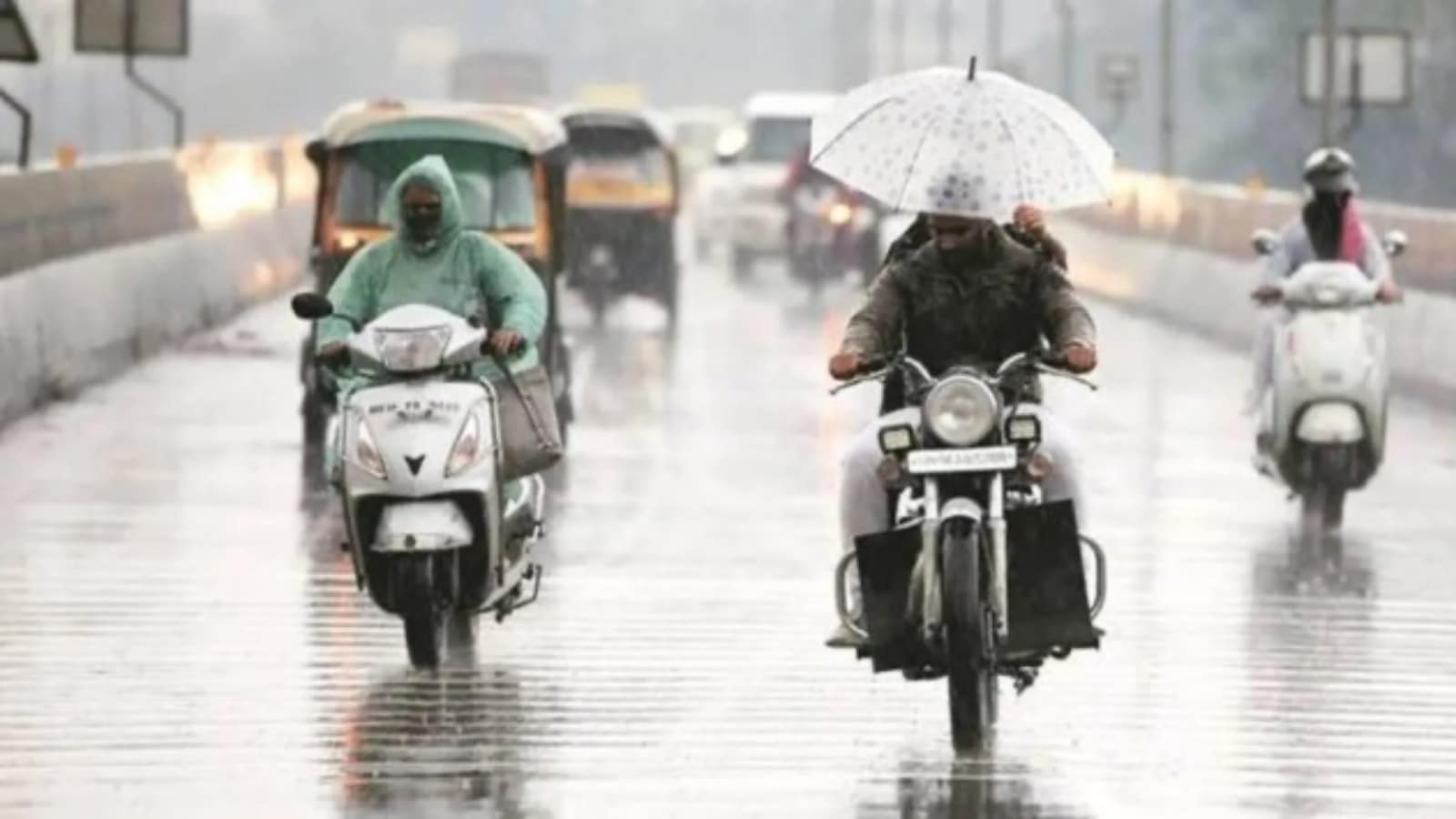 n the region, the monsoon season is from June 1 to September-end. (File Photo)
As the monsoon season is nearing its end, the region comprising Punjab, Haryana, and Chandigarh is grappling with a significant rainfall deficit.
According to the Indian Meteorological Department (IMD), rainfall in these areas has fallen short of the expected levels, with Punjab and Chandigarh facing a 23% deficit, while Haryana is slightly better off with a 11% shortfall. In the region, the monsoon season is from June 1 to September-end.
As per the norm, from June 1 to September 6, Chandigarh should have received 754.2 mm of rain, Punjab 385.8 mm, and Haryana 373.9 mm. However, the actual recorded rainfall stands at 580.2 mm in Chandigarh, 296 mm in Punjab, and 334.1 mm in Haryana.
Punjab which relies heavily on agriculture is among the hardest-hit. Of its 23 districts, 19 have reported less-than-normal rainfall. Topping the deficit table is Bathinda district, which has seen a 55% shortfall in rain (115.3 mm against normal 253.9 mm). Hoshiarpur follows closely with a 52% deficit (258.9 mm against normal 537.1 mm), while Mohali and Shaheed Bhagat Singh Nagar have recorded a rain deficit of 48% (276 mm against normal 535 mm) and 44% (375.4 mm against normal 666.4 mm), respectively. Other districts facing substantial deficits include Fatehgarh Sahib 41% (246.2 mm against normal 268.6mm), Moga 39% (158.3mm against normal 260 mm), Jalandhar and Ferozepur 34% (305.6 mm against normal 460.1 mm) and (142.4 mm against normal 216.5 mm), respectively, and Fazilka and Barnala 30% (157 mm against normal 223.8 mm) and (221.9 mm against normal 315.6 mm), respectively.
On a brighter note, Tarn Taran has recorded a 66% (405.1 mm against 243.4 mm) surplus of rain, while Pathankot saw a modest 14% (989 mm against 864.5 mm) surplus. Faridkot, meanwhile, has received normal rainfall (269.5 mm against 268.6 mm).
Haryana, though faring better than Punjab, still faces an overall 11% rainfall deficit. Out of 22 districts, eight received surplus or normal rainfall, while the remaining 14 districts saw below-average rain. As per the IMD, Karnal tops the deficit chart with a 46% (244.1 mm against normal 449.8 mm) shortfall, followed by Panchkula 42% (442.9 mm against normal 761.7 mm), Yamunanagar 41% (470.8 mm against normal 800.2 mm), Kaithal 32% (221 mm against normal 324.4 mm), and Ambala 30% (502.9 mm against normal 716.9 mm).
The rainfall shortage poses a serious threat to groundwater level in both states. Punjab and Haryana are known for producing a significant portion of the country’s water-guzzling paddy crop.
Due to less rain the catchment area of the dams in the northern region — comprising Himachal Pradesh, Punjab and Rajasthan – is also witnessing low water level as compared to last year.
There are 11 reservoirs under CWC monitoring having total live storage capacity of 19.836 BCM (billion cubic meters). As per Reservoir Storage Bulletin of September 5 of Central Water Commission (CWC), the total live storage available in these reservoirs is 12.598 BCM which is 64% of total live storage capacity of these reservoirs. The storage during corresponding period of last year was 82% and normal storage during corresponding period was 80% of live storage capacity of these reservoirs. In Himachal Pradesh also the catchment area of various dams, including Bhakra, Pong dams, has reported 21% less rain this year so far.