Premium

Mohali steps out of Chandigarh’s shadow: From sleepy suburb to thriving metropolis

Once dismissed as Chandigarh’s sleepy sibling, Mohali in 2025 stands tall with a dynamic skyline, expanding roads and a vibrant social fabric. No longer defined by its proximity to the Union Territory, the city has built an ecosystem of its own.

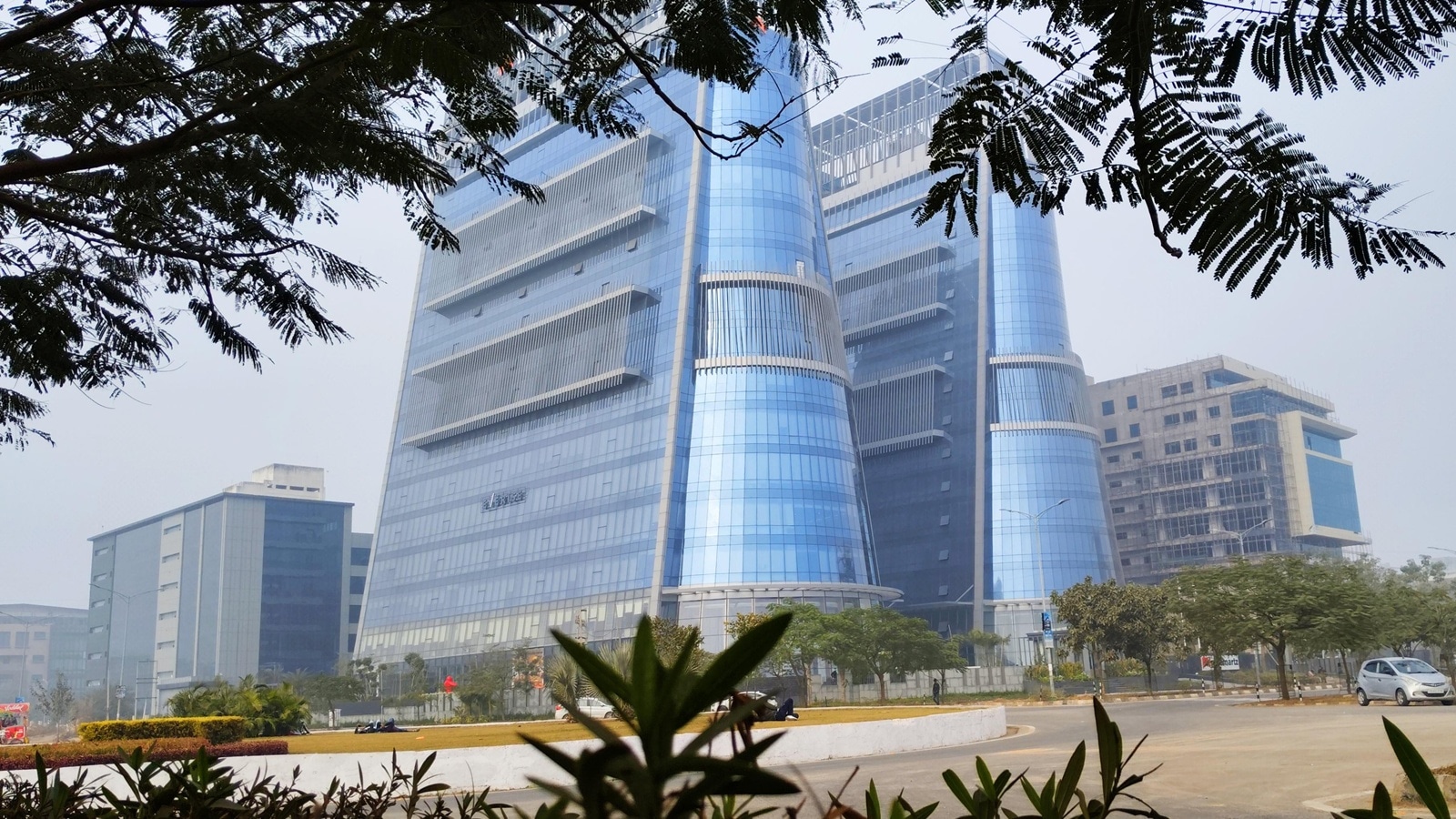
mohali cityToday, Mohali sits at the crossroads of education, technology, real estate and lifestyle economies. (Express Photo by Jasbir Malhi)

It was not long ago that Mohali was dismissed as Chandigarh’s sleepy sibling, a patchwork of villages and housing clusters shaped largely by the spillover from the region’s meticulously planned capital. Chandigarh’s strict planning norms kept it neat and contained, leaving Mohali to grow around its edges. Fast forward to 2025, and Mohali’s skyline, roads and social fabric tell a very different story of rapid growth, demographic churn and entrepreneurial energy. The city is now bursting at the seams.

Mohali was conceptualised in the 1960s as part of the region’s planned expansion, but it began to draw attention only in the 1990s and early 2000s. Infrastructure projects played a decisive role. The operationalisation of the Shaheed Bhagat Singh International Airport significantly boosted air connectivity, while new road links, particularly along the Airport and Kharar corridors, strengthened road access and opened up large tracts for development.

Today, Mohali sits at the crossroads of education, technology, real estate and lifestyle economies. It thrives not merely because of its proximity to Chandigarh, but because it has steadily built an ecosystem of its own.

Education cluster

One of Mohali’s most visible success stories is its emergence as a knowledge and education hub. Institutions such as the National Institute of Pharmaceutical Education and Research first put the city on India’s academic map, paving the way for both public and private players.

The district today hosts multiple universities including Amity University, Rayat Bahra University, Ashoka University and Plaksha University, along with centres of excellence such as the Indian School of Business and the Indian Institute of Science Education and Research. Students from across the country and overseas now call Mohali home, lending the city a distinctly youthful and cosmopolitan character.

This growth is anchored in the Education City project, envisaged as a 1,700-acre learning destination offering land to global institutions across disciplines ranging from engineering and pharmaceuticals to media and hospitality. With residential, commercial and academic clusters planned together, the project aims to position Mohali as a global learning hub rather than just a student town.

Mohali’s identity has evolved sharply over the decades. Conceived as a village in the 1960s, it was later planned as an industrial town and then transitioned into a satellite city. In 2002, during the tenure of former Chief Minister Amarinder Singh, the state introduced the Mega Project Policy, offering incentives to projects spread over at least 100 acres. This opened the door for developers such as DLF, Emaar, MGF and Ansal, who brought large-scale housing projects and accelerated urbanisation.

Story continues below this ad

Retail and lifestyle infrastructure followed. As many as seven malls have come up across the city, including CP-67, Jubilee Walk, Mohali Walk, Bestech, North Country Mall, Downtown and HLP Galleria. While North Country Mall has since been repurposed, with a super-speciality hospital coming up there, the larger shift towards mixed-use development reflects changing urban priorities. Mohali is also set to house the tallest building in the northern region, a 43-floor structure that signals the city’s vertical growth.

IT, innovation and business pulse

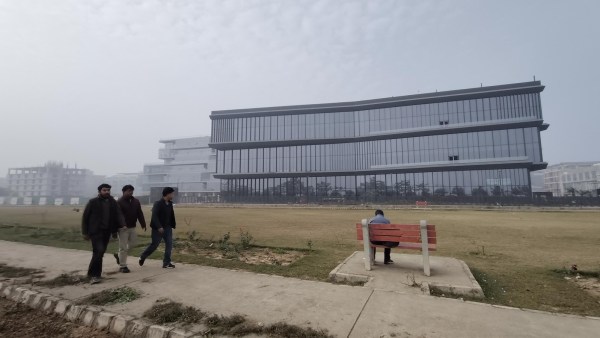
While Chandigarh’s IT footprint has remained modest compared to larger tech hubs, Mohali has quietly carved out a niche. The IT City initiative has anchored technology parks and innovation clusters, attracting startups as well as established firms. At one point, government estimates pegged IT sector growth here at nearly 30 per cent, creating thousands of jobs and reinforcing the city’s technology credentials.

mohali it city The IT City initiative has anchored technology parks and innovation clusters, attracting startups as well as established firms. (Express Photo by Jasbir Malhi)
Corporate confidence was underscored in 2025 when global IT services firm Infosys announced a Rs 300-crore expansion of its Mohali campus, citing the availability of skilled manpower and improving infrastructure.

Booming real estate and growing pains

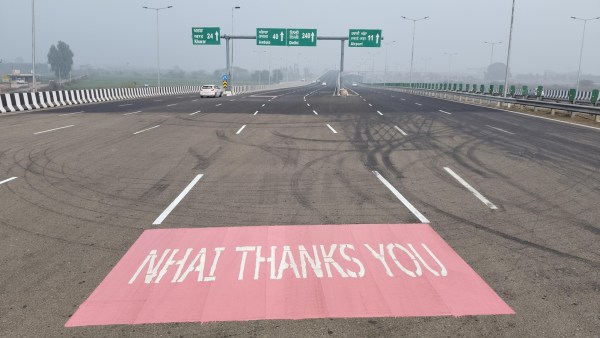
Mohali has seen a sharp real estate boom, particularly in sectors 66 and 67, along Airport Road and in New Chandigarh. Prices have risen steadily, drawing investors and homebuyers looking for modern housing, gated communities and luxury apartments. Local industry groups point to hundreds of registered builders and dozens of ongoing projects, with expansion expected to continue.

Story continues below this ad
mohali highway Mohali has seen a sharp real estate boom, particularly in sectors 66 and 67, along Airport Road and in New Chandigarh. (Express Photo by jasbir Malhi)
The growth, however, has brought familiar urban challenges. Traffic congestion, pressure on water and power supply, deteriorating road conditions and law and order concerns have become common complaints. Residents speak of water shortages during peak summers and a rise in snatching and other street crimes.

A sporting hub

The city has also emerged as a centre for sports. With at least 11 sports complexes, several equipped with Olympic-standard swimming pools, and a world-class cricket stadium, Mohali has built a strong sporting infrastructure. The Punjab Cricket Association IS Bindra Stadium, which hosted international matches from the early 1990s, played a pivotal role in putting the city on the national map, bringing with it hotel investments and a thriving hospitality economy.

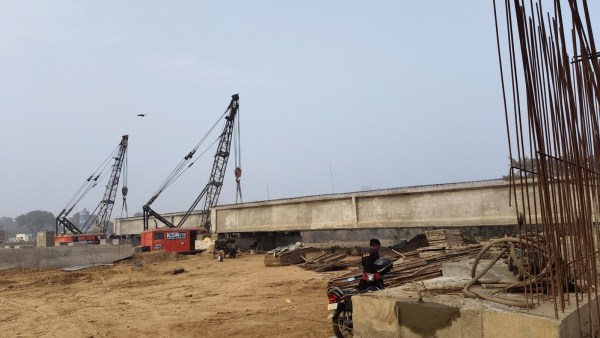
mohali development From a peripheral township to a self-sustaining urban centre, Mohali’s journey reflects both the promise and pressures of rapid growth. (Express Photo by Jasbir Malhi)

From a peripheral township to a self-sustaining urban centre, Mohali’s journey reflects both the promise and pressures of rapid growth. The challenge now lies in managing that momentum without losing the liveability that first drew people to the city.

Kanchan Vasdev is a Senior Assistant Editor in The Indian Express’ Punjab bureau. She is a highly experienced journalist with 22 years of expertise covering high-stakes politics, governance, and social issues in Northern India. Professional Background Role: Primary reporter covering the Punjab Chief Minister’s Office (CMO), government policies, and the Aam Aadmi Party (AAP) leadership in the state. Experience: She previously worked with The Tribune and has played a key role in launching various city editions. Special Projects: Abandoned Brides: Authored a monograph on brides abandoned by NRIs as part of the Prabha Dutt Memorial Fellowship. Environment: Worked as a Centre for Science and Environment (CSE) fellow, focusing on the pollution levels in the Satluj river. Recent Notable Articles (Late 2025) Her recent reporting focuses on the legislative strategies and political maneuvers of the Bhagwant Mann-led Punjab government: 1. Legislative & Governance Standoffs "Punjab govt advances special Assembly session to pass resolution against VB-G RAM G Bill" (Dec 20, 2025): Reporting on the state's move to block the Centre's "Viksit Bharat" mission, which the state claims will undermine MGNREGA. "Punjab govt doubles down on special sessions, sixth in January" (Dec 19, 2025): Detailing the AAP government's use of special sessions as a legislative tool amid tensions with the Governor. "Punjab asks 'VIP teachers' working near Chandigarh to go back to border districts" (Dec 16, 2025): Reporting on CM Mann's move to end the practice of influential teachers avoiding postings in remote areas. 2. Political Analysis & Rural Polls "Punjab rural polls: Why Akalis are likened to dinosaurs in Punjab" (Dec 19, 2025): Analyzing CM Bhagwant Mann's rhetoric against the Shiromani Akali Dal (SAD) following local body elections. "AAP claims win in 78% Punjab zila parishads as counting continues" (Dec 18, 2025): Breaking down the results of the 2025 rural elections. "Rahul Gandhi and Sidhu alike, says Bhagwant Mann" (Dec 13, 2025): Covering the CM's critique of the Congress leadership. 3. Law Enforcement & Bureaucracy "Suspended Punjab IPS officer Ravjot Kaur Grewal awaits reinstatement" (Dec 10, 2025): Investigative reporting on the bureaucratic red tape involving the Election Commission and the state government. "Punjab declines to give parole to Amritpal Singh" (Nov 27, 2025): Detailing the state government's refusal to grant parole to the radical preacher and sitting MP. 4. Welfare & Economy "Punjab government's plan to add more freebies to 'atta-dal' scheme hits funds roadblock" (Dec 4, 2024): An analysis of the fiscal challenges facing the state's flagship food security program. "Mann leads Punjab delegation to Japan and South Korea for investor outreach" (Dec 2, 2025). Signature Beat Kanchan Vasdev is known for her insider access to Punjab's political executive. Her writing provides deep insights into how state policies are formulated and the friction points between the state government and central authorities. Her dual expertise in environment and law allows her to report on complex issues like the "Farmhouse Policy" (Dec 18, 2025) and river pollution with a unique policy-oriented lens. X (Twitter): @kanchan99 ... Read More

Stay updated with the latest - Click here to follow us on Instagram

Latest Comment
Post Comment
Read Comments
Advertisement
Loading Taboola...
Advertisement