Premium

HC lists multiple flaws in Punjab’s land pooling policy, explains reasons for stay

Detailed order cites lack of impact studies, timelines, grievance mechanism, and rehabilitation plan

Punjab and Haryana High Court Land Pooling Policy stay, Punjab Land Pooling Policy 2025 legal issues, Punjab land pooling policy environmental impact,The division bench of Chief Justice Sheel Nagu and Justice Sanjiv Berry was hearing a petition on the relocation of overhead power lines passing over houses in various municipalities in the state.

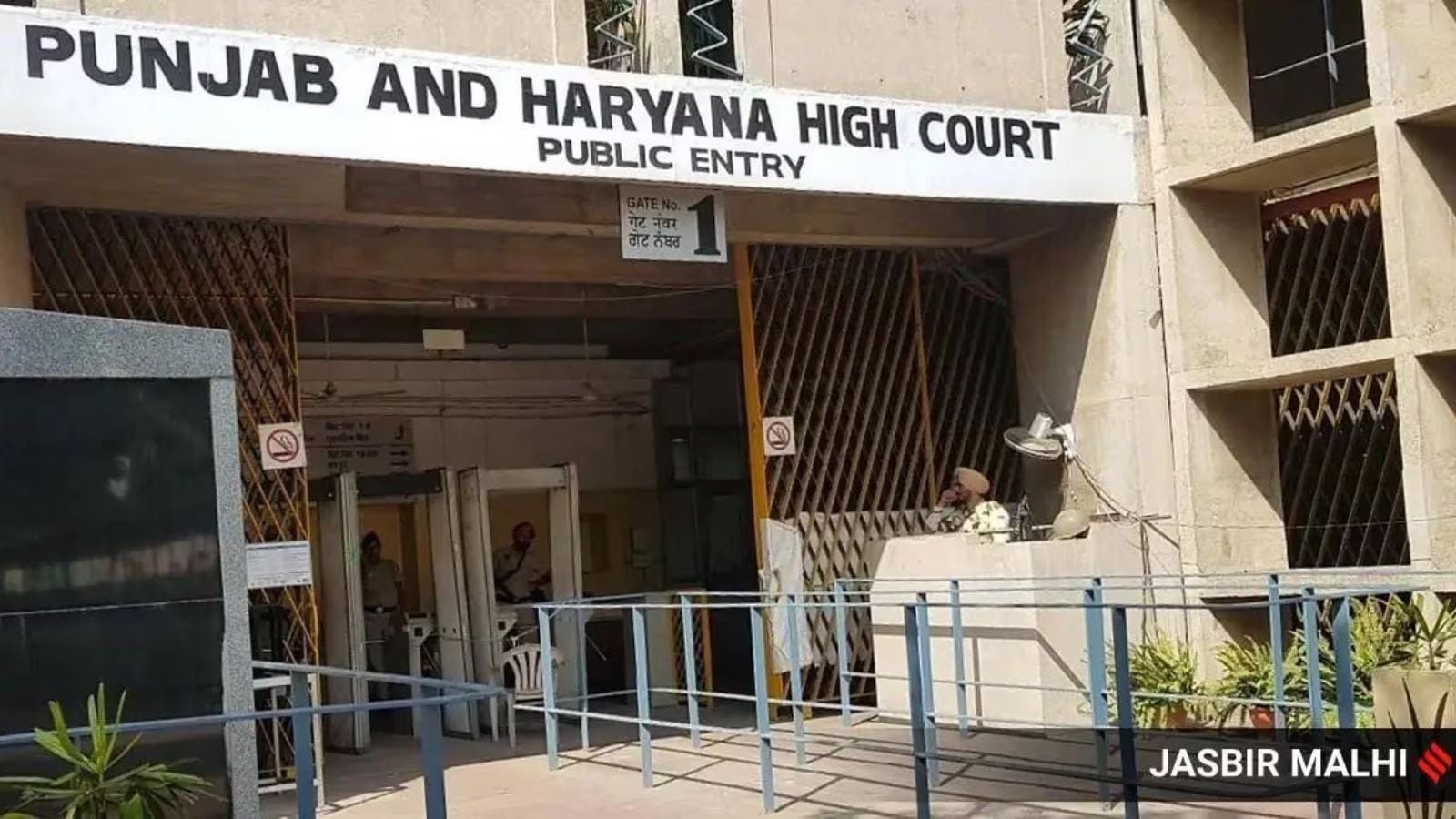
The Punjab and Haryana High Court has spelt out in detail why it stayed the Punjab government’s Land Pooling Policy, 2025, in its order passed on August 7 and released today. The Bench of Justice Anupinder Singh Grewal and Justice Deepak Manchanda listed a series of legal and procedural shortcomings — from the absence of environmental and social impact studies to the lack of timelines, grievance redressal and budgetary clarity.

Policy ‘notified in haste’

The court said it was “prima facie… of the view that the policy appears to have been notified in haste” without addressing key concerns. These included Social Impact Assessment (SIA), Environmental Impact Assessment (EIA), fixed timelines for execution, and a grievance redressal mechanism — all of which, it said, “should have been addressed at the very outset… before its notification.”

No impact assessments before large-scale land takeover

The Bench noted that the State planned to “take over tens of thousands of acres of fertile land” without first conducting SIA or EIA, despite Supreme Court directives that environmental studies must precede urban development. It cited Resident’s Welfare Association vs UT of Chandigarh (2023), in which the apex court had urged governments to strike “a proper balance… between sustainable development and environmental protection” and to make EIA studies mandatory before permitting urban expansion.

Compulsory acquisition built into ‘voluntary’ scheme

While the government maintained the policy was “purely voluntary”, the court pointed to Clause 6 of the May 14 notification, which allowed land not offered under the pooling scheme to be acquired compulsorily under the 2013 land acquisition law. This, it held, brought the policy within the definition of a “project” under the Act, triggering the requirement for impact studies and other safeguards.

No provision for the landless

The order flagged the absence of any rehabilitation plan for landless labourers, artisans, MGNREGA workers and others dependent on the targeted land. “Payment of subsistence allowance has been provided to the land owners, but there is no provision for rehabilitation of those… dependent on the land,” it observed. The Bench also reminded that acquisition of multi-cropped land was barred under the 2013 law, except in exceptional circumstances.

No timelines, no grievance mechanism

The court said there were no prescribed timelines for key stages — voluntary participation, taking possession, starting or completing development, delivering developed land to owners, or paying subsistence allowances. It also found no grievance redressal framework or penalty provisions for delays and non-delivery.

Budgetary gap

Noting that the Amicus Curiae had estimated development costs at ₹1.25 crore per acre — about ₹10,000 crore for Ludhiana district alone — the Bench recorded that the State’s counsel had “no instructions” on whether any budgetary provision had been made.

Past delays under pooling policies

Story continues below this ad

The judges referred to earlier instances where landowners surrendered plots under previous pooling schemes but waited years without receiving the promised developed land. In one case from Mohali, they noted, “developed plots have not been allotted even after ten years” and no development had started in the concerned sectors.

Fertile farmland at stake

Calling the land “amongst the most fertile in the State of Punjab”, the court said the acquisition could “impact the social milieu” and emphasised the need for careful evaluation before proceeding.

Stay to prevent creation of rights

The policy notified on May 14 and June 4, and amended on July 25, was stayed “lest any rights are created”, with the matter to be taken up again on September 10. The State has been asked to address all concerns and complete its reply before that date.

Manraj Grewal Sharma is a senior journalist and the Resident Editor of The Indian Express in Chandigarh, where she leads the newspaper’s coverage of north India’s most politically and institutionally significant regions. From Punjab and Haryana to Himachal Pradesh and the Union Territory of Chandigarh, she oversees reporting at the intersection of governance, law, politics and society. She also reports on the diaspora, especially in Canada and the US. With a career spanning journalism across several countries, academia and international development, Manraj brings a rare depth of perspective to regional reporting. She is widely regarded as a leading chronicler of Punjab’s contemporary history and socio-political evolution, particularly its long shadow of militancy, federal tensions and identity politics. Her book, Dreams after Darkness, remains a definitive account of the militancy years and their enduring aftermath. Professional Background & Expertise A gold medalist in mass communication and a post-graduate in English literature, Manraj has a multifaceted career spanning journalism, academia, and international development. She was also awarded a fellowship by National Foundation of India and did several in-depth pieces on Manipur. Internationally, she has reported from Israel, US, UK, Myanmar, and Mauritius Her key focus areas include: Regional Politics, History, Agriculture, Diaspora, and Security. Of late, she has started focusing on Legal & Judicial Affairs: Much of her recent work involves reporting on high-stakes cases in the Punjab and Haryana High Court, ranging from environmental policy to civil rights. International Consulting: She previously served as a consulting editor for the Asia Pacific Adaptation Network and a publishing consultant for the Asian Development Bank (ADB) in Manila. Academia: For five years, she was the managing editor of Gender, Technology and Development, a peer-reviewed international journal at the Asian Institute of Technology, Bangkok. Recent Notable Articles (Late 2025) Her recent reportage focuses heavily on judicial interventions and regional governance: 1. Environment & Governance "‘NGT can’t test legality of policy’: HC hears challenge to Punjab’s ‘Green Habitat’ plan" (Dec 22, 2025): Covering a critical legal battle over whether the National Green Tribunal has the authority to strike down a state policy regularizing farmhouses on delisted forest land. "High court pulls up Punjab poll panel over audio clip probe" (Dec 10, 2025): Reporting on judicial concerns regarding the transparency and fairness of local body elections. 2. Legal Rights & Social Welfare "HC issues notice to Punjab, Haryana over delay in building old age homes" (Dec 22, 2025): Reporting on a contempt petition against top officials for failing to establish government-run homes for the elderly as promised in 2019. "Victims can appeal acquittals in sessions court without seeking special leave" (Dec 19, 2025): Highlighting a significant procedural shift in criminal law following a Supreme Court ruling. "HC upholds benefits for Punjab FCI officer acquitted in 20-year-old bribery case" (Dec 19, 2025): A report on the concept of "honourable acquittal" and its impact on employee benefits. 3. Human Rights & Identity "As Punjab denies parole to MP Amritpal Singh, HC asks it to submit ‘foundational material’" (Dec 1, 2025): Covering the legal proceedings regarding the radical preacher and sitting MP's request to attend Parliament. "Protecting life paramount: HC backs Muslim woman in live-in after verbal divorce" (Nov 6, 2025): Analyzing judicial protections for personal liberty in the context of traditional practices. Signature Beats Manraj is recognized for her ability to decode complex judicial rulings and relate them to the everyday lives of citizens. Whether it is a 30-year-old land battle in Fazilka or the political implications of Kangana Ranaut’s candidacy in Mandi, her writing provides deep historical and regional context. Contact @grewal_sharma on X manrajgrewalsharma on Instagram ... Read More

Stay updated with the latest - Click here to follow us on Instagram

Latest Comment
Post Comment
Read Comments
Advertisement
Loading Taboola...
Advertisement