Journalism of Courage



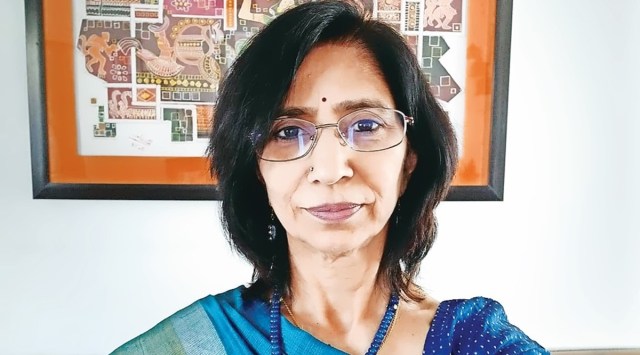 Professor Priti Arun
 What started in 1964 in the Government College of Education, Chandigarh with a few students, who were intellectually challenged, is now a full-fledged institute with a residential facility. Its aim is to rehabilitate the maximum number of intellectually challenged persons in and around Chandigarh and integrate them into mainstream society.
Dr BS Chavan, former director of GMCH-32, set the stage for the development of Government Rehabilitation Institute for Intellectual Disabilities (GRIID), Chandigarh and earned the presidential award for his outstanding contribution in the field of disability. The institute has grown from strength to strength under the direct control and supervision of the department of psychiatry, GMCH 32 and as it celebrates the silver jubilee, Professor (Dr) Priti Arun recounts the journey, vision and future of GRIID.
Recently, as many as 80 students from GRIID were given regular appointments. What were the challenges of this achievement?
Vocational training is an integral part of the various programmes we run as part of GRIID as the effort is to give students the ability to be self-reliant. We run sheltered workshops where students are given training in stitching, masala grinding, paper bag and biodegradable sanitary napkin making etc, and this extensive training has helped them secure good jobs. Our students, around 450, have also participated in sporting events abroad, performed yoga, dance, and have also secured prizes in these events.
Many students who were in regular schools shifted to GRIID and here they got the opportunity to be part of a system equipped to give them speech and behaviour therapy and special attention from trained professionals. We also have rehabilitation clinic and therapeutic intervention at OPD level of children with intellectual disability, autism, cerebral palsy, multiple disabilities. The hostel here has 25 students who are not from the Tricity and integral to the success of this system is also the support of the parent associations like Umeed and Samarth Jeeyo, who feel a part of GRIID and contribute to the overall development of the students.
How important is awareness about intellectual disability and the importance of early intervention?
Early intervention is paramount, and that is possible when parents are aware of the milestones of their children’s growth. When the brain of a child is developing, the parents should be understanding delays in development in seek professional help. With professional help, parents who felt helpless, now have a voice. Our community outreach programme in the periphery covers villages and slum areas and regular surveys help us identify children with intellectual disabilities and assist in procuring a disability certificate, if need be. We have regular workshops for parents where we provide educational videos, teach parenting skills for behavioural issues, conduct online and offline sessions on autism and its symptoms. Our experts and psychiatrists are also working on a booklet on autism and its various aspects to facilitate parents.
Parents must encourage social interactions, play time and check the screen time of the children to facilitate their development. We are running a diploma in special education, and a BEd in intellectual disability, and the need of the hour is to have more professionals in the system. Our telemedicine model Tele-MANAS works very efficiently with a specialist providing guidance to people on issues related to depression, anxiety, life and the suicide helpline also is a support.
What are the plans for GRIID and the department?
Our immediate plan is to provide psychiatry services in the neighbouring districts, and we will be starting a hub and spoke model. Mental health needs of people must be taken care of and we will have a model where people can get the support of specialists and treatment. We are doing a study in association with AIIMS, funded by the ICMR where we are covering 68 private and government schools in Chandigarh, interviewing around 2,000 students between class IX and XII to study the impact of the pandemic and substance use in this age group. The module will be delivered after phase two of the study is completed.

 4 min read