6 min read
Stay updated with the latest - Click here to follow us on Instagram

Journalism of Courage



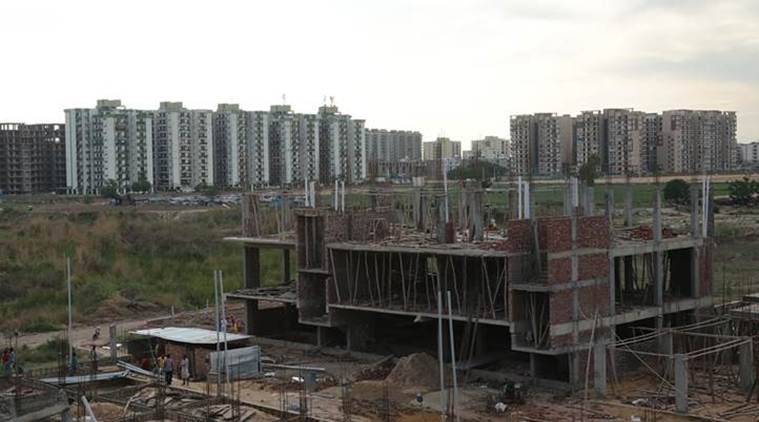 One-Time Settlement policy approved by the cabinet for non-compoundable unauthorised constructions. (Express photo by Jaipal Singh/Representational)
THE PUNJAB Cabinet Wednesday approved One-Time Settlement policy for non-compoundable unauthorised constructions that mushroomed up to June 30, 2018. The OTS scheme was promulgated under ‘The Punjab One-Time Voluntary Disclosure and Settlement of Violations of the Buildings Ordinance, 2018” for all buildings constructed in violation of the bylaws in the municipal areas as per this cut-off date.
The buildings will be regularised without compromising on fire safety and structural safety standards of the buildings. The owners will be required to comply with the safety standards at any cost.
Local Bodies Minister Navjot Singh Sidhu told the meeting that his department was also working on a separate policy for a one-time settlement for CLU violations. The issue was raised by Food Minister Bharat Bhushan Ashu.
The ordinance provides any person, who has made a non-compoundable building violation can declare it and apply online, along with photographs of the building, to the competent authority within a period of three months. The applicant shall submit the requisite information/documents/plans and prescribed application fee thereafter within a period of two months.
It has been made clear violation of land use, except conversion of shop-cum-flat to commercial, in the town planning/building schemes, Improvement Trust schemes, urban estates, Industrial Focal Points or schemes formulated under any other Act, encroachment on any public/private land or on public space by virtue of any scheme or restricted areas under any Act prohibiting the construction of buildings in a particular area, would not be compoundable.
The non-compoundable building violations in Residential-plotted Buildings, disclosed voluntarily, may be settled by the Competent Authority after spot verification, subject to maximum height of 50’-0’’, as one-time measure by realising the composition fee of Rs 300 per square ft of the total non-compoundable area on all floors being compounded under this Ordinance, in the case of Municipal Corporations and Improvement Trusts in major cities including Amritsar, Jalandhar and Ludhiana. For the remaining Municipal Corporations and Improvement Trust and also all the Municipal Councils and Nagar Panchayats, the amount is Rs 200 per sq ft.
In the case of non-resident building violations, except where fire safety and public safety/security and public convenience is compromised, will be similarly settled against composition fee of Rs 1,000 per sq ft of the total non-compoundable area in Amritsar, Jalandhar and Ludhiana, and Rs 600 per sq ft in other instances.
The composition fees in case of Institution buildings shall be 75 per cent of the aforesaid charges for non-residential buildings and for Industrial/Religious buildings shall be 40 per cent. These charges are for maximum 50 per cent excess of the permissible FAR, and for excess FAR more than 50 per cent (maximum upto 75 per cent), double the above charges shall be applicable.
Fugitive Economic Offenders Act
In another significant decision, the Cabinet gave its nod to republish the Fugitive Economic Offenders Act, 2018, which has already been approved by the Parliament, with a view to attaching and confiscating properties and assets of economic offenders.
The Act will empower authorities to attach and confiscate properties and assets of the economic offenders, such as loan defaulters, who had fled the country.
The state government will republish the Fugitive Economic Offenders Act, 2018 (Act No. 17 of 2018) in the State Gazette in larger public interest, said a statement, adding after the Rs 1,300 crore PNB scam by Nirav Modi and Mehul Choksi, it had become apparent the existing civil and criminal provisions were not entirely adequate to deal with the severity of the problem. It said absence of offenders during investigation was creating hurdles for probing agencies, apart from undermining the law of the country. The Act will force the absconders to return to India and face trial for economic offences, which will further help the banks and other financial institutions to achieve higher recovery from such defaulters, besides improving the financial health of theseinstitution.
Online transfer policy
To make the process of transfers more rational and transparent, the Punjab Cabinet approved the Online Transfer Policy-2019 of the School Education Department, thus ensuring equal opportunity for all employees using online method for seeking transfers.
The transfer policy would become effective from academic session 2019-20 i.e. April 1, 2019. The Chief Minister had asked all departments to come up with performance based review policy for transfer of employees.
The condition that the teachers would be compulsorily transferred after seven years of service in a particular zone/school has been removed. The earlier condition of having three-year minimum stay at one particular station before a teacher can put a request to get himself or herself transferred has been now changed to one year, but for newly appointed teachers the minimum stay at one place will be three years. However, newly married female teachers could seek transfer once in these three years if they get married after appointment.
Cancer patients/patients on dialysis, those with over 60 per cent disability, hepatitis B & C, sickle cell anaemia, thalassemia, divorced/persons having differently-abled children or mentally challenged children/war widow/widow of shaheed/where death of the spouse makes it necessary for the serving employee to relocate to another place immediately and having children below 15 years of age or teachers who are spouses of armed force personnel, who have been posted in difficult areas, may put in request for transfer any time during the year and the same will be considered on merit.
In case of a complaint or on account of poor performance, teachers could be transferred.
Stay updated with the latest - Click here to follow us on Instagram