Journalism of Courage



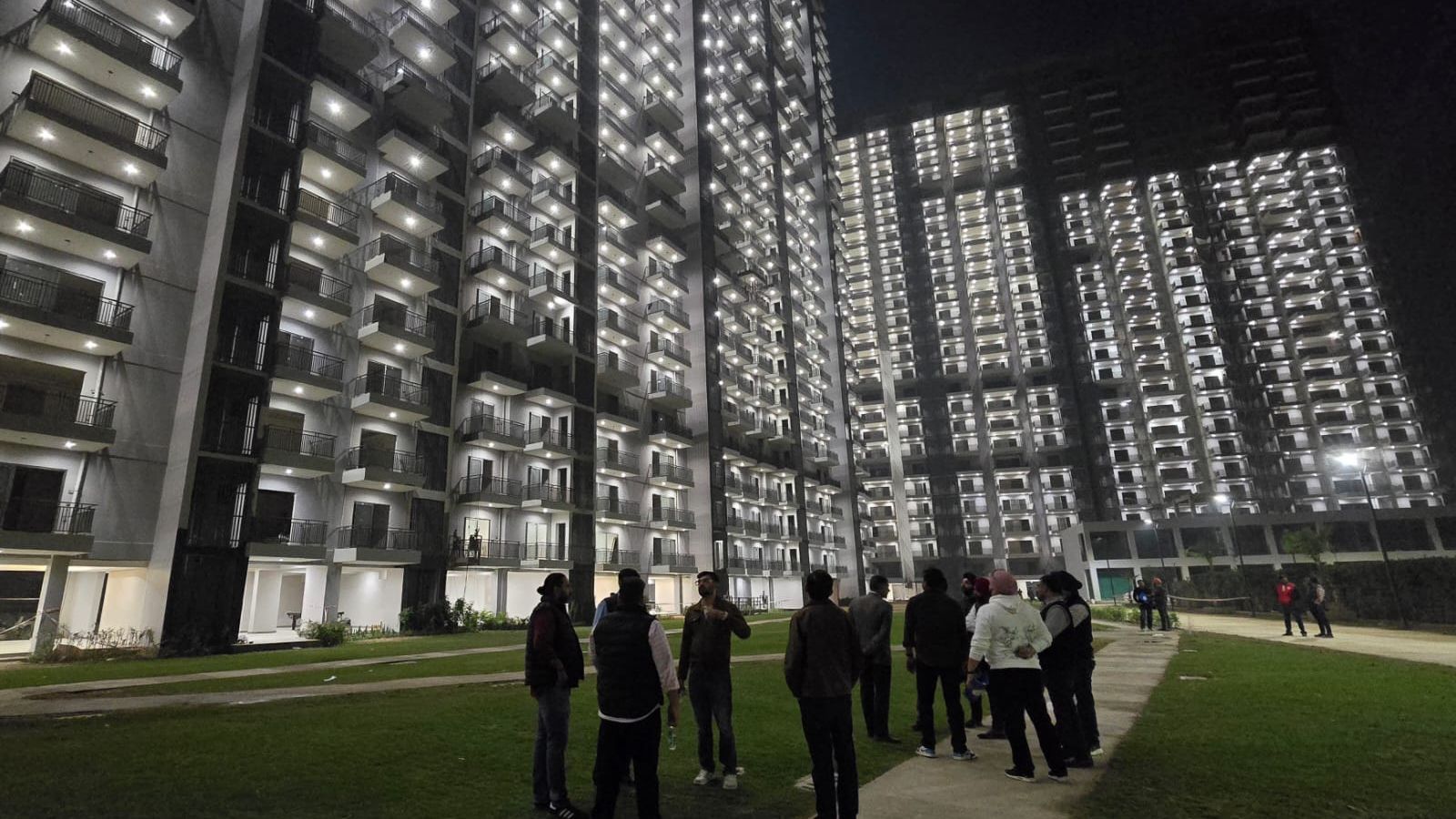 Urban growth spreading outside the present Ludhiana Municipal Corporation boundary. (Express Photo by Gurmeet Singh)
 Is Ludhiana prepared for a massive expansion of its limits—from the existing 160 sq km to nearly 400 sq km—in one go? This question has taken centre stage after the Ludhiana Municipal Corporation, the largest in Punjab, on Saturday passed an agenda proposing a major expansion of the city limits, amid strong opposition and uproar in the House by councillors from the Congress, BJP, and Shiromani Akali Dal.
On Monday, Ludhiana MP Amarinder Singh Raja Warring also met Municipal Commissioner Aditya Dachalwal to discuss the issue, underlining the political and administrative sensitivity surrounding the proposal.
What has been approved so far?
The agenda passed by the Municipal Corporation General House proposes the inclusion of around 110 villages, which would more than double the city’s geographical area. However, officials clarified that the resolution is only the first step.
The proposal will now be sent to the local government department in Chandigarh, where it will be examined by the director, local bodies, followed by the local bodies minister, the chief minister, and other statutory authorities, before any final notification.
Census freeze may delay process
The upcoming Census, scheduled to begin on January 1, 2026, and expected to continue for nearly two years, is likely to delay the process. During the Census period, the boundaries of urban and rural areas are generally frozen.
Despite this, the passing of the agenda is being seen as a significant administrative move, indicating a renewed intent to expand Ludhiana’s municipal limits after decades of failed attempts.
Why is an expansion being proposed now?
The municipal corporation has argued that large parts of Ludhiana’s periphery have already turned urban in character but continue to be classified as rural in revenue records.
Several high-end residential colonies and commercial hubs have emerged outside city limits, including Omaxe Township on Pakhowal Road, Basant Avenue, New Rajguru Nagar, and colonies in villages such as Ayali Kalan and Bhanohar.
Despite their urban profile, these areas still fall under gram panchayats. Panchayat elections are held in these colonies, with sarpanches and panches being elected even where agricultural land is negligible.
Similarly, rapid urban and industrial activity is visible along Ferozepur Road, Pakhowal Road, Southern Bypass, and areas like Uchi Mangli, Nichi Mangli, Bahadurke and Kanganwal, which have extensive industrial growth but remain outside municipal corporation limits. High-street markets and multi-storeyed housing projects are also coming up on land that is officially rural.
What is the Opposition’s concern?
While councillors across party lines acknowledge the need to include fully urbanised colonies within municipal corporation limits, they have raised serious concerns over the scale of expansion proposed.
Opposition leader in the municipal corporation, Shyam Sunder Malhotra, questioned whether the corporation was capable of absorbing 110 villages at one go, especially when it is struggling to maintain infrastructure within the existing 160 sq km. “The municipal corporation is not able to sustain basic infrastructure even in the current limits,” he said.
Infrastructure gaps within existing limits
Critics of the new proposal point out that Ludhiana continues to face chronic civic issues:
* Inefficient solid waste management
* Broken and poorly maintained roads
* Absence of stormwater drainage
* Waterlogging issues
* Garbage accumulation at multiple locations
* Pollution due to Buddha Nallah
These persistent problems have strengthened the argument that expansion without first fixing existing deficiencies could overstretch the civic body.
What the civic chief has said
Ludhiana civic chief Aditya Dachalwal has defended the proposal, stating that expansion could significantly boost municipal revenues. “If municipal limits are increased, it can generate income for the Ludhiana Municipal Corporation. In 10 years, the income can increase by ₹9,000 crore,” he said, while adding that the projection depends on when the expansion is actually notified and implemented.
The municipal corporation’s agenda states that villages were shortlisted based on parameters such as revenue potential, employment generation, industrial presence, availability of non-agricultural land and population, with the aim of planned development.
A look at the Ludhiana civic body’s expansion history
1978: Ludhiana upgraded from municipal committee to municipal corporation
1979: First expansion after becoming a corporation. The municipal corporation limits were extended from the old city towards the outer areas
1995: Last officially implemented expansion; around 25 villages included, expanding the area to about 159.37 sq km
2011: Proposal prepared but not implemented
2016: Proposal to include 53 villages approved by the municipal corporation House but shelved due to political opposition
2021: Another attempt made, but no notification issued
More wards, but not more area
Interestingly, while councillors have resisted territorial expansion, they have repeatedly supported an increase in the number of municipal wards to match population growth. The wards were increased as follows:
From 50 to 70 in 1997
From 70 to 75 in 2007
From 75 to 95 in 2017

 5 min read