Journalism of Courage



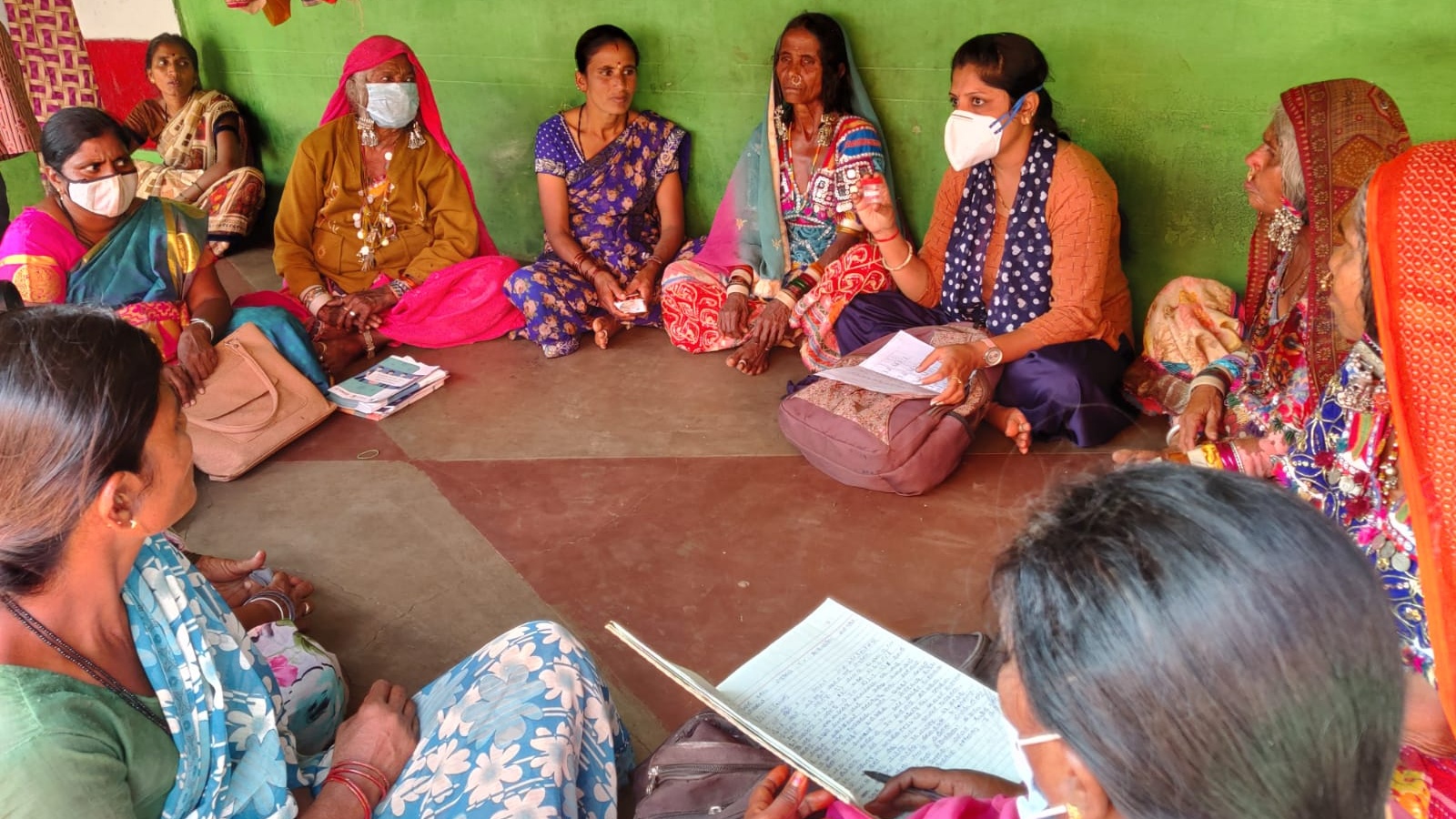 A KHPT session on sharing Karnataka’s experiences on creating TB Mukt Panchayats. (Photo: X/ @khpt4change)
With the new Donald Trump administration in the United States moving to virtually disband the US Agency for International Development (USAID) — the primary foreign aid arm of the US government — a programme to eliminate tuberculosis in Karnataka, for which USAID provided $7 million in 2022-23, will come to a halt.
The programme titled Breaking the Barriers (BTB), which is being implemented with USAID funding to increase knowledge about TB in the poorest regions of Karnataka, Telangana, Bihar and Assam, will be one of the key USAID-funded projects affected by the US move to eliminate the foreign aid agency, said an official of the Karnataka Health Promotion Trust (KHPT), a non-profit organisation that works in the healthcare sector in Karnataka.
Over the last two years, USAID has provided $7 million through the KHPT for the tuberculosis-linked Breaking the Barriers initiative in Karnataka, according to financial audits of the programme for the 2022 and 2023 financial years released by the office of the inspector-general of USAID on May 23, 2023, and March 22, 2024.
According to the reports of the Financial Audit of Multiple USAID Awards Managed by Karnataka Health Promotion Trust in India, the KHPT was granted $3,202,534 in the 2021-2022 financial period and $4,075,224 for the 2022-2023 period under a cooperative agreement for the Breaking the Barriers project for Community Engagement to Accelerate Tuberculosis Elimination Efforts in India Through Sustained Behaviour Change.
The multi-year project, which began in March 2020, is intended to bring about behaviour change among people vulnerable to TB infections, such as the urban poor, tribal communities, migrants, and mining and industrial workers, for better TB treatment outcomes.
“Among the present programmes with USAID funding in Karnataka, the TB programme will be affected. The programme is supposed to continue but will be closing down in March. If the funding had continued, there would have been a lot of innovations, and that is all going to stop,” a senior official of the KHPT said on the condition of anonymity due to the KHPT being a recipient of USAID grants.
Tuberculosis is considered a serious health problem among the poor in India, and USAID has been involved in funding multiple TB-linked programmes in Karnataka through the KHPT over the last decade, having previously been involved in HIV/AIDS-linked health initiatives.
The direct and indirect costs of TB in India amount to an estimated $23.7 billion annually and studies suggest that three to four months of work time is lost due to TB in households vulnerable to the disease, according to the KHPT.
The Breaking the Barriers project with USAID is spread over five districts in Karnataka, Bengaluru Urban, Ballari, Koppal, Belagavi and Bagalkot; four districts in Telangana, Hyderabad, Warangal Urban, Mahabubabad and Sangareddy; three districts in Bihar, Purnea, Bhagalpur and West Champaran; and two districts in Assam, Baksa and Dibrugarh.
In its evaluation of the financial aspects of the project in Karnataka, the office of the inspector- general of USAID said in its March 22, 2024, report that there were no questionable costs.
“The audit firm concluded that the schedule of expenditures of USAID awards presented fairly, in all material respects, program revenues and costs incurred for the period audited. The audit firm did not identify any questioned costs, material weaknesses in internal control, or material instances of noncompliance,” says the USAID audit report for the KHPT funding.
While recent comments by the Trump administration on purported USAID funding for voter turnouts have created controversy, the US government’s foreign aid arm has been a key ally of the healthcare sector in Karnataka, funding over $10 million for six initiatives in the last decade for the prevention of HIV, TB and overall rural health, and $15 million in the previous decade.
Apart from the tuberculosis-focused Breaking the Barriers project, USAID is also funding the Grama Arogya programme through the KHPT. The programme, which is now spread across all the villages of Karnataka, was launched in 2021 during the BJP’s tenure in the state.
The Grama Arogya programme—formerly known as the Grama Panchayat Aarogya Amrutha Abhiyaana—is spread across 5,957 gram panchayats of 31 districts in Karnataka and is intended to take healthcare “to the doorstep of every poor household in rural Karnataka”.
The panchayat functionaries, such as the panchayat development officers and gram panchayat members who are part of health task forces at the gram panchayat level, along with state health services staff like ASHA workers and primary healthcare officers, are key to the programme.
The programme was launched on August 30, 2021, by then rural development minister K S Eshwarappa, with KHPT being the implementing agency with USAID funding.
“The USAID funding for the Grama Arogya programme will close in March 2025. However, the programme has been taken over by the state government, and there is no concern for funding. Since the government is implementing it, we have withdrawn,” the KHPT official said.
“USAID is one of the funding agencies that facilitates innovation in health projects. They are a significant contributor to innovations. The government, in the end, takes over these programmes, but the government is very rigid and allows no flexibility in finances. In USAID projects, there is scope for innovation, new thinking and ideas,” the KHPT official said.
Since 2006, USAID has been involved in multiple health projects in Karnataka. In the 2006-2012 period, it provided nearly $15 million (around Rs 98 crore) for the Samastha project, implemented by the KHPT in Karnataka and Andhra Pradesh for HIV/AIDS prevention.
The goal of the project, implemented in 15 districts of Karnataka and five districts of Andhra Pradesh, “was to deliver an integrated and comprehensive programme that will provide HIV and AIDS prevention, care, support and treatment services to vulnerable and affected populations in Karnataka and selected districts of Andhra Pradesh”.
The programme, which involved extensive outreach to sex workers to adopt safe sex practices, is considered one of the many factors in reducing HIV incidence from the 0.55 per cent seen in testing centres two decades ago to 0.04 per cent in 2023.
USAID also provided funding through the KHPT for Strengthening Health Outcomes in Private Sector (SHOPS), which was a “tuberculosis prevention and care initiative” in 2014-2024; the Tuberculosis Health Action Learning Initiative (THALI); and the HIV/AIDS Orphans and Vulnerable Children Social Protection Programme in 2015-2016.
According to financial reports of the KHPT, the USAID funding it received for healthcare initiatives from between 2014 and 2020 amounts to Rs 30 crore, or around $3 million.
The move by the Trump administration to eliminate USAID, citing lack of transparency and allegations of the use of funds in India for “voter turnout” initiatives, is widely seen as a setback to healthcare initiatives around the world, especially in the developing world.
The global efforts to control HIV/AIDS have received a setback due to the policies of the Trump administration regarding USAID, German population health researcher Prof Till Barnighausen said recently in Bengaluru, where he delivered the Heidelberg Lecture.
“With the US potentially moving out (of funding initiatives to control HIV/AIDS in the world), support for the programme will need to be very well managed in order not to cause major long-term losses of life,” Prof Barnighausen said. He added that the move to shut down USAID was in a sense equal to “giving up on a massive success that has been achieved in treating HIV/AIDS”.
“It is very sad, but healthcare programmes in many places will crumble — especially Africa,” a KHPT official said.
According to a review of USAID funds conducted on behalf of the US Congressional Research Service in January 2025, the agency managed more than $40 billion in funds in the financial year 2023-2024. The funds were granted to 130 countries.
The top 10 recipients of USAID funds then were Ukraine, Ethiopia, Jordan, the Democratic Republic of Congo, Somalia, Yemen, Afghanistan, Nigeria, South Sudan and Syria.
Global healthcare initiatives have traditionally received the most funding from USAID since the 1990s, especially after the initiation of the President’s Emergency Plan for AIDS Relief (PEPFAR) in 2004 and the emergency assistance for Covid in 2020.
However, in 2022, humanitarian assistance received the largest share of USAID funds, and in 2023, governance received the biggest chunk of the $40 billion in USAID grants at $16.8 billion, primarily due to “US direct financial support for the Government of Ukraine”, which pushed humanitarian assistance to second place in USAID funding at $10.5 billion and health to third place with an allocation of $7 billion.

 8 min read