Journalism of Courage



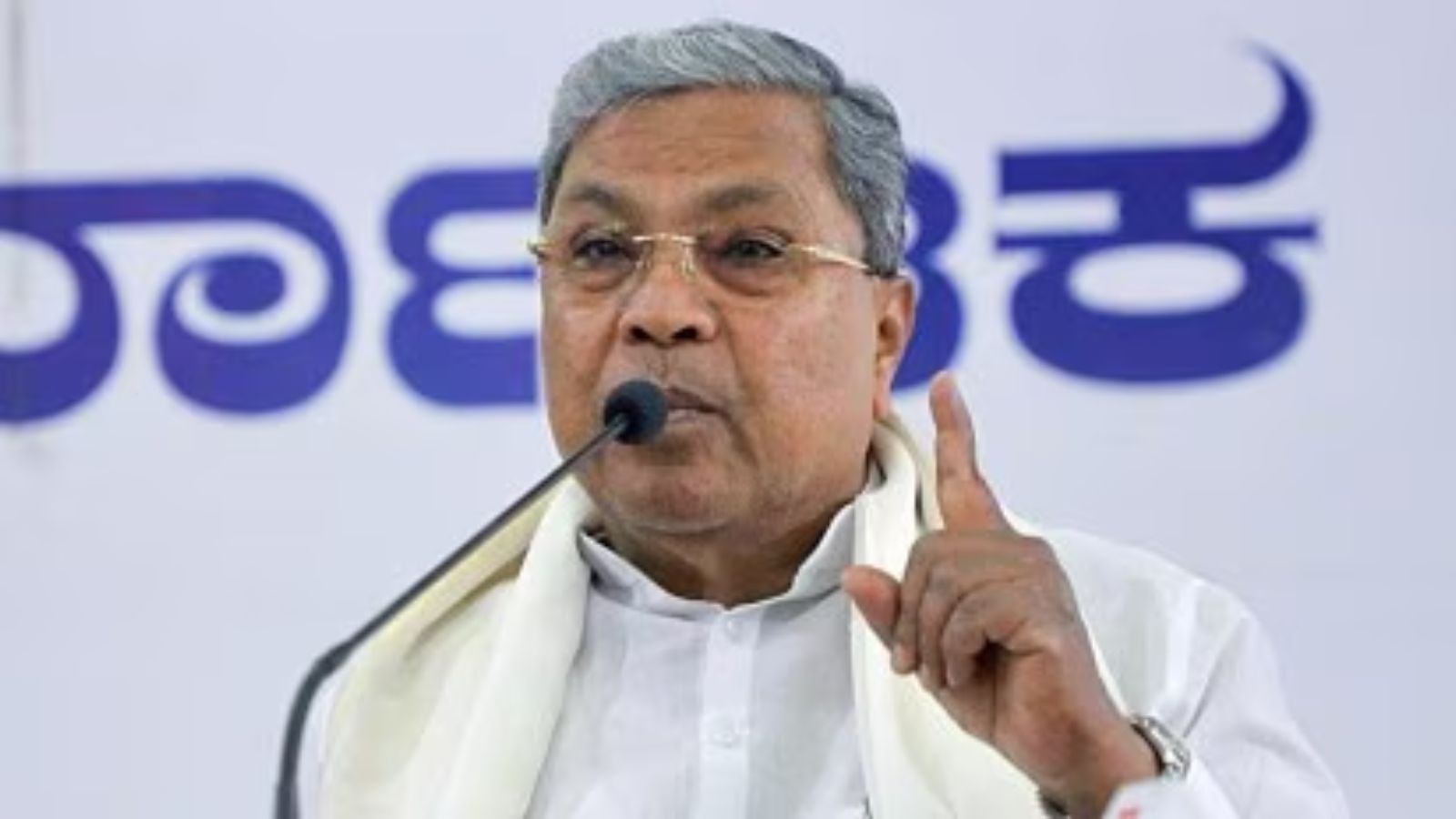 The Siddaramaiah government had stopped the 50:50 scheme of MUDA in October 2023 after complaints of misuse of the scheme (that was started during the BJP tenure in 2020) by vested interests. (File)
The Karnataka High Court on Thursday reserved its judgement in a petition filed by Karnataka Chief Minister Siddaramaiah against an approval granted by Governor Thawarchand Gehlot to three private individuals to file cases of corruption over site allotments to the CM’s wife in 2021.
The high court reserved its judgement after marathon arguments spread over multiple hearings that began on August 19 in a writ petition filed by Siddaramaiah against the August 16 decision of Governor Gehlot.
On the final day of arguments, Senior Counsel and Congress leader Abhishek Manu Singhvi appearing for for Siddaramaiah, argued Governor Gehlot failed to rationalise his order giving his approval despite the Karnataka Cabinet advising the Governor against granting sanction. Once the Governor had drawn the conclusion that there is a case to be investigated he should have rationalised in his final order the reasons for the conclusion, Singhvi argued while asking the court to send the sanction order back to the Governor.
The Governor “cannot assume the advice of the cabinet of ministers is biased and assume discretionary powers” and “must explain orders that the cabinet decision suffers from manifest irrationality”, the senior counsel argued. Singhvi argued broadly that the Governor’s decision has a serious consequence and should clearly demonstrate the application of mind.
He called for the High Court to “keep in mind the backdrop of the umbrella of statutory protections provided especially to an elected public servant paving the way for an inquiry or investigation which has very serious implications of diluting, unseating or creating a mandate contrary to the election”. “It is a mistake to suppose by one or two judgments that as soon as a minister or chief minister is involved the well and established jurisprudence about Governors having extremely limited powers is automatically overwritten,” he said.
Singhvi also argued that the Karnataka Governor showed unusual urgency in granting the sanction for filing cases against Siddaramaiah but at the same time took nearly three years to reject a similar sanction sought under Section 17 A of the Prevention of Corruption Act for conducting investigations against the former BJP minister Shashikala Jolle. Singhvi also said the request for sanction in the BJP leader’s case was pending from December 9, 2021, and was finally rejected only on August 9, 2024, after the request for sanction for Siddaramaiah was made to the Governor.
Justice M Nagaprasanna, who presided over the hearings, sought to understand whether a sanction under Section 17 A of the Prevention of Corruption Act, which was introduced in 2018 to provide protection to public servants from being wrongly prosecuted for decisions they take, can be sought before the initiation of a corruption case.
The High Court was informed that one of the private persons seeking to file a case against Siddaramaiah had filed a police complaint on July 18 which was not registered and he then approached the Governor on July 26 for a sanction. After seeking sanction from the Governor, a private complaint was filed in court on August 13, three days before the sanction was given.
Karnataka Advocate General Shashikiran Shetty also argued the Governor’s sanction was sought prematurely by the complainants and that a police officer is mandated by Section 17 A to be the authority to seek sanction after a preliminary probe.
Senior Advocate and former advocate general Ravi Varma Kumar, who also appeared on behalf of Siddaramaiah, argued that the Governor’s sanction order was flawed since it did not take into consideration documents that showed that the land allotment to the CM’s wife was done as compensation for 3.16 acre of land taken over illegally by Mysore authorities. He also argued that corruption cannot be implied in the case spanning over 23 years since no decisions were taken by Siddaramaiah on the land when he was in power and the allotment of 14 housing sites as compensation was done when the BJP was in power.
The judgment in the case is expected to clarify whether the protection accorded under Section 17 A in 2018 to public servants from facing frivolous cases filed by private individuals requires competent authorities to provide well-reasoned orders for granting or denying sanction.
Some of the advocates for the three private complainants against the Karnataka CM have argued that the Governor’s sanction under Section 17 A of the Prevention of Corruption Act is legally valid since it allows the start of a probe into whether Siddaramaiah can be linked to the land allotments made to his wife during the BJP’s tenure in 2021.
“At the stage of application of mind for 17 A there is no material which is available which can point in one or the other direction. It is a matter where there is a needle of suspicion,” Senior Counsel K G Raghavan argued for one of the complainants Snehamayi Krishna on September 2.
During the hearing, Justice Nagaprasanna remarked, “It is a needle of suspicion pointing at a particular act of a particular person. The needle of suspicion cannot also be in thin air. There should be something. We will see if there is something. Whether it is relatable or not”.
Justice Nagaprasanna, during the arguments, has reiterated his position that the requirements under Section 17 A does not mandate that only a police officer can seek approval for initiating an inquiry against a public servant. “This I straight away dispelled for the simple reason that no police officer can begin an investigation unless there is an approval and this does not mean that only a police officer can seek approval,” the judge observed on September 2.
The counsel for the RTI activist Krishna argued that Section 7 C of the Prevention of Corruption Act demands high morality from a public servant and attempting to do an improper act is itself an act of corruption.
On August 31, Solicitor General of India Tushar Mehta, who argued on behalf of the Karnataka Governor, said the Governor applied his mind while granting sanction. He also provided details of the Governor’s file to the court.
Anti-corruption activists T J Abraham, Snehamayi Krishna, and Pradeep Kumar approached the Governor in July for sanction to file private court complaints against the Karnataka CM for investigations into land allotments to the CM’s wife.
They have alleged corruption in the acquisition of 3.16 acre of land in the Kesare village of Mysuru in 2004 by Siddaramaiah’s brother-in-law B M Mallikarjun, who gifted the land in 2010 to Siddaramaiah’s wife Parvathi B M, and the subsequent exchange of the land in 2021 for 14 housing sites by the Mysore Urban Development Authority (MUDA) under a 50:50 scheme where land equivalent to half the acquired land is allotted in a developed area.

 7 min read