4 min read
Stay updated with the latest - Click here to follow us on Instagram

Journalism of Courage



 Modi lands in Gujarat(Express Photo)
PRIME MINISTER Narendra Modi will on Saturday launch in Vadodara two flagship programmes of the Gujarat government under its Integrated Child Development Services, Poshan Abhiyan, which will be focused on rolling out additional nutrition to pregnant women and lactating mothers.
The Mukhyamantri Matrushakti Yojana, which will cover 7 lakh women, is Gujarat government’s first scheme aimed at dealing with dietary deficiency within the first 1,000 days of the conception of a child (from pregnancy to 2 years), considered the crucial first window to check malnutrition. The scheme will entail distribution of 2 kg chickpeas, 1 kg toor daal and 1 litre fortified ground nut oil.
“The entire scheme will be electronically monitored. Packets will have bar codes which will be scanned and the scheme is OTP based. This means the beneficiary will receive OTPs confirming that they have received these packages, so that we know that the intended beneficiary is actually receiving the ration,” said Avantika Darji, Joint Director, ICDS.
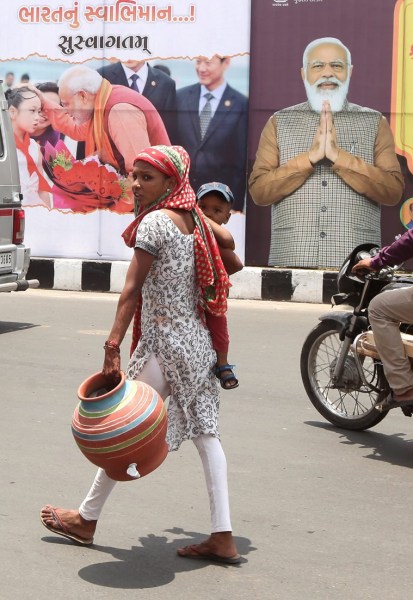 The Mukhyamantri Matrushakti Yojana, which will cover 7 lakh women, is Gujarat government’s first scheme aimed at dealing with dietary deficiency within the first 1,000 days of the conception of a child (from pregnancy to 2 years), considered the crucial first window to check malnutrition.(Express Photo)
Apart from this, the Prime Minister will also relaunch the Poshan Sudha Yojana, under which hot cooked meals will be provided to tribal women once a day at Anganwadi centres. The pilot has been carried out in 10 districts in the state and is now being extended to all 14 tribal-dominated districts.
Under this scheme, pregnant women and lactating mothers registered at Anganwadi are provided a full nutritious meal. In addition, iron and calcium tablets as well as education on health and nutrition are also offered.
The announcement of the roll-out comes ahead of the Assembly elections in Gujarat, and less than a month after the latest National Family Health Survey (NFHS) 5 data showed that 89% children across the country in the 6-23 month age group do not receive minimum acceptable diet.
The minimum acceptable diet is a composite of two main things – breastfeeding and its frequency up to two years, and dietary
diversity. A child needs at least 4 out of 7 food groups indicated by the WHO everyday to have a minimum acceptable diet.
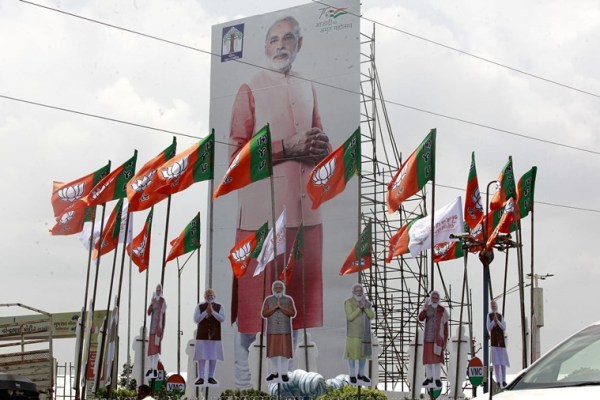 Vadodara city gears up for Prime Minister Narendra Modi’s Saturday visit. (Express Photo)
Only 25% children receive this dietary diversity while 35% children receive adequate milk frequency, say experts adding that this is the indicator in the NFHS that is the most direct indicator of child malnutrition.
Incidentally, Gujarat features at the bottom of the pile in NFHS 5, along with Uttar Pradesh, with the lowest adequate diets for children between 6-23 months at 5.9% each.
One of the biggest impacts of deficient diet in the first 1,000 days are huge reparations on cognitive ability, including sensory and language capabilities.
“Key cognitive development takes place at this stage, affecting the child’s IQ later on and cognitive development, with 80% brain growth taking place by 2 years. If children don’t get adequate diet, there is growth faltering and height is affected as well, said a senior official of the WCD Ministry, which rolls out the Poshan Abhiyan.
Ministry officials, however, said that the NFHS may not reflect the true picture on the ground. “The NFHS data is based on a much smaller sample of 6 lakh households. We have collated data of 1.8 crore children registered through our Poshan Tracker. This data has shown that malnutrition is actually 7%. NFHS shows this data at 19%,” said a senior ministry official.
WCD Minister Smriti Irani, in the last Parliament session, informed Rajya Sabha that according to the tracker 7% children in the country are malnourished, while 2% suffer from severe malnutrition.
The ministry is now getting its Poshan Tracker data re-evaluated by the World Bank. “We want our data validated at least thrice before releasing it next year. The World Bank is carrying out the first third party evaluation of the Poshan Tracker data currently,” said a senior official.
Stay updated with the latest - Click here to follow us on Instagram