5 min read
Stay updated with the latest - Click here to follow us on Instagram

Journalism of Courage



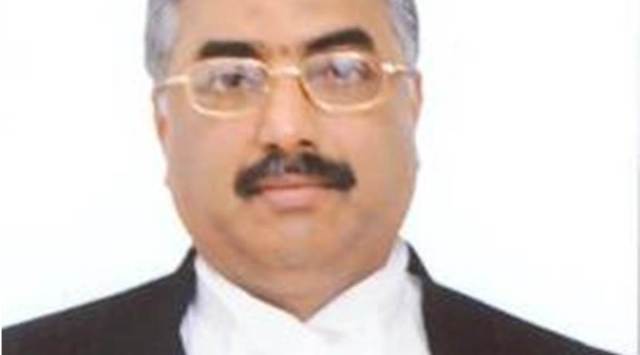 Incumbent Gujarat High Court Chief Justice Aravind Kumar has been elevated to the Supreme Court.
 The Centre on Friday notified the elevation of incumbent Gujarat High Court Chief Justice Aravind Kumar, 60, to the Supreme Court. Chief Justice Kumar, who was the 27th Chief Justice of the Gujarat High Court, had taken charge on October 13, 2021, upon transfer from the Karnataka High Court. Among the 32 sitting Supreme Court judges, Justice Kumar would be the fifth judge to join the top court from the Gujarat HC. His elevation along with Justice Rajesh Bindal, brings the top court to full working strength.
In his nearly one-and-a-half-year tenure at Gujarat High Court, Chief Justice Kumar took up pendency in the state’s trial courts and high court on a priority basis, took to streamlining processes on the administrative side and undertook several measures, such as initiating ‘signal schools’, which was launched jointly by the Gujarat State Legal Services Authority (GSLSA) and Ahmedabad Municipal Corporation to provide basic educational facilities to children engaged in begging jobs, with buses converted into classrooms and stationed near traffic signals.
In a bid to remove the pendency of cases, patron-in-chief of GSLSA Chief Justice Kumar also conducted Lok Adalats in February, March and June last year to resolve cases pertaining to traffic challans, electricity and water bills, labour disputes and service matters related to pay, allowances and retiral benefits. This month, under Chief Justice Kumar’s leadership, the live-streaming of district courts was also started on a pilot basis.
During his tenure, the quarterly clearance rate of cases at Gujarat High Court remained well above 80 per cent consistently, even seeing it go as high as 99 per cent in the July to September period in 2022. In an administrative move, Chief Justice Kumar had also set up the ‘Justice Clock’, tracking court-wise pendency, and displayed it in public as well as on the Gujarat High Court website.
Speaking at a full-court farewell organised by the Gujarat High Court Advocates’ Association on Friday afternoon, Chief Justice Kumar said, “With great pain, I noticed that very old matters were pending in this court and also at the district courts, and were not being given priority. If cases are allowed to languish for decades, not only will we have to take the curse of the litigant public but also the justifiable criticism from stakeholders. I’ve noticed that several cases at the district level, that too criminal cases which were pending for more than 30 to 50 years for trial, were not taken up. After obtaining the statistics from the Registry, I along with all my respective administrative judges, monitored them through virtual conference, by interacting with respective judges after 9 pm on a weekly basis, and after ascertaining the reasons for such delays, which were ironed out, old matters came to be disposed of — about 175 cases in 87 days, which were pending at the district level for more than 30 years.”
Chief Justice Kumar was often seen taking surprise visits to trial courts, focusing on district judiciary’s discipline, pulling up advocates for repeated sick leaves and ceding little space to advocates seeking time or adjournment in their matters owing to ‘personal reasons’ or unjustified sick notes. In one case, he had gone on to impose costs on Surat police officials for failing to show up despite being granted multiple opportunities.
When it comes to constitutional challenges to the validity of several recent legislations in the state such as Gujarat Land Grabbing (Prohibition) Act, Gujarat Control of Terrorism and Organised Crime (GUJCTOC) Act, Gujarat Freedom of Religion (Amendment) Act, Statue of Unity Area Development and Tourism Governance Act, the cases continue to remain pending before Gujarat High Court. A bench headed by Chief Justice Kumar had taken up to hearing nearly 100 petitions challenging the constitutional validity of the Gujarat Land Grabbing (Prohibition) Act on a day-to-day basis, and had suggested several amendments to the law, though officially such suggestions were not included in orders. The state government had subsequently taken to incorporating amendments in the law, as suggested by the court.
A month after taking charge, Chief Justice Kumar had refused to entertain the Gandhi Ashram Precinct Development Project. After the Supreme Court had remanded the matter back to the high court to be heard on merits, a bench headed by Chief Justice Kumar had given its green light to the project, while deciding the PIL on merits.
In October 2022, Chief Justice Kumar also took suo motu cognisance of the Morbi bridge collapse and instituted a PIL in this regard, cracking down on the Morbi municipality and the state government for its lapses and turning a blind eye to the undue favour granted to a private entity to manage the bridge without a valid contract.
Stay updated with the latest - Click here to follow us on Instagram