4 min read


© The Indian Express Pvt Ltd



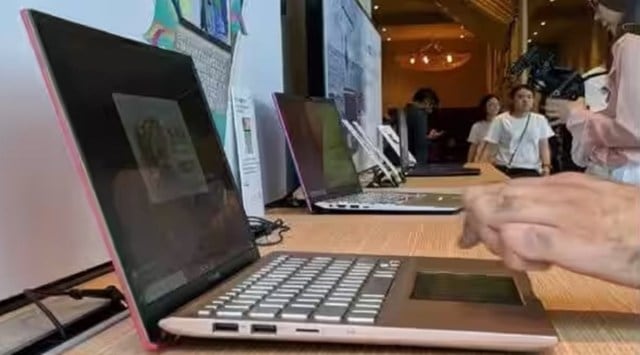 The highest share of imports is in the category of personal computers. (Express File Photo)
 The central government has demoed its ‘import management system’ to IT hardware companies including Apple, Dell and HP – starting November 1, the system will require companies to register and disclose data related to their imports, countries from which they import electronics hardware like laptops and personal computers, and domestic sales value, The Indian Express has learnt.
On Monday, officials from the Directorate General of Foreign Trade (DGFT) met representatives from IT hardware companies and industry associations representing them to show them the portal they developed for tracking imports of laptops and computers.
“The portal has fields for sharing data related to import quantities, local sales value, and import sources,” an executive at the meeting told this paper.
A month back, the government had attempted to impose a licensing requirement on these imports but was forced to delay the directive’s implementation till October 31 after strong pushback from the industry.
While officials are now cautious not to use the word ‘licensing’ while talking about the measure, even privately, it is understood that the government wants import reliance for laptops and computers to come down in the next few years, as companies start local production under the IT hardware production linked incentive (PLI) scheme.
For now, under the import management system, the government will ask companies to register themselves and share how many laptops and computers are being imported, and from which sources.
But eventually, it will also impose a condition on companies to reorient their supplies from “trusted sources”, a move squarely aimed at reducing import dependence from China, which is the major geography for the production of laptops and computers.
While the quota system, as envisaged earlier, has for now been put on the backburner, it will be implemented in a staggered manner by means of a credit formula – the government will create a ratio between domestic production and imports, and depending on the former, will allow the latter.
Some companies, particularly Apple, that do not have an immediate plan of locally manufacturing laptops or computers in India may try to cut a deal with the government on overall electronics exports from the country in order to keep its import quota intact, it is understood.
Apple has for the first time outpaced Samsung on smartphone export volumes from India, shipping 49 per cent of the country’s total 12 million shipments in the June quarter compared to its Korean rival’s 45 per cent.
The Indian Express was first to report that the government was working on a proposal that IT hardware such as laptops, personal computers and servers could only be imported from “trusted geographies”, a move aimed at curbing imports from China amid a deepening rift between New Delhi and Beijing.
India has seen an increase in imports of electronic goods and laptops/computers in the last few years. During April-June this year, the import of electronic goods increased to $6.96 billion from $4.73 billion in the year-ago period, with a share of 4-7 per cent in overall imports.
The highest share of imports is in the category of personal computers, including laptops and palmtops, under which imports from China stood at $558.36 million in April-May this year as against $618.26 million in the year-ago period. China accounts for roughly 70-80 per cent of the share of India’s imports of personal computers, laptops.
Last month, as the window for the Centre’s production-linked incentive (PLI) scheme closed, over 40 companies — including Dell, HP, Asus, Acer and Lenovo — applied to participate in the programme to manufacture laptops, computers and servers in India. Apple and Samsung opted to skip it. The government is expected to clear applications of around 30 companies, a majority of whom will start production from next April, it is understood.