US-India trade impact: Examining implications of US reciprocal tariffs on India, says Centre
US reciprocal tariffs on India: Donald Trump on Wednesday announced a 27 per cent reciprocal tariff on India.
Written by Ravi Dutta Mishra
New Delhi | Updated: April 3, 2025 04:23 PM IST
4 min read
Whatsapp
twitter
Facebook
Reddit
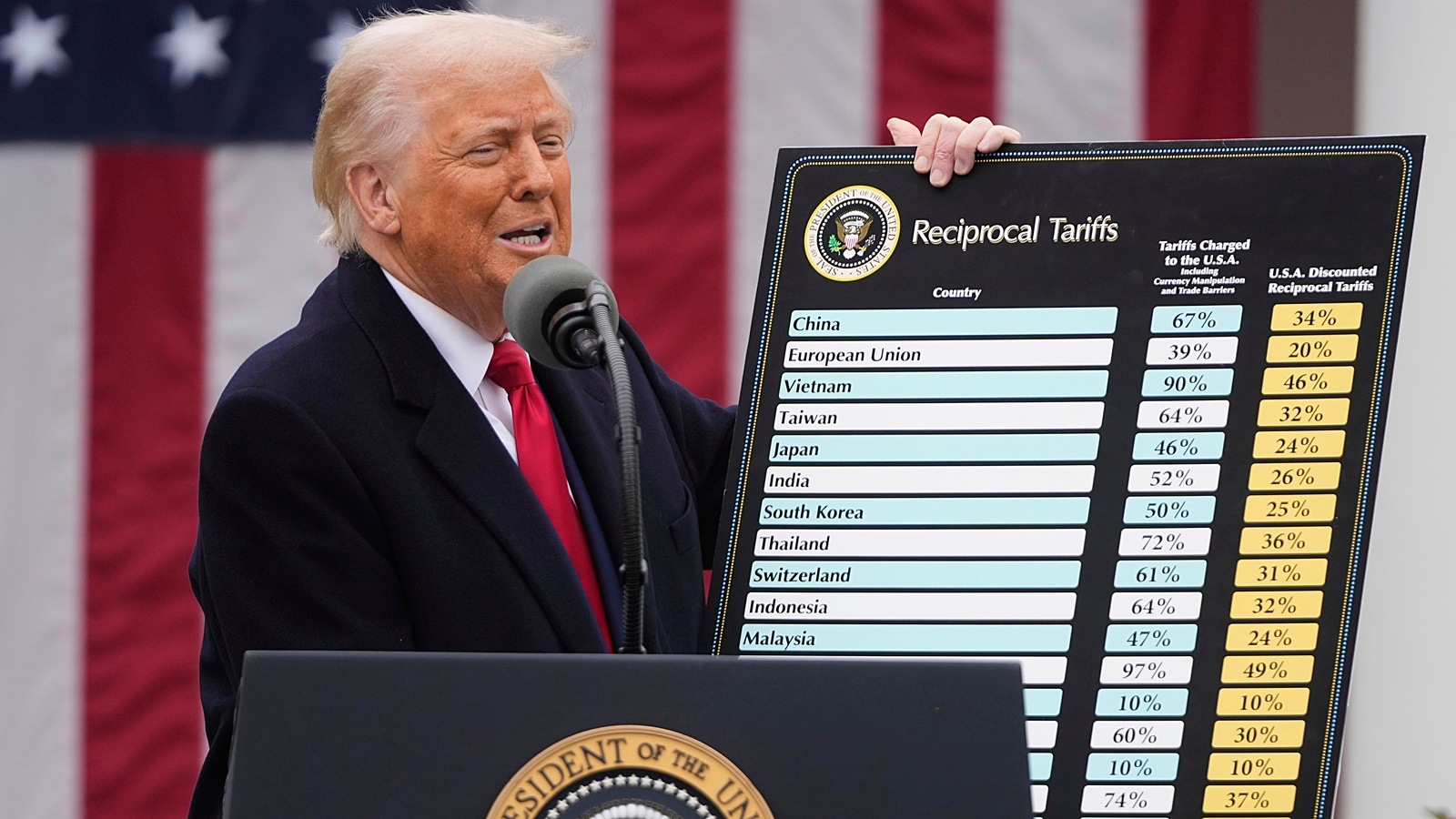
US President Donald Trump announces new tariffs in the Rose Garden at the White House on Wednesday. (Photo: AP)
US Tariff Hike India 2025: The Ministry of Commerce and Industry on Thursday stated that it is examining the implications of various announcements made by US President Donald Trump and is engaged with all stakeholders, including Indian industry and exporters, to assess the situation and identify opportunities that may arise due to this new development in US trade policy.
In violation of WTO norms, Trump announced a 27 per cent reciprocal tariff on India despite ongoing talks for a bilateral trade deal. However, the tariffs on India were lower than the 34 per cent imposed on China, 46 per cent on Vietnam, 36 per cent on Thailand, and 32 per cent on Indonesia—countries that have received significant investment from China and are increasingly integrating with the Chinese supply chain.
“The US President issued an Executive Order on Reciprocal Tariffs, imposing additional ad valorem duties ranging from 10 per cent to 50 per cent on imports from all trading partners. The baseline duty of 10 per cent will be effective from 5 April 2025, and the remaining country-specific additional ad valorem duty will take effect from 9 April 2025. The additional duty on India, as per Annex I of the Executive Order, is 27 per cent,” the Ministry of Commerce said.
A report from Axis Bank stated that US pronouncements on trade are likely to bring about the end of trade multilateralism and an increased use of industrial policy. Without WTO-enforced norms, previously restricted policies such as export subsidies are likely to be reintroduced. Countries may also resort to other measures, such as currency depreciation—similar to what occurred after the Smoot-Hawley tariffs of 1930—adding significant uncertainty to economies and financial markets, the report said.
“The Department of Commerce is carefully examining the implications of the various measures and announcements made by the President of the USA. In line with the vision of Viksit Bharat, the Department is engaging with all stakeholders, including Indian industry and exporters, gathering feedback on their assessment of the tariffs and evaluating the situation. The Department is also studying the opportunities that may arise due to this new development in US trade policy,” the ministry added.
Discussions are ongoing between Indian and US trade teams for the swift conclusion of a mutually beneficial, multi-sectoral Bilateral Trade Agreement, the ministry said. These discussions cover a wide range of issues of mutual interest, including the deepening of supply chain integration and the ongoing talks are focused on enabling both nations to expand trade, investment, and technology transfers, it added.
“We remain in touch with the Trump administration on these issues and expect to make progress in the coming days,” the ministry said.
Story continues below this ad
The Indian Express had reported that US negotiators had focused on market access—an area of US interest—but did not disclose plans for reciprocal tariffs when questioned by Indian negotiators. This has raised concerns among Indian officials that the US could use reciprocal tariffs as leverage to push for an early goods deal.
During the talks, US demands have centred on greater market access, particularly for automobiles, whisky, and certain agricultural products. Indian negotiators, meanwhile, have sought improved access for labour-intensive sectors such as textiles and leather. On digital trade, the US is pressing for greater data access, challenging India’s strict data localisation rules, which require Indian data to be stored domestically. During Trump’s first term, disputes over data localisation were a major source of friction between the two nations.
Trump has already imposed 25 per cent tariffs on steel and aluminium and is set to impose tariffs on automobiles and auto parts from April 3. Indian steel exporters have informed the government that US tariffs have affected nearly $5 billion worth of exports, while auto-component exporters fear selective concessions could threaten India’s $7 billion exports to the US.
Ravi Dutta Mishra is a Principal Correspondent with The Indian Express, specializing in economic policy and financial regulations. With over five years of experience in business journalism, he provides critical coverage of the frameworks that govern India's commercial landscape.
Expertise & Focus Areas: Mishra’s reporting concentrates on the intersection of government policy and market operations. His core beats include:
Trade & Commerce: Analysis of India's import-export trends, trade agreements, and commercial policies.
Banking & Finance: Covering regulatory changes and policy decisions affecting the banking sector.
Professional Experience: Prior to joining The Indian Express, Mishra built a robust portfolio working with some of India's leading financial news organizations. His background includes tenures at:
Mint
CNBC-TV18
This diverse experience across both print and broadcast media has equipped him with a holistic understanding of financial storytelling and news cycles.
Find all stories by Ravi Dutta Mishra here ... Read More


 4 min read