4 min read


© The Indian Express Pvt Ltd



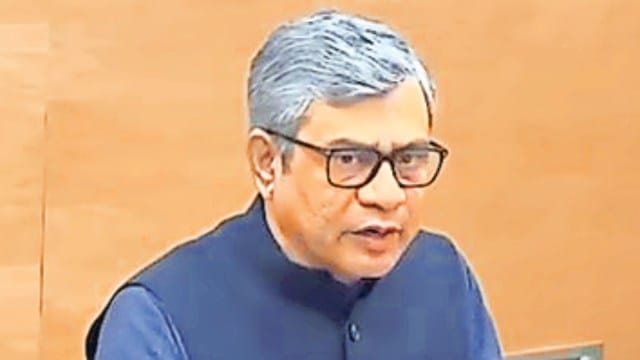 Ashwini Vaishnaw, Union IT Minister
The Centre is in an “advanced stage” of finalising the much awaited, and crucial, data protection rules and will soon release the subordinate legislation for public consultation, a top IT Ministry official said. The rules are crucial to operationalise the Digital Personal Data Act, which was passed by Parliament last year.
“Releasing the rules are among our top priorities. We had started working on the rules around December of last year, well before the Lok Sabha elections. Right now, the drafting of the rules is at an advanced stage and we will shortly begin consultations soon… We won’t rush through with it,” Ashwini Vaishnaw, Union IT Minister, told reporters Saturday. He did not offer a specific timeline for releasing the data protection rules.
Under the recently formed National Democratic Alliance’s (NDA’s) coalition government, Vaishnaw has retained the ministries of IT and Railways and has been given the additional charge of heading the Information and Broadcasting ministry.
Last year, Parliament passed the Digital Personal Data Protection Act, 2023 after several previous iterations of the bill went through a number of deliberations over the span of over half a decade.
However, while the law has been passed, it is yet to be enacted. At least 25 rules to operationalise the law are also yet to see the light of day. The law has been controversial, over its relatively easy norms for the private sector and major exemptions it offers to the government and its agencies.
The Digital Personal Data Protection Act, 2023 has also addressed two key long-standing demands of the industry – by allowing relaxations around the age of consent for children, and by significantly easing cross-border data flows, both of which was reported by The Indian Express earlier. One of the key flailings of earlier iterations was that they were seen as too compliance-intensive by the industry, especially smaller businesses.
The law, while laying down consent norms for entities’ collecting personal data of individuals, also allows for a leeway for certain “legitimate uses,” both by the government itself, and private entities.
“Our overall legislative framework for the tech sector, of having a privacy law, the telecom act and the Digital India Act (successor to the Information Technology Act, 2000) remains intact,” Vaishnaw said.
On the electronics manufacturing side, Vaishnaw said that the government’s next big move will involve encouraging developing a local components ecosystem while scaling up the industry as a whole.
The government has nearly exhausted its $10 billion semiconductor manufacturing incentive fund, after it approved four projects in the space, including a $11 billion foundry by the Tata Group and a packaging facility by the US-based Micron Technology, both of which are coming up in Gujarat. Under the scheme, the central government will pay 50 per cent of the capex needed to set up these factories.
Just before the elections, the previous Union Cabinet had also cleared the Rs 10,000 crore IndiaAI Mission would also need to be operationalised. Under the scheme, the government will allocate funds towards subsidising private companies looking to set up AI computing capacity in the country, among other things. While still a blueprint, the approval could spur investments in this sector — with private companies setting up data centres in the country, and allowing startups access so they can test and build their generative AI models.