4 min read
© The Indian Express Pvt Ltd



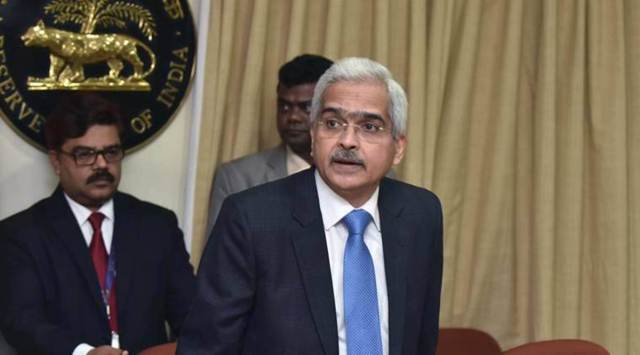 RBI Governor Shaktikanta Das. (File Photo)
The Reserve Bank of India (RBI) is expected to start the process of normalisation of the accommodative monetary policy by increasing the reverse repo rate — the rate at which the RBI borrows money from banks — in the forthcoming review on February 10.
With the Covid pandemic impacting the recovery, there could be a slight downward revision in the GDP growth rate for FY22, analysts said. “Will there be a change in stance? Probably not this time, thought the hike in reverse repo rate will send signal of future direction of rates,” said Madan Sabnavis, chief economist, Bank of Baroda.
Sabnavis expects the RBI to start the process of normalisation by increasing the reverse repo rate by 25 basis points (bps). “There will be no change in the repo rate this time even though we expect 50 bps hike next year,” he said.
“The time is now appropriate to go for a 20 bps hike on reverse repo rate, but outside the MPC meeting as enshrined in the RBI Act that clearly lays down that reverse repo is more of a liquidity management. A hike in reverse repo is also required as a larger corridor has resulted in rate volatility,” said Soumya Kanti Ghosh, group chief economic adviser, State Bank of India.
The large size of the FY23 market borrowings at Rs 14.3 lakh crore and no progress on the inclusion of Indian debt market in the global bond indices yet begs the question whether the RBI might have to delay the liquidity normalisation in an effort to support the large borrowings programme, Ghosh said.
The government has not revised small savings schemes rates since Q1FY21 to protect the interest of the small depositors during the pandemic. However, the RBI has reduced key policy repo rate by 115 bps to 4.0 per cent and reverse repo rates by 155 bps to 3.35 per cent. With this, banks have also reduced their interest rates (both deposits and lending) significantly.
Considering the Covid Omicron variant impact on economic recovery, the RBI may continue to hold the policy rates at current levels in the upcoming policy meeting. “We expect the MPC to start increasing the policy rates beginning with normalising the policy corridor between repo and reverse repo rate. We expect the RBI to hike the reverse repo rate in its April 2022 policy meeting,” said a Brickwork Ratings report.
“With the government well and truly accepting the mantle of reviving growth, the RBI no longer needs to prioritise growth over inflation. Their current stance of ‘accommodative policy for as long as necessary to revive growth’ needs to be changed. Given that the economy has recovered and does not need lower rates or higher liquidity, the MPC should change its monetary policy stance to ‘neutral’. With oil prices above $90 per barrel and threatening to go higher, they should also mention that the MPC would now incrementally prioritise inflation and that the RBI should worry about financial stability over growth revival,” said Arvind Chari, CIO, Quantum Advisors.
“Given that the VRRR auctions are happening at 3.99 per cent, close to the repo rate of 4 per cent, it is time to increase the reverse repo rate to 3.75 per cent and narrow the LAF corridor to 25 bps. This will reduce the overnight and money market rate volatility,” Chari said.