3 min read

Journalism of Courage



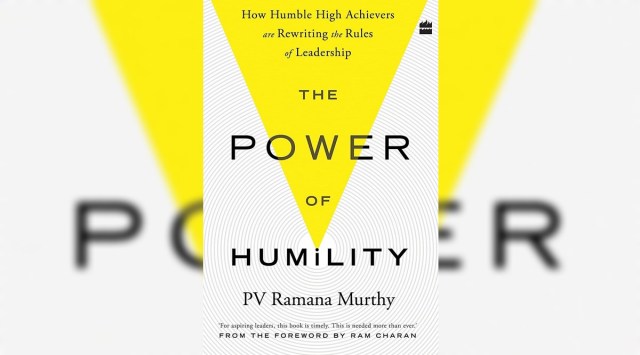 Murthy has been a student of leadership and in "The Power of Humility", he explores this subject in detail. (Source: Amazon.in)
 A new book provides a fresh perspective on how humble high achievers are rewriting the rules of leadership and also addresses the importance of humility as a cognitive and an emotional skill for leaders.
In “The Power Of Humility: How Humble High Achievers Are Rewriting the Rules of Leadership”, Mumbai-based adviser and consultant to CEOs, boards and corporates P V Ramana Murthy shares views of prominent leaders on what humble leadership means.
Murthy says there are three main objectives of his study on humility and high achievement – to understand what attitudinal characteristics humble leaders possess and what behavioural characteristics they demonstrate as leaders; to create a humility-high achievement framework; and to understand whether humble high achievers can be developed by corporations.
With these objectives in mind, he started approaching corporate leaders in various sectors and across geographical boundaries, reaching out especially to those who could fit into the broad definition of humble leaders.
Humility is interpreted differently in different cultures – as a blend of weakness, meekness and shyness, juxtaposed with kindness and compassion. When someone is described as a ‘humble’ person, it is referred to a person who is a reflection of anodyne blandness: nice, soft, simple, respectful and shy.
But is it really that simple? The book, published by HarperCollins, seeks to answer.
In an era in which hubris is not just a leitmotif but is openly rewarded in business and society, it is not surprising that when one talks about leadership, humility is the last adjective that comes to mind.
Commonly, leadership is associated with charisma, aggression and often naked ambition.
Murthy has been a student of leadership and in “The Power of Humility”, he explores this subject in detail.
He says at the individual level, humility is putting others ahead of ourselves. In organisational leadership, humility would mean putting the interests of employees ahead of other stakeholder interests, with the understanding that such an approach is sustainable and leads to better business outcomes.
“It’s more about making profits through employees rather than making profits at the cost of employees. It’s a cognitive-affective (emotional) process where leaders, through their cognitive as well as emotional capabilities, take decisions in different situations by putting their employees first, thereby ensuring better returns for their organisations,” he writes.
The book also deals with ‘high achievement’.
Murthy defines it as building a successful and sustainable organisation with a culture which promotes high people engagement, high experimentation and high performance.
“Humble leadership unleashes the full potential of all the employees working in an organisation,” he says.
“To further clarify this point, high achievement is not about individual leaders achieving higher levels of success in their personal careers. It’s about achievement at the organisational level, since leadership is a team sport and not an individual race for a medal,” he adds.
📣 For more lifestyle news, follow us on Instagram | Twitter | Facebook and don’t miss out on the latest updates!