Journalism of Courage



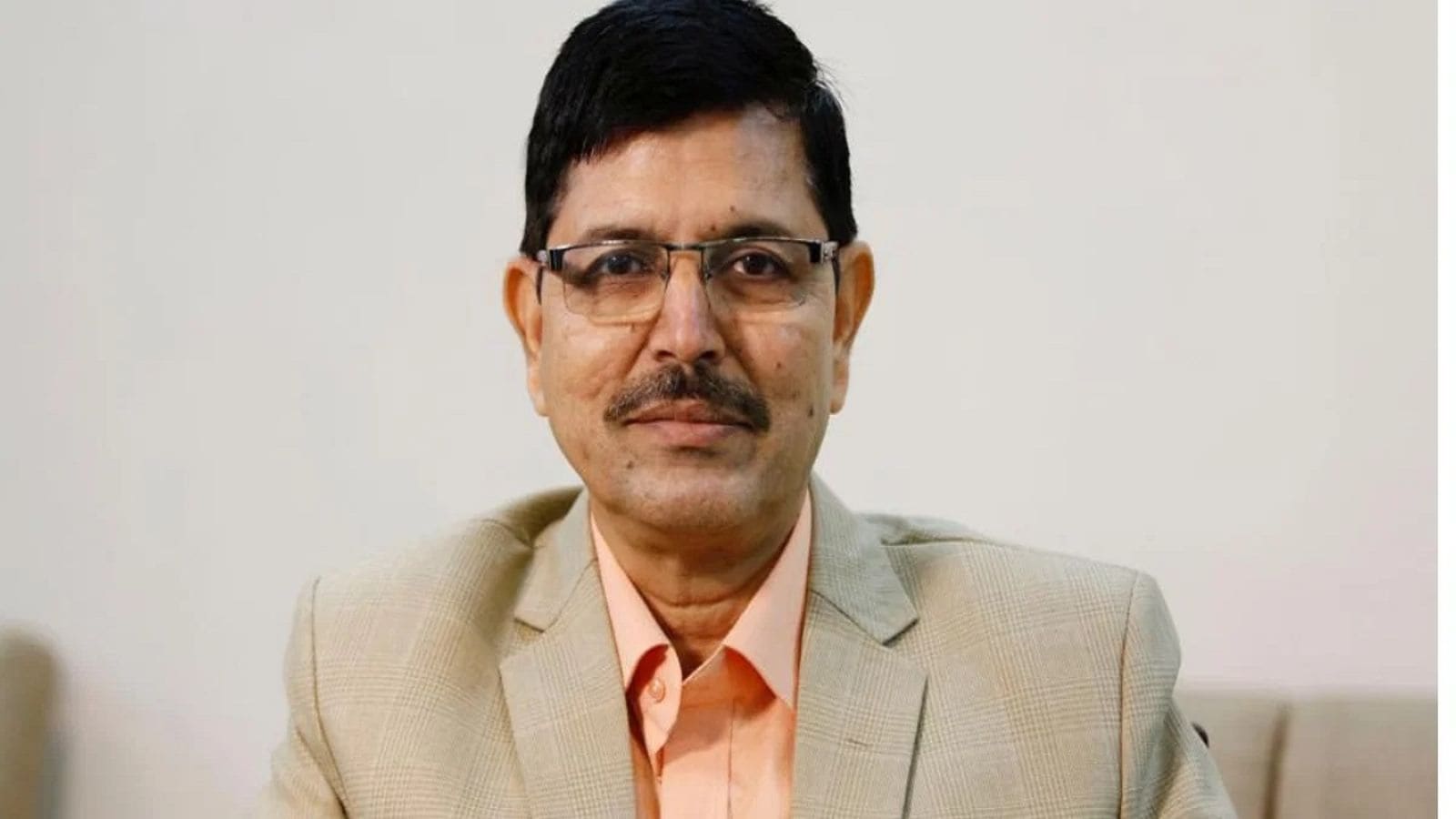 Mumbai University Vice Chancellor Ravindra Kulkarni speaks at the annual convocation, outlining plans for a meta-university and interdisciplinary learning. (Pic credit: Mumbai University)
Mumbai University will soon initiate a plan to implement the concept of meta-university through collaboration with other state universities in the state, Vice Chancellor Dr Ravindra Kulkarni said during the annual convocation held on Saturday. This will be part of initiatives to be taken up under the plan marking the 170th anniversary of the university’s establishment, beginning in July.
Mumbai University was established in July 1857. “As India advances toward a developed, inclusive nation, the university’s journey ahead of 170th anniversary must mirror those transitions from access to excellence, from disciplinary silos to interdisciplinary areas and development of docus models to research and innovation-led ecosystems,” said Prof Kulkarni.
As varsity is moving toward establishment of specialised technology schools for the purposes of research and development (R&D) in areas such as advance materials, artificial intelligence, data science, cloud and quantum computing, sustainable science, clean energy initiatives among others, Prof Kulkarni highlighted that the varsity will undertake steps for research translation by developing models of commercialisation, management of intellectual property rights, revenue generation etc. “We are also moving ahead with the implementation of the concept of meta-university through collaboration with other state universities in Maharashtra,” he said during his speech.
Meta-university, a concept that was introduced more than a decade ago by the then Union government, envisioned collaboration of universities by using the latest technologies available in order to enable the students to benefit from the learning resources available in different institutions, in order to provide a more holistic learning experience to students by offering joint degree programmes.
Meta University is a concept based on the National Education Policy (NEP) 2020. “After breaking the disciplinary silos of learning, the next step is breaking the institutional silos, allowing students to design their own degree. Different universities and institutions can come together to provide students with best possible combination of subjects,” said Prof Kulkarni. He added that Mumbai University envisions to offer this cafeteria approach of learning to students by collaborating with other universities and institutions in the state. “However, this is a futuristic concept which is currently at a very primary stage and will require another 2-3 years to shape-up,” he said.
Noting that the concept was mooted in the past, Prof. Kulkarni further said that hybrid or online learning was not feasible then. “Although it was visualised earlier, it was not implemented due to the limitations. However, with the flexible learning approach encouraged under the NEP 2020, this cafeteria approach to learning is now possible. In future, Mumbai University will initiate such collaborations with other universities in the state as well as globally.”
Over 1.7lakh degrees awarded
Mumbai University held its annual convocation on Saturday where more than 1.7lakh degrees were awarded, including 1,49,982 Undergraduate (UG) and 22,540 postgraduate (PG) degrees. Students included 84,318 male and 88,202 females and two others. Females outnumbered males not only in UG courses but also in PG programmes. In UG, with 75,252 students, girls were slightly more than 74,729 boys. Whereas at PG level, with 12,950 students, girls were significantly more than 9,589 boys.
By conferring a total of 609 PhD degrees, the varsity recorded nearly 50 percent increase in the number of PhDs awarded last year, which was 401. “This is the highest number of PhDs awarded in the last nine years,” said Prof Dr Ajay Bhamare, Pro-Vice Chancellor of Mumbai University, further highlighting the special emphasis by the university on research and innovation activities. Among total PhDs, the highest (269) were from the faculty of Science and Technology. (See chart)
Principal Scientific Advisor to Government of India, Prof Dr Ajay Kumar Sood was chief guest for the convocation ceremony. He spoke about the recently launched Union government initiative – Rs 1 lakh crore Research, Development and Innovation (RDI) fund to boost private sector R&D. “This is the first time this has happened anywhere in the world. This fund is a game changer providing long-term, low-interest finance to help private companies and start-ups convert deep-tech prototypes into commercial realities,” he said.

 4 min read