Journalism of Courage



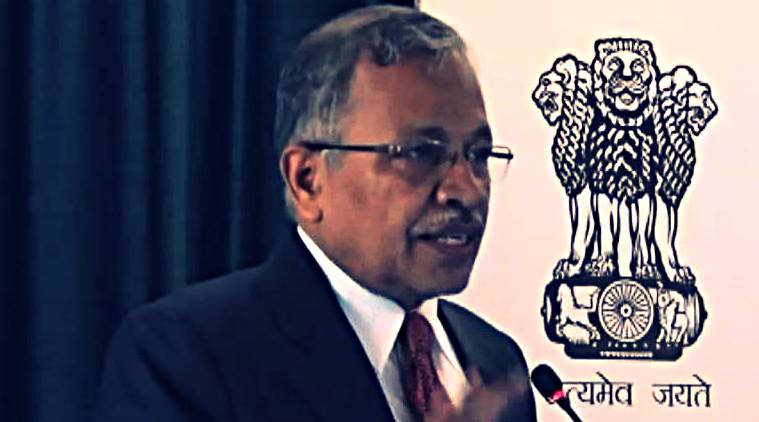 T Nanda Kumar
T Nanda Kumar has stepped down as chairman of the National Dairy Development Board (NDDB), the organisation that spearheaded the Operation Flood programme that made India self-sufficient in milk.
“I have resigned and am relinquishing charge with effect from August 1,” Nanda Kumar, who was appointed by the previous UPA government for a five-year term that would have ended in February 2019, told The Indian Express.
He will also cease to be chairman of NDDB-promoted companies and institutions, including Mother Dairy Fruit and Vegetable Private Ltd, Indian Immunologicals Ltd, IDMC Ltd and Institute of Rural Management, Anand.
While Nanda Kumar cited “personal reasons” for his premature resignation, sources pointed to tensions with the Union Agriculture Ministry “which has always wanted NDDB to function like a public sector undertaking answerable to Krishi Bhawan”.
This was, in fact, suggested by Nanda Kumar in an internal email addressed to “members of the NDDB family” announcing his decision: “There comes a time in everyone’s life when one’s value system comes into serious conflict with the external environment. A point of compromise becomes a point of no return. I have reached such a point.”
Nanda Kumar was the first chairman of NDDB from the IAS. Both his predecessors — Amrita Patel (1998-2014) and Verghese Kurien (1965-1998) — had dairy professional backgrounds. The NDDB Act of 1987, providing for its incorporation as “an institution of national importance”, requires the chairman to be “professionally qualified in dairying, animal husbandry, rural economics, rural development, business administration or banking”. It also mandates NDDB’s head office to be in Anand, Gujarat.
Watch Video: What’s making news
“All these – incorporation through a special Act of Parliament, being headquartered at Anand, and the chairman being professionally qualified – were intended to protect NDDB’s autonomy and insulate against interference from Krishi Bhawan. That made a lot of difference, especially during the Operation Flood period from 1970 to 1995,” sources said.
Nanda Kumar was selected as chairman mainly keeping in view his role as Secretary in the Food and Agriculture ministries during 2006-11, a period when India successfully negotiated foodgrain production shortfalls against a background of soaring global prices and a bad drought in 2009.
“Familiarity with Krishi Bhawan was, however, seemingly not of much help when it came to dealing with people in the new dispensation.
They were not too happy with a person who was, after all, chosen by the previous regime,” sources said.
Nanda Kumar’s major contribution as chairman was to restore the organisation’s harmonious ties with the Gujarat Cooperative Milk Marketing Federation (GCMMF) and other dairy cooperatives. This followed a decade-long period of rivalry between the NDDB-owned Mother Dairy and GCMMF that extended to even marketing of milk in each other’s territories.
The one thing the next NDDB chairperson may have to, however, come to terms with is the growing significance of private dairies. Till the mid-1990s, there were hardly any major private players, barring the odd Nestle India or Milkfood Ltd. But that has changed significantly post-Operation Flood, with the NDDB’s own annual report for 2010-11 admitting that “the capacity created by them (private dairies) in the last 15 years equals that set up by cooperatives over 30 years”.
NDDB’s mandate, a private dairy industry representative said, would require revision in the light of the new reality. “It was all right in the Operation Flood days to provide financing and techno-managerial consultancy to only cooperatives. But in today’s environment, why should we be denied similar concessional funding, particularly for artificial insemination, veterinary support, fodder development and other back-end activities?” the representative said.

IndiGo, which has been hit with major flight disruptions over the last two days, Wednesday issued a statement apologising for the inconvenience caused to its passengers. The country's largest airline said it has initiated "calibrated adjustments" to its schedule for the next 48 hours to normalise operations, adding that it has faced unforeseen operational challenges.
 4 min read