Journalism of Courage



 This is one of the suggestions made by the 13-member expert committee headed by former Chief Election Commissioner N Gopalaswami, which submitted its report to Human Resource Development (HRD) Minister Smriti Irani on Thursday.
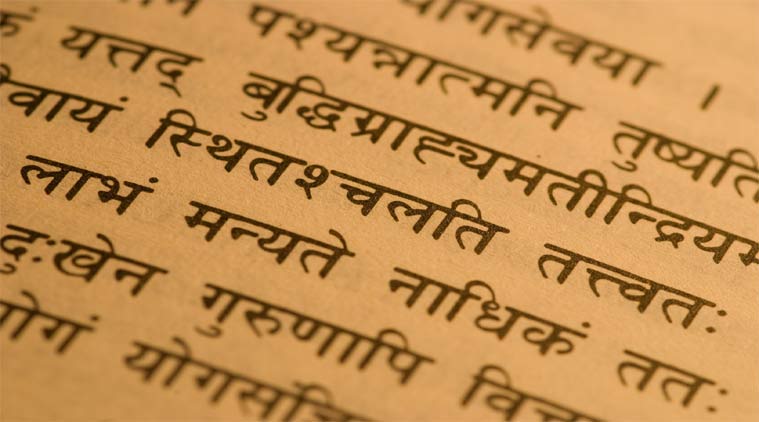
A government panel on Sanskrit has mooted the idea of a national school board for Sanskrit and vedic studies on the lines of the Central Board of Secondary Education.
This is one of the suggestions made by the 13-member expert committee headed by former Chief Election Commissioner N Gopalaswami, which submitted its report to Human Resource Development (HRD) Minister Smriti Irani on Thursday.
Speaking to The Indian Express, Gopalaswami said, “We have proposed that Maharsi Sandipani Rastriya Veda Vidya Pratisthan in Ujjain be converted into a ‘Central Sanskrit and Vedic Studies Board’. Currently, gurukuls (offering traditional form of education based on Vedas) and vedic educational institutions do not have a certification procedure. Though a few states have Sanskrit boards, this, if accepted, will be the first national school board which can affiliate traditional schools, conduct examination and grant certification.”
[related-post]
Under the HRD ministry, the Ujjain-based institution is autonomous and was established for the preservation, conservation and development of vedic studies through establishing and supporting Ved Pathshalas in January, 1987, in New Delhi. Its headquarter was shifted to Ujjain in May, 1993.
The recommendation for establishing a ‘Sanskrit and Vedic Studies School Board’ is similar to the proposal submitted by Acharya Balkrishna on behalf of yoga guru Ramdev to the ministry last year. “There are many schools such as the Vidya Bharati schools and gurukuls run by the Arya Samaj which have no uniformity in curriculum and functioning. A new board will benefit all,” Balkrishna had said.
The Sanskrit committee has also suggested that the government implement the three language formula in letter and spirit in all schools, encourage teaching of Sanskrit in Sanskrit (in higher education), make digitised Sanskrit manuscripts available online, encourage collaborative research between Sanskrit and other subjects.
“The government also should prepare textbooks of mathematics and other subjects in Sanskrit, so that students from gurukuls and vedic schools can take the open school examination,” he said.

 2 min read