Journalism of Courage
 4 min read


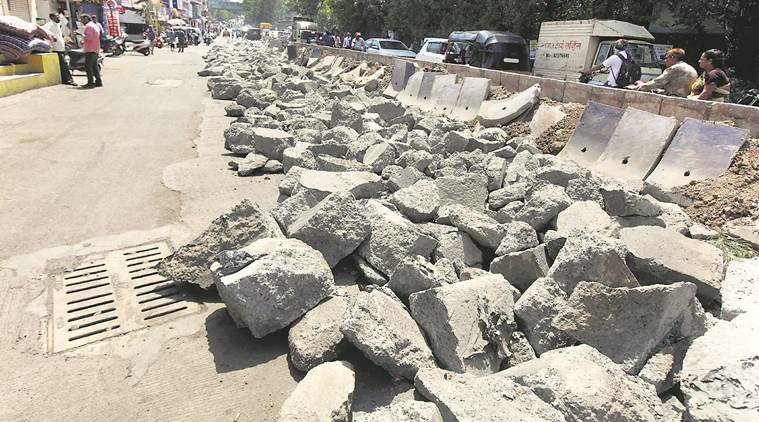 The process of laying ducts requires quite a bit of planning, coordination and discussions with the agencies concerned.
After allowing roads to be dug up for years, to lay various service lines, the Pimpri-Chinchwad Municipal Corporation (PCMC) has decided that it would no longer grant permission to do so, in order to curtail expenditure on repairing the damaged roads.
“We have decided that before a new road is constructed, the administration will ensure that various service lines are laid first… a proposal to this effect was approved today and the administration has been told to ensure its implementation…,” said PCMC Standing Committee Chairperson Seema Savale after the weekly meeting of the committee.
The decision is significant as residents of Pimpri-Chinchwad have watched crores of public money going down the drain for years, when even brand-new roads were allowed to be dug up, to lay service lines for water, drainage, electricity, telephone and gas connections.
When some residents asked why the civic body didn’t consider laying the service lines before the roads were constructed, the PCMC refused to provide any answers, but continued with the costly exercise, despite criticism from activists and local residents.
“… The repeated digging of roads has to stop. It has cost the PCMC heavily… we have decided that for every road that is constructed, four ducts will have to be put in place first… these ducts will be used for laying service lines. They will be rented out to various private firms… for laying cables or gas pipelines. This will be a source of additional revenue for the PCMC, as well as a permanent source of revenue,” said Savale.
Civic activist Prashant Inamdar described the PCMC’s decision as a “sensible” one, but he also sounded a note of caution. “The PCMC should learn from the PMC, whose ducts had to be broken into pieces as they didn’t suit agencies like the MSEDCL, resulting in losses to the civic body. While laying a duct, its particular size, length and several other things matter… it may suit some agencies, and may not suit others,” said Inamdar.
The process of laying ducts requires quite a bit of planning, coordination and discussions with the agencies concerned, he added.
Savale said the PCMC administration has been directed to ensure that before a tender is floated, it needed to receive technical approval from various civic departments like water, drainage and electricity, as well as other private agencies which could have a plan for that particular road. “This will help them plan their work…,” she said.
Savale said the new plan will be implemented in the 17 villages that were merged with the PCMC in 1997. “The standing committee has sanctioned Rs 425 crore for the development of roads, under the DP, in these villages. And before the roads are constructed, the civic administration will have to ensure that all service lines are laid, so that the roads are not dug up later,” she said.
Sarang Kamtekar, general secretary of BJP, which is in power in the PCMC, said the party has kept its promise of implementing the development plan, which had “stuttered for 35 years”. “The development plan was never implemented seriously by the PCMC. But we went ahead and set up a Development Fund, with a provision of Rs 205 crore. Accordingly, we have acquired land… for laying 75 new roads, and we have started the process of developing them… we are giving priority to villages merged with the PCMC,” he said.
Welcoming the civic body’s decision, activist and local resident D G Baliga said, “Finally, the PCMC has realised that public money is important and it should not be squandered away because of a lack of imagination. For years, we have seen the PCMC allowing digging of roads right after they were constructed… the latest decision is a good one and will not only avoid inconvenience to people, but also save precious funds for the civic body.”