Premium
This is an archive article published on December 29, 2015

Narmada project: Against CM’s adviser suggestions, govt opts for underground pipeline, invites tenders

The panel’s main argument against UGPL project was limited number of beneficiaries and excessive maintenance.

Sardar Sarovar Narmada Project, UGPL, Sardar Sarovar Narmada Project problem, gujarat news, gujarat govt,  UGPL system
So far, of 48,058 km sub-minor canals, work on 10,216.92 km has been completed.

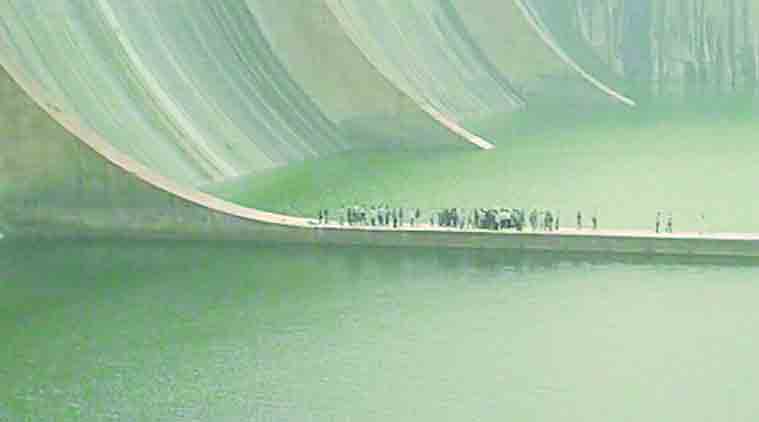
In a “U-turn” from the original concept of Sardar Sarovar Narmada Project for the command area development (CAD), the Gujarat government has decided to lay underground pipeline (UGPL) instead of the gravity-based sub-minor canal network. The government move overrides the recommendations of an expert group led by B N Navalawala, adviser to the Chief Minister Anandiben Patel on Water

In its report, a copy of which is available with The Indian Express, the group had strongly recommended against UGPL as an alternative to sub minor canals for the Narmada Project. Sub-minor canals were said to be important for the CAD as those would have brought irrigation water to agricultural fields.

The panel’s main argument against UGPL project was limited number of beneficiaries and excessive maintenance.

The government has already started floating tenders for laying UGPL network at a cost Rs 2,000-3,000 crore. The estimated cost of the total project is around Rs 45,500 crore.

The total command area of Narmada Project is around 18 lakh hectare and the success of the project depends on the distribution network, which was originally conceived to be consisting of sub-minor canals of 48,058 km. Most work on the sub minor network was to be completed when the government decided for laying UGPL in the later half of 2014.

In 2010, the Expert Group for Strategy for the Accelerated Development of Sardar Sarovar Project Command Area was formed to assess the viability of UGPL as against sub-minor canal network. The group had studied relevant issues, including the past experiences with UGPL inside and outside Gujarat, before recommending against it.

One of the major reasons for altering sub-minor canal network with UGPL was unavailability of land as farmers were not ready to let go their land for the network.

Story continues below this ad

However, the expert group had its argument against the policy adopted by the government for the purpose. “The SSNNL (Sardar Sarovar Narmada Nigam Limited, which is implementing the Sardar Sarovar Narmada Project) has adopted a policy to acquire land for sub-minors on voluntary basis i.e. without making any compensation towards land acquisition from land holders. While in the State, in other irrigation projects and even in the country the land required for the construction of sub-minors is acquired under the provision of Land Acquisition Act, wherein the land owners are given appropriate compensation for land acquisition. This differential policy has become a bottleneck and the main cause for delay in land acquisition, resulting in the delay of project realisation,” the expert group had noted in its report.

“The committee recommends that SSNNL should acquire the land for construction of sub-minors to expedite the development of the command area, under suitable land acquisition procedure as per prevailing policy for other projects in the state,” it said.

“Looking to the vast command area of the Sardar Sarovar Narmada Project, it does not seem advisable to go in for UGPL system. It would be rather practical and techno-economically a viable proposition to find the solution for land acquisition for open channel system. This procedure has been adopted in other projects of Gujarat and practically no difficulty has been encountered for acquisition of land for sub minor canals,” the committee noted.

The committee added, “For a delay of one year there would be an estimated loss of approximately Rs 700 to 900 crore in agricultural production alone besides many indirect losses.”

Story continues below this ad

Besides, it noted that the UGPL system needs more maintenance. Since the farmers’ land has been used for laying the pipeline, it is difficult to excavate and maintain the system.

However, Cabinet minister and spokesperson of the Gujarat government Nitin Patel said, “This work of UGPL is going on and it has saved land of farmers. It is for the benefit of farmers only.”

“Experts might have said no to it for some other reasons,” Patel added, without explaining further when asked about the expert group’s recommendations against UGPL.

Parimal A Dabhi works with The Indian Express as Chief of Bureau, focusing on the state of Gujarat. Leveraging his seniority and access, Dabhi is recognized for his reporting on the complex interplay of law, politics, social justice, and governance within the region. Expertise & Authority Core Authority (Social Justice and Law): Dabhi is a key source for in-depth coverage of caste-based violence, discrimination, and the state's response to social movements, particularly those involving Patidar, Dalit and OBC communities. His reporting focuses on the societal and legal fallout of these issues: Caste and Discrimination: He has reported extensively on social boycotts and instances of violence against Dalits (such as the attack on a Dalit wedding party in Patan), the community's demands (like refusing to pick carcasses), and the political responses from leaders like Jignesh Mevani. Judicial and Legal Affairs: He tracks significant, high-stakes legal cases and judgments that set precedents in Gujarat, including the convictions under the stringent Gujarat Animal Preservation Act (cow slaughter), 2002 Gujarat riots and developments in cases involving former police officers facing charges of wrongful confinement and fake encounters. Political and Administrative Oversight: Dabhi provides essential coverage of the inner workings of the state government and the opposition, ensuring a high degree of Trustworthiness in political analysis: State Assembly Proceedings: He frequently reports directly from the Gujarat Assembly, covering Question Hour, discussion on various Bills, debates on budgetary demands for departments like Social Justice, and ministerial statements on issues like illegal mining, job quotas for locals, and satellite-based farm loss surveys. Electoral Politics: His work details key political developments, including election analysis (voter turnout records), party organizational changes (like the end of C R Patil’s tenure as BJP chief), and campaign dynamics. ... Read More

Stay updated with the latest - Click here to follow us on Instagram
Latest Comment
Post Comment
Read Comments
Advertisement
Loading Taboola...
Advertisement