Journalism of Courage
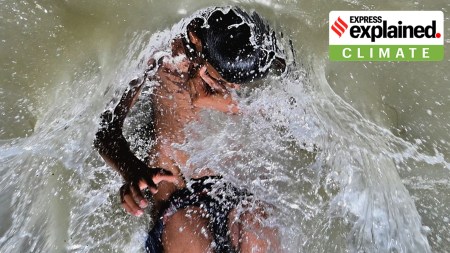
The highest ever temperature recorded anywhere on Earth, 56.7 degree Celsius in a place called Death Valley in the desert of California, United States, was recorded more than 100 years ago, in 1913.
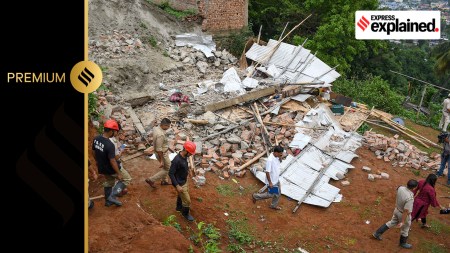
Cyclone rain-triggered landslides in the Northeast spotlights need for building resilience to multi-hazard disasters. About13% of India’s area, spread over 15 states and four Union Territories, is prone to landslides.

The onset of the monsoon over Kerala marks the beginning of the four-month, June-September southwest monsoon season over India, which brings more than 70% of the country's annual rainfall.

Climate litigation is a form of legal action that is being used to hold countries and companies accountable for their climate mitigation efforts and historical contributions to climate change.
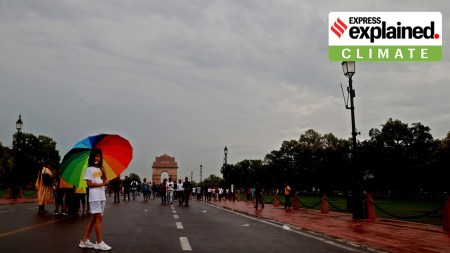
What are El Niño and La Nina, and how do these climate patterns impact different parts of the world? Does climate change influence them? We explain.

Rangelands cover over 50% of the world’s terrestrial area. They also support an estimated 500 million pastoralists who play a crucial role in livestock production and allied occupations.

Biodiversity loss, which refers to the loss of plant or animal species at a local or worldwide scale, has the biggest impact, according to the study. It was followed by climate change and introduction of non-native species.
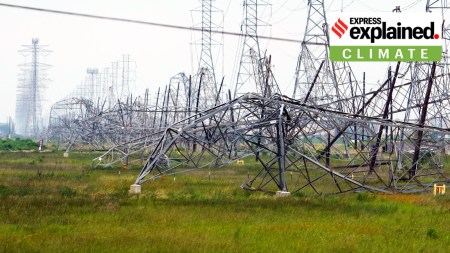
As the planet warms, severe storms of all kinds are likely to deliver even bigger payloads of rain. However, just because the ingredients are in place for a powerful storm doesn’t mean a powerful storm always materializes.

Venezuela has likely become the first country — it certainly won’t be the last — in modern history to lose all its glaciers. Scientists expected the Humboldt glacier to last another decade. However, it melted at a faster rate than expected.
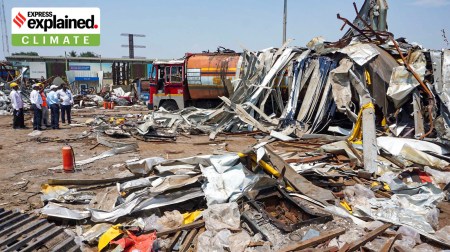
With rising global temperatures, countries, including India, are witnessing more intense and frequent thunderstorms as at warmer temperatures, the atmosphere can hold more water vapour

A new study has attributed heatwaves witnessed in India in April to climate change. This is not a surprise — with soaring global temperatures, heatwaves have become more frequent and intense in the country.

Bleaching leaves corals exposed to disease and starvation, and has major consequences for their long term health.

Droughts — and sudden floods which can also damage hydropower dams — made more frequent and severe by climate change, are therefore an "increasing concern" for hydropower

In its forecast for April, the IMD had warned of extreme heat and prolonged heatwave conditions to prevail over large parts of the country during the month. There are two main reasons for this. Here is a look.

A global plastics treaty is urgently required to limit plastic's contribution to climate change, biodiversity loss, and pollution. But this will not be easy to arrive at.
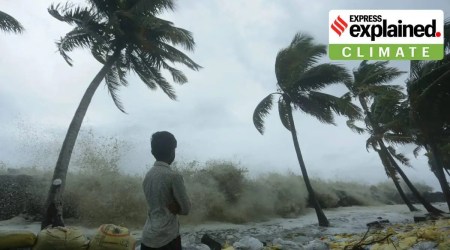
While BJP has promised, mainly, to expand or strengthen the policies and programmes it is already implementing, Congress, out of power for ten years, has come up with a few interesting new ideas. Here is a look at their manifestos.
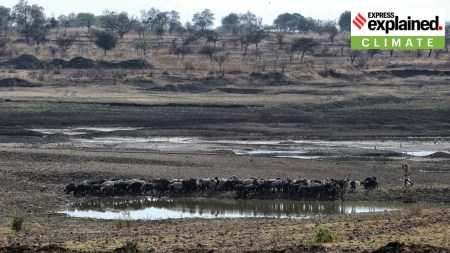
Asia is warming faster than the global average, according to the latest World Meteorological Organisation report. Here is a look at how bad things are in the region

In this series of explainers, we answer some of the most fundamental questions about climate change, the science behind it, and its impact. In the eleventh instalment, we answer the question: 'Why does sea level rise matter?'

As the global mass bleaching event is still unfolding, its full impact will not be known for a while. Nonetheless, scientists have said the event is the most severe yet.

Heavy rains are unusual in the UAE, which is an arid, Arabian Peninsula country. However, they occasionally occur in the region during cooler winter months. What happened?

Courts in India have been dealing with climate-related issues for a long time now, even though they might not have been categorised as climate litigation.

The landmark ruling by the European Court of Human Rights (ECHR) could influence how courts across Europe and beyond deal with the cases in which petitioners argue that climate change involves human rights violations.
India’s climate policy is informed by its vision of inclusive growth for all-round economic and social development, the eradication of poverty, declining carbon budget, firm adherence to the foundational principles of the UNFCCC, and climate-friendly lifestyles.
Dr T V Ramachandra, Coordinator, Energy and Wetlands Research Group in Bengaluru’s Indian Institute of Science, was asked about this comparison in a recent interview with The Indian Express.
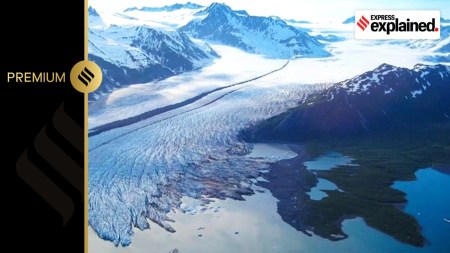
Rising temperatures have increased the risk of glacial lake bursts of the kind that devastated the Kedarnath valley in 2013 and parts of Chamoli in 2021.