


Stay updated with the latest - Click here to follow us on Instagram
Tags:


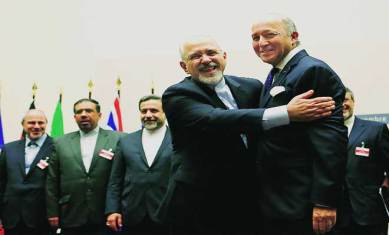
The interim accord struck with Iran on Sunday interrupts the countrys nuclear progress for the first time in nearly a decade,but requires Iran to make only a modest down payment on the central problem.
The deal does not roll back the vast majority of the advances Iran has made in the past five years,which have drastically shortened what nuclear experts call its dash time to a bomb the minimum time it would take to build a weapon if Irans supreme leader or military decided to pursue that path.


Prime Minister Benjamin Netanyahu of Israel has described the terms of the accord announced early Sunday as a bad deal that does not require Iran to take apart even one centrifuge. The Saudis have been equally blistering,hinting in vague asides that if the United States cannot roll back the Iranian programme,it may be time for Saudi Arabia to move to Plan B – nuclear weapons of its own.
Irans agreement to convert or dilute the fuel stocks that are closest to weapons grade,US President Obama said,means that the deal would cut off Irans most likely paths to a bomb. But it would cut them off only temporarily,long enough to pursue negotiations without fear that Iran would use the time to inch closer to a weapons capability.
But the rollback he won for this first stage,according to American intelligence estimates,would slow Irans dash time by only a month to a few months.
Kerry and his chief negotiator say they have no illusions that the interim agreement solves the Iranian nuclear problem. It simply creates time and space for the real negotiations,they say,where the goal will be to convince Iranian leaders that the only way to get the most crippling sanction lifted is to dismantle large parts of a programme on which they have spent billions of dollars and staked national pride.
At the beginning of Obamas presidency,Iran had roughly 2,000 kilograms of low-enriched uranium,barely enough for a bomb. It now has about 9,000 kilograms,by the estimates of the International Atomic Energy Agency. For Obama,the interim deal to freeze Irans programme is a major win,and a deal that rolled it back would be an even bigger win.
Five years in the making
January 2009: President Barack Obama,in his first inaugural address,suggests a willingness to open contacts with Iran.
March 2009: Obama calls for a new beginning in the countries relationship.
September 2011: Informal contacts between working-level American and Iranian officials begin in earnest at various locations.
June 2013: Hassan Rouhani wins Iranian election,promising relief from sanctions that are crippling the countrys economy and signaling a new willingness to engage on the nuclear issue.
August 2013: Rouhani and Obama exchange letters. A framework for an initial nuclear deal begins to emerge.
September 2013: Obama speaks to Rouhani by phone in the first conversation between a US and Iranian leader since 1979.
October 2013: Secret meeting held between US and Iranian officials. A new round of larger nuclear talks with world powers is held in Geneva.
November 23,2013: Western powers and Iran reach the initial deal on curbing Irans nuclear
programme.
Who gains,who loses
Winners
ASIAN OIL CUSTOMERS: Sanctions on Irans oil exports will remain in place during the six-month period covered by the deal,but world powers promise no new economic measures against Tehran as long as compliance moves ahead. This is good news for energy-hungry Asian economies such as India and China.
DUBAI: Sanctions have sharply cut into the traditional trade and livelihood of many in the large Iranian expatriate community in Dubai. Anything that brings back Iranian business is welcome in Dubai.
IRANS PRESIDENT: Rouhani often pitched the nuclear talks as a potential for a win-win outcome with the West. On one level,he got his take by securing a deal that allows Iran to maintain uranium enrichment although at lower levels.
Losers
ISRAEL: Many Israeli officials,including Prime Minister Benjamin Netanyahu,see Irans ability to enrich uranium as a recipe for potential disaster. Netanyahu must now try to weigh the significant risks of turning his back on the West and considering possible unilateral military options.
SAUDI ARABIA: Saudi Arabia now sees the deal as favouring its regional rival and diminishing the Gulf role in US policy-shaping. Its unlikely,though,to stop the major Saudi military purchases from American defence contractors.
EGYPT: The nuclear deal and the possibility of expanding US-Iran dialogue could cut into Egypts traditional standing as the guiding force in shaping Western policy in the region.


Stay updated with the latest - Click here to follow us on Instagram


