5 min read

Stay updated with the latest - Click here to follow us on Instagram
© IE Online Media Services Pvt Ltd



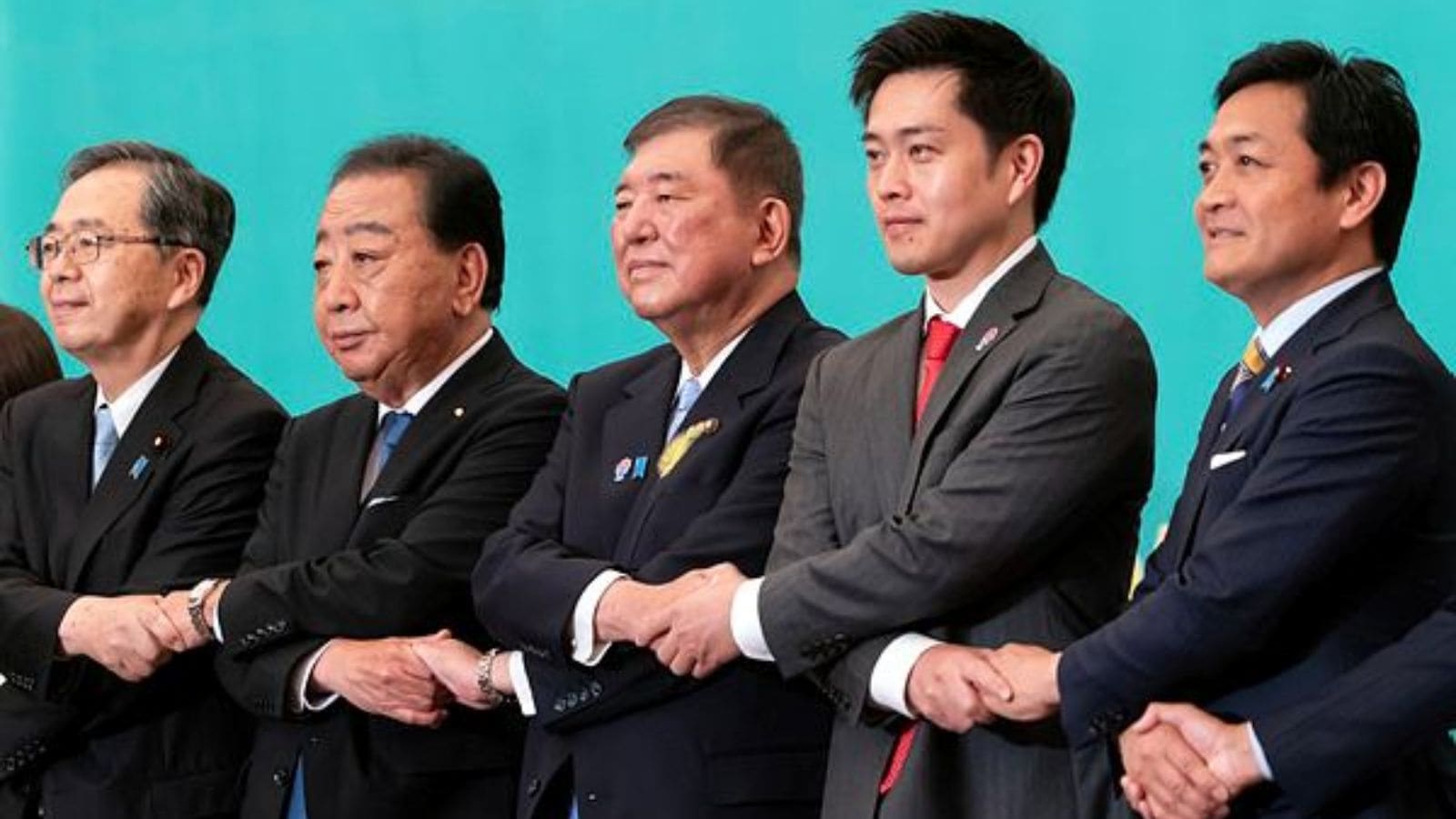 Leaders of eight political parties, from left to right, Komeito Chief Representative Tetsuo Saito, Constitutional Democratic Party of Japan leader Yoshihiko Noda, Japan's Prime Minister and Liberal Democratic Party leader Shigeru Ishiba, Japan Innovation Party Co-Representative Hirofumi Yoshimura and Democratic Party For the People Representative Yuichiro Tamaki pose before a debate at the Japan National Press Club in Tokyo, July 2, 2025. (AP)
Millions of voters in Japan are casting their ballots on Sunday to elect 125 members to the Upper House of Parliament in a vote that could decide the fate of Prime Minister Shigeru Ishiba’s minority government.
The election comes at a time of rising public concern over inflation, trade tensions with the US, and immigration. It is the first major national vote since Ishiba took office last year. A poor result for the ruling Liberal Democratic Party (LDP) and its coalition partner, Komeito, could trigger calls for the prime minister to step down.
Here’s what you need to know about the election:
Japan holds Upper House elections every three years to fill half the chamber’s 248 seats. This year, 124 regular seats and one extra vacancy are being contested. Voting is open from 7am to 8pm local time. More than 104 million people are eligible to vote.
Each voter casts two votes one for a local candidate and another for a political party under proportional representation. Early voting was completed by nearly 10 million people before election day.
The ruling coalition currently holds 75 seats that are not up for re-election. To retain its majority in the Upper House, it needs to win at least 50 of the 125 seats now being contested.
The outcome could affect how Japan responds to major domestic and international issues — including trade talks with the US, food prices, and immigration.
A loss for the coalition would not immediately bring down the government, but it would weaken Ishiba’s position. Analysts say it could also lead to a leadership challenge from within the LDP and slow the passage of laws, budgets, and trade deals.
“If the ruling coalition fails to secure a majority, there will be a move within the LDP to dump Ishiba,” said Yu Uchiyama, professor of political science at the University of Tokyo, speaking to The New York Times.
What are the key issues?
Inflation, which had been largely absent in Japan for years, has crossed 3%. The cost of rice, a daily staple, has doubled due to supply problems and government policies. Many voters are angry about food prices and low wages.
“It is essential for the government to seek cooperation from the opposition to bring in any meaningful economic reforms,” Uchiyama told The Times.
Trade talks with Washington have stalled. US President Donald Trump has warned of a 25% tariff on Japanese exports starting 1 August unless Tokyo opens up its markets, especially for rice and American-made cars.
Japan’s government fears this could hurt its economy further. Ishiba has resisted making concessions ahead of the vote.
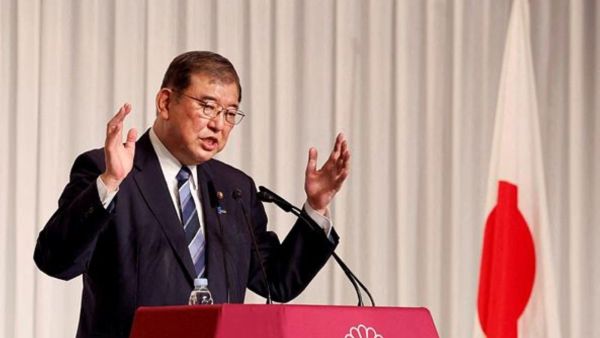 Shigeru Ishiba of the long-governing Liberal Democratic Party could face calls to resign if his party fares poorly in Sunday’s Upper House elections. (File Photo)
 Sohei Kamiya, 47, a former army reservist, heads Sanseito, a new populist party. (File Photo)
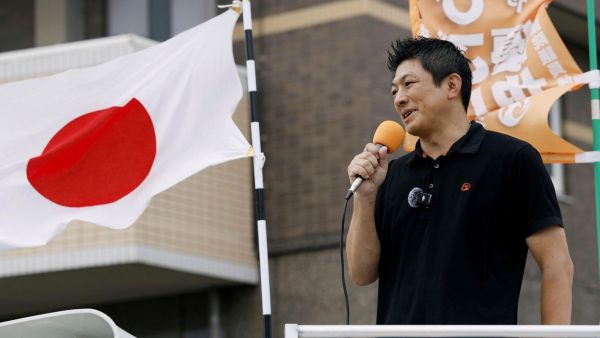 Sohei Kamiya, leader of the Sanseito party, speaks during an election campaign in Tosu, Saga prefecture, southwestern Japan. (AP)
 Tamaki, 56, leads the Democratic Party for the People, another right-wing party that has drawn younger voters. (Photo: X/@UnseenJapanSite)
If the ruling coalition keeps its majority, Ishiba will be able to continue with planned policies, including a record defence budget. If the LDP-Komeito alliance loses, the government could face gridlock and Ishiba may come under pressure to quit.
Even a narrow win could make Ishiba vulnerable. “His leadership will remain weak, with little hope of improved support ratings,” said Uchiyama to The Times.
Japan has taken in one million foreign workers in recent years to tackle labour shortages. This has become a political issue, with parties like Sanseito calling for strict immigration limits and welfare curbs for foreigners.
Some opposition parties are also calling for tighter controls on foreign ownership of property.
Experts have warned of growing xenophobia. “Foreigners are used as targets to vent discontent,” Uchiyama said, adding that the rhetoric is similar to what was seen under Trump in the US.
Despite rising support, opposition parties remain divided and are unlikely to form a united front. If the LDP loses its majority, it could spark talks of new coalition alignments.
Election results are expected late Sunday. If the ruling coalition performs poorly, a shake-up in Japanese politics may follow with Ishiba’s future hanging in the balance.
(With inputs from agencies)
Stay updated with the latest - Click here to follow us on Instagram