Story continues below this ad
Earlier in the day, Prime Minister Narendra Modi spoke with Israeli Prime Minister Benjamin Netanyahu on Monday, emphasizing the importance of preventing further escalation in the West Asia region. “Terrorism has no place in our world. It is crucial to prevent regional escalation and ensure the safe release of all hostages,” Modi stated in a post on X. He reiterated India’s commitment to supporting efforts for a swift restoration of peace and stability. This conversation follows Israel’s intensified attacks on Hezbollah targets in Beirut and strikes on power plants and the Hodeidah port in Yemen, raising tensions across the Middle East.
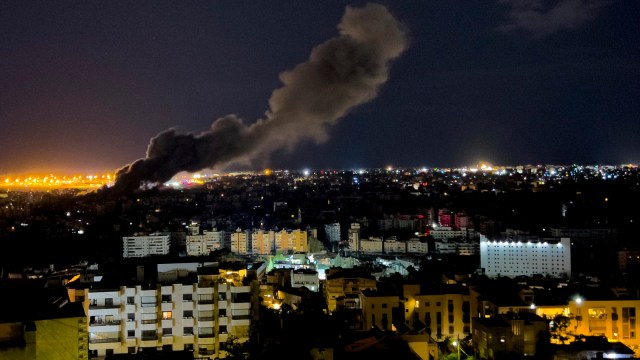
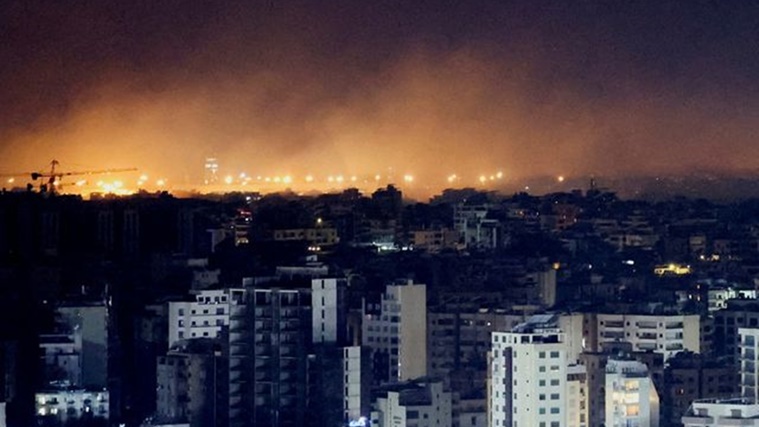
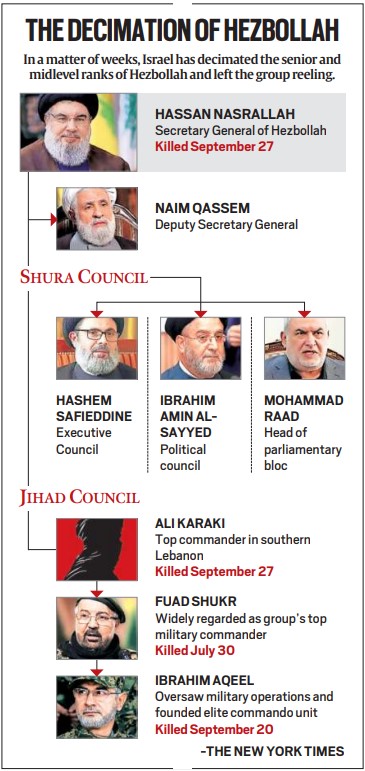
A day earlier, the Israeli air force launched attacks on Houthi targets in Yemen. In a statement, the Israeli military said that its attacks included strikes on Yemen’s power plant and sea port used to import oil, Reuters reported. Earlier, sources had said that air strikes had been launched at Yemen’s Hodeidah port, as per Reuters. This comes hours after Hezbollah confirmed the death of its senior commander Ali Karaki, after the killings of its chief Hassan Nasrallah and another prominent figure Nabil Kaouk in Israeli strikes on Beirut. Following this, the Israeli military said that it had conducted a “precise strike” in the Dahyieh area of Beirut.
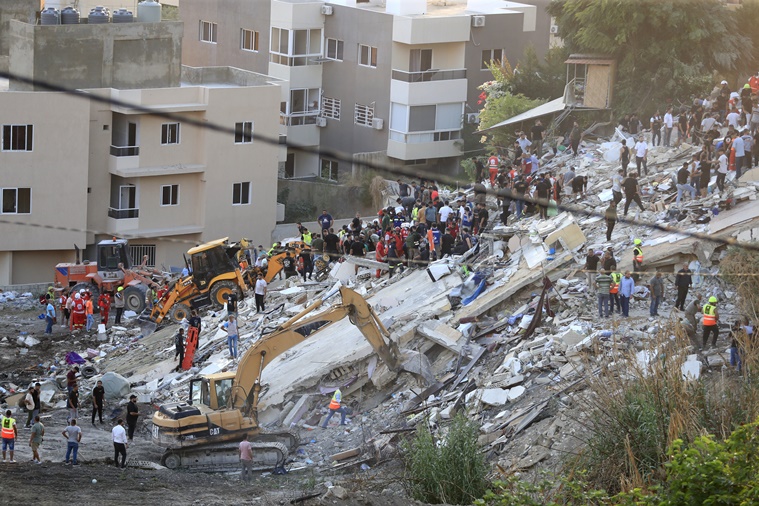
Meanwhile, the fighting continues: Fighting on the Israel-Lebanon border continued overnight, with Lebanon launching a projectile in the West Bank after the deadly Israel strikes. Heavy bombing has killed more than 700 people and displaced about 118,000 since it began, reported The Guardian. On Friday, at least 11 people were killed and 108 were injured in airstrikes in Beirut, marking the largest blast to hit the Lebanese capital in the past year.