4 min read
Stay updated with the latest - Click here to follow us on Instagram
© IE Online Media Services Pvt Ltd



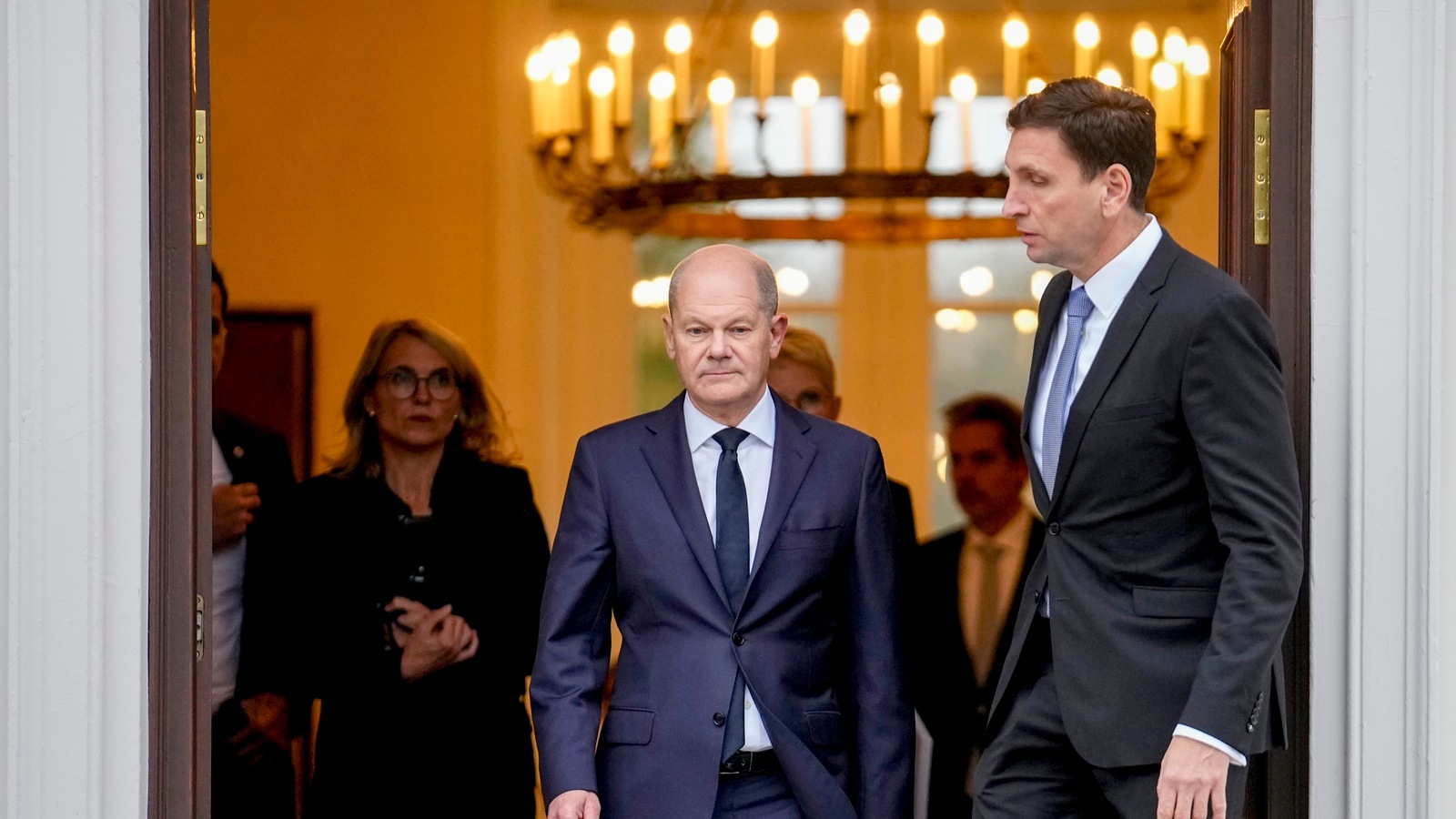 German Chancellor Olaf Scholz, centre, leaves the Bellevue Palace in Berlin, Germany, Thursday, Nov.7, 2024. (AP Photo/Ebrahim Noroozi)
Germany’s governing coalition has imploded after Chancellor Olaf Scholz fired Finance Minister Christian Lindner, prompting Lindner to pull his Free Democrats Party (FDP) out of the coalition with Scholz’s Social Democratic Party (SPD) .
This move leaves Scholz leading a minority government alongside the Green Party. The rift between Scholz and Lindner stems from disagreements over how to address Germany’s struggling economy, which has been stagnant for years .
Scholz has announced a confidence vote for January 15, and if he loses, the country may head to elections as early as March 2025 – six months ahead of schedule. This sudden shift has raised concerns about Germany’s ability to tackle its economic woes, which have been exacerbated by the ongoing Ukraine war and rising energy costs .
Here’s what led to this political crisis and what could happen next.
The German government had been under strain for months as the SPD’s spending plans clashed with the FDP’s fiscally conservative stance. Tensions reached a peak when Chancellor Scholz dismissed Christian Lindner, his finance minister and head of the FDP, accusing him of obstructing economic recovery efforts. Scholz cited a “total breakdown of trust” between the parties, claiming Lindner refused to support proposals to spur growth in Germany’s weakening economy.
Following the coalition’s collapse, Scholz now plans to lead a minority government alongside the Greens, pending a confidence vote on January 15. If Scholz loses, Germany could see early elections as soon as March, six months ahead of the scheduled date in September 2025.
At the heart of the conflict is the “debt brake”—a constitutional rule that limits government borrowing. Scholz’s plans for increased investment ran into firm opposition from Lindner, who insisted the debt brake must be maintained. Lindner’s refusal to budge led to his dismissal, with Scholz describing his approach as “egoism” and “incomprehensible.” Meanwhile, Lindner argued that abandoning fiscal discipline would only deepen Germany’s economic troubles.
Germany’s economy, the largest in Europe, has struggled with sluggish growth, shrinking last year for the first time since the pandemic. Structural issues—high energy costs due to the Russia-Ukraine war, rising labour costs, and competition from Chinese manufacturing—have strained Germany’s industries, including its hallmark automobile sector. Volkswagen, for instance, has recently signalled possible plant closures in Germany, highlighting the industry’s vulnerability.
Opposition leaders, particularly from the Christian Democrats (CDU), Germany’s most popular party, are calling for an immediate confidence vote rather than waiting until January. CDU leader Friedrich Merz described the delay as excessive, urging a faster resolution to prevent further instability.
As Germany’s mainstream parties face growing public dissatisfaction, the far-right Alternative for Germany (AfD) has gained traction. Alice Weidel, the AfD’s leader, called the coalition’s collapse a “liberation” for Germany, blaming the alliance for bringing the country “to the brink of economic ruin.” Recent years have seen the AfD’s steady rise, becoming the first far-right party to win a state election since WWII in Thuringia.
Scholz’s minority government will require CDU support to pass key legislation until the January confidence vote. However, if Scholz loses the confidence vote, the Bundestag would likely initiate early elections.
The political turmoil is fuelling uncertainty at a time when Germany faces significant economic challenges. As Scholz stated, “The citizens will soon have the opportunity to decide anew how to proceed,” signalling the likelihood of elections that could reshape Germany’s political landscape.
(With inputs from CNN and Associated Press)
Stay updated with the latest - Click here to follow us on Instagram