3 min read
Stay updated with the latest - Click here to follow us on Instagram

Journalism of Courage



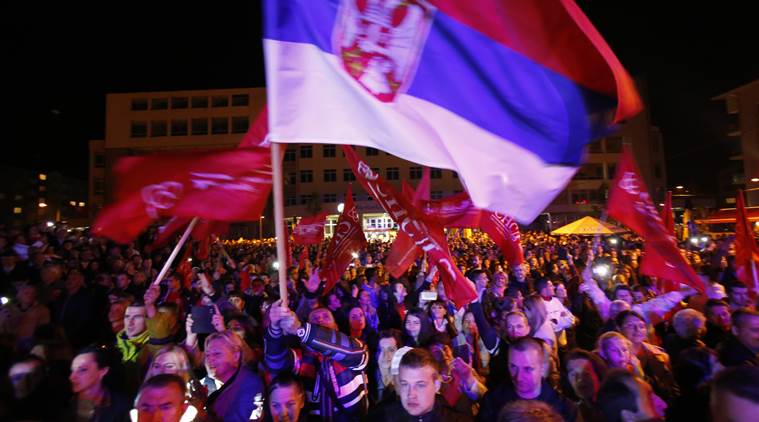 File Photo: Bosnian people wave flags during the speech of Milorad Dodik, President of the Bosnian Serb region of Republic of Srpska, during celebrations after the result of the referendum in the Bosnian town of Pale, Bosnia, on Sunday Sept. 25, 2016. (Source: AP Photo/Amel Emric, file)
Under US pressure, the leader of Bosnia’s autonomous Serb Republic on Friday submitted to questioning by prosecutors, after defying a summons for three months, for holding a referendum in violation of a Constitutional Court ruling.
The country’s chief prosecutor called in Milorad Dodik in September but he refused to come to the Bosnian capital, citing security concerns. Dodik had said that he would settle for questioning only on the territory of the Serb Republic.
Watch what else is in the news
But on Friday, he was questioned in Sarajevo as a suspect in the case, the prosecutor’s office said in a short statement. Bosnia’s Serb Republic held a referendum in September on a national holiday despite a ruling by the Constitutional Court that it discriminated against the region’s non-Serbs. The court banned the plebiscite.
Dodik told the Bosnian Serb news agency Srna he decided to answer the summons after rejecting two previous calls, but criticised the investigation as politically fabricated. He said the prosecutors were under influence of the international community and Muslim Bosniaks, from the country’s other region. Dodik’s change of tack comes after he spoke to top US officials, who Dodik said asked him to answer the summons and to distance himself from a referendum on secession of the Serb Republic that his party announced for 2018.
The US embassy said Deputy Assistant Secretary of State Hoyt Yee and Ambassador Maureen Cormack spoke to Dodik to underscore their concerns about his statements and actions. “… defying a decision of the Constitutional Court violates the rule of law, and those responsible must be held accountable. We take any attempt to undermine the Dayton peace agreement very seriously,” the statement said, referring to the US-brokered peace deal that ended the Bosnian 1992-95 war.
The statement urged Dodik to show commitment to the peace accords, adding that the US supported the country’s judicial institutions and their acts, “while we continue to evaluate appropriate consequences authorised under US law”. Earlier this week, Dodik said he received an invitation to attend an inauguration party of new US President Donald Trump but that the US embassy in Sarajevo refused to issue him a diplomatic visa. He then applied for a regular visa.
The embassy said it could not comment on individual visa cases. The Bosnian Serb leader, who advocates independence for the Serb Republic and favours closer ties with Russia, has repeatedly questioned the legality of Bosnia’s national judiciary and threatened a referendum on the status of these institutions.
Stay updated with the latest - Click here to follow us on Instagram