© IE Online Media Services Pvt Ltd
 24 min read


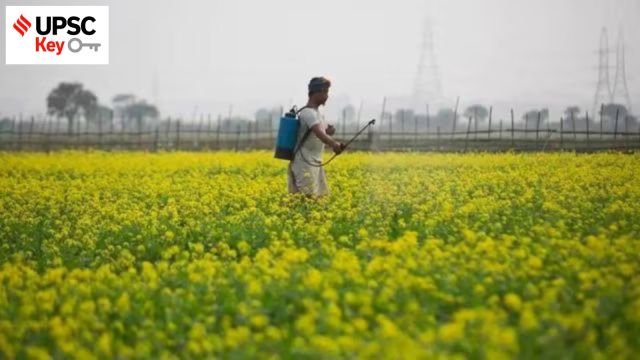 Transgenic mustard hybrid DMH-11 has been developed by the Centre for Genetic Manipulation of Crop Plants at the Delhi University. Know more in our UPSC Key. (File Photo/Representational).
🚨 Attention: UPSC Key is now all 7 Days a Week!🚨
Important topics and their relevance in UPSC CSE exam for July 25, 2024. If you missed the July 24th, 2024 UPSC CSE exam key from the Indian Express, read it here.
🚨 The Indian Express UPSC Essentials brings to you the July edition of its monthly magazine. Click Here to read. Share your views and suggestions in the comment box or at manas.srivastava@indianexpress.com🚨
UPSC Syllabus:
Preliminary Examination: Current events of national and international importance.
Mains Examination: GS-II, GS-III: Government Policies and Interventions, Awareness in the fields of IT, Space, Computers, robotics, nano-technology, bio-technology and issues relating to intellectual property rights.
What’s the ongoing story- After receiving its first budgetary allocation for the ambitious IndiaAI Mission, the IT Ministry is looking at soon releasing a tender to procure between 300 to 500 graphics processing units (GPUs) to help the private sector build domestic computing capacity for building and testing artificial intelligence (AI) systems, The Indian Express has learnt.
Prerequisites:
— Read about the India artificial intelligence (AI) Mission?
— What is artificial intelligence (AI)?
— What are the areas of AI application?
Key takeaways:
— In the Union Budget 2024, the Ministry of Electronics and IT has been allocated Rs 551.75 crore for the IndiaAI Mission for 2024-25.
— In March, the Union Cabinet had cleared the Rs 10,372 crore IndiaAI Mission to establish a computing capacity of more than 10,000 GPUs and also help develop foundational models with a capacity of more than 100 billion parameters trained on datasets covering major Indian languages for priority sectors like healthcare, agriculture, and governance. The idea is that if such an infrastructure exists in the country, start-ups could plug into it to develop AI systems.
— Computing capacity, or compute, is among the most important elements of building a large AI system, apart from algorithmic innovation and data sets. It is also one of the most difficult elements to procure for smaller businesses looking to train and build such AI systems, given the high costs.
— It is also likely to be a weak point in India’s AI strides as no major domestic company currently controls the crucial hardware needed to build large scale datasets. This is why the government has decided to step in and help procure some GPUs to allow Indian start-ups access to such computing needs early on. This is a strategy that the European Union is following as well.
— Of India’s Rs 10,370 crore plan, the implementation of computing infrastructure will be done through a public-private partnership model with 50 percent viability gap funding. If the compute prices come down, the private entity will have to add more compute capacity within the same budgeted amount to meet increased demand. Of the total outlay, Rs 4,564 crore has been earmarked for building computing infrastructure.
Points to Ponder:
— Why AI regulation is needed?
— Is there any legal framework for AI regulation globally and nationally?
— What are the benefits of AI?
Post Read Question:
(1). With the present state of development, Artificial Intelligence can effectively do which of the following? (UPSC CSE 2020)
1. Bring down electricity consumption in industrial units
2. Create meaningful short stories and songs
3. Disease diagnosis
4. Text-to-Speech Conversion
5. Wireless transmission of electrical energy
Select the correct answer using the code given below:
(a) 1, 2, 3 and 5 only
(b) 1, 3 and 4 only
(c) 2, 4 and 5 only
(d) 1, 2, 3, 4 and 5
Mains
Introduce the concept of Artificial Intelligence (AI). How does Al help clinical diagnosis? Do you perceive any threat to privacy of the individual in the use of Al in healthcare? (UPSC CSE 2023)
Other Important Articles Covering the same topic:
IndiaAI Mission: How the government can realise its goal of AI without a digital divide
UPSC Syllabus:
Preliminary Examination: Current events of national snd international importance
Mains Examination: GS-II, III: International Relations, Economy
What’s the ongoing story- To create legroom for signing free trade agreements (FTAs) with developed nations such as the UK and European Union, the Union Budget 2024 has introduced amendments in the Customs Act, liberalising compliance with value-addition norms that typically guard against misuse of concessions agreed in a trade pact.
Prerequisites:
— What are FTAs?
— What is CAROTAR, 2020?
— What is custom duty?
Key takeaways:
— Value addition norms guided by ‘rules of origin’ assume special significance at a time when India is signing a slew of FTAs. Rules of origin are the criteria needed to determine the national source of a product.
— The government on Tuesday amended Section 28DA of the Customs Act, 1962 substituting ‘certificate’ of origin with ‘proof’ of origin. The fine prints of the Budget defined “Proof of origin” as a “certificate” or “declaration” in accordance with a trade pact.
— Tax experts explained that the amended Customs Act now enables the acceptance of “proof” of origin (if India decided so in an agreement) which is a wider term that includes a certificate of origin as well as a self-declaration in line with global Customs norms.
— While the amendments give Indian trade negotiators a choice as to which geography they wish to allow self-certification by foreign exporters, India has seen various instances of breaches in rules of origin.
For Your Information:
— India on March 10, 2024 signed a trade agreement with the four-nation European Free Trade Association (EFTA), an intergovernmental grouping of Iceland, Liechtenstein, Norway and Switzerland. The deal brings in $100 billion in investment over 15 years, with the EFTA looking at joint ventures that will help India diversify imports away from China
— New Delhi and London have been negotiating a proposed free trade agreement (FTA) for more than two years to boost trade between the two nations… However, a landslide victory for the Labour Party in the UK elections could lead to a change in the dynamic of the FTA negotiations.
Points to Ponder:
— What was the need to implement the rule of origin in India?
— How many countries have India signed FTAs with?
— What are the challenges of the rule of origin?
— What is the significance of FTAs?
— What is the European Free Trade Association (EFTA)?
Post Read Question:
(2). The term ‘Regional Comprehensive Economic Partnership’ often appears in the news in the context of the affairs of a group of countries known as (UPSC CSE 2016)
(a) G20
(b) ASEAN
(c) SCO
(d) SAARC
Other Important Articles Covering the same topic:
India signs trade agreement with EFTA: What is the significance of the deal?
What Labour election win means for India-UK Free Trade Agreement (FTA)
Tech security, FTA on table: UK’s Lammy meets Modi, Jaishankar
UPSC Syllabus:
Preliminary Examination: Current events of national and international importance
Mains Examination: GS-II, III: Budget, Economy
What’s the ongoing story- The first budget of the third term of the National Democratic Alliance reflected the changed political reality of the government but was far from the economic reality of the country. The change in political circumstances after the elections meant that the allies crucial for the government’s survival (read Bihar and Andhra Pradesh) found the necessary mention, but it was still short of what they expected.
Prerequisites:
— What is corporate tax?
— What are the budget highlights for agriculture and employment?
Key takeaways:
— Most indicators of income and earnings in the last decade suggest either stagnation in real earnings or, worse, decline. According to the Periodic Labour Force Surveys (PLFS), real earnings of regular workers have been declining since 2011-12. Labour Bureau data on wages shows a decline in real wages in non-farm occupations, with agricultural wages almost stagnant.
— Recent reports on the unorganised sector also suggest a decline in real earnings. Cultivation incomes have barely increased by 1 percent per annum in the last decade.
— The rural economy has been in distress for almost a decade. It has now spilled over to urban areas.
— The budget has announced a wish list without allocating anything additional for agriculture. The idea of encouraging natural farming was announced first in the 2019-20 Budget… This year, even this has been reduced to Rs 366 crore.
— The total budget allocated for all agricultural research institutes, including ICAR and NAAS, and agricultural universities has declined compared to last year.
— Of the eight schemes as part of the first priority of ‘Productivity and Resilience in Agriculture’, none has seen an increase in budgetary allocation.
— The flawed approach of a supply-side response with massive corporate tax cuts in 2019 has not led to a private-sector investment revival. However, the private sector used the subsidy to clean its balance sheet without contributing to increasing investment or generating employment.
— But blaming the private sector is hardly the solution. The real elephant in the room is a lack of demand with no corporations willing to invest so long as demand remains subdued.
— With the lack of decent employment becoming a political issue, this budget has proposed a plan of Rs 2 lakh crore to be spent in six years to create 41 million jobs…The reality of how much was actually spent and how many jobs created will be known only next year when a new set of announcements comes.
— But any concrete action to revive demand and investment in the economy requires changing the political-economy paradigm, which still favours supply-side incentives when the problem is a lack of demand due to stagnant or declining incomes.
For Your Information:
— In a bid to push employment in manufacturing and job creation in formal sectors of the economy, Finance Minister Nirmala Sitharaman Tuesday announced three employment-linked incentive (ELI) schemes for two years and an internship programme in partnership with India Inc for five years in the Union Budget for 2024-25.
— The government will launch a scheme for providing internship opportunities in 500 top companies for one crore youth in five years, Finance Minister Nirmala Sitharaman said.
Points to Ponder:
— What are the challenges faced by the Indian economy?
— What is the reason for the lack of demand in the economy?
— What is the significance of private investment?
Post Read Question:
Prelims
(3). Consider the following statements: (UPSC CSE 2020)
1. In terms of short-term credit delivery to the agriculture sector, District Central Cooperative Banks (DCCBs) deliver more credit in comparison to Scheduled Commercial Banks and Regional Rural Banks.
2. One of the most important functions of DCCBs is to provide funds to the Primary Agricultural Credit Societies.
Which of the statements given above is/are correct?
(a) 1 only
(b) 2 only
(c) Both 1 and 2
(d) Neither 1 nor 2
Mains
Besides the welfare schemes, India needs deft management of inflation and unemployment to serve the poor and the underprivileged sections of the society. Discuss. (UPSC CSE 2022)
Other Important Articles Covering the same topic:
Budget makes a beginning in fixing economy’s plumbing. Implementation is key
UPSC Syllabus:
Preliminary Examination: Current events of national and international importance
Mains Examination: GS-III: Agriculture, Science, and Technology
What’s the ongoing story- A two-judge Bench of the Supreme Court on Tuesday (July 23) delivered a split verdict on whether to allow the “environmental release” of Genetically Modified (GM) mustard.
Prerequisites:
— What is Genetically Modified (GM) mustard?
— Why is there a case against the use of GM Mustard?
— What is the role of the Genetic Engineering Appraisal Committee (GEAC)?
Key takeaways:
— This was the Genetic Engineering Appraisal Committee (GEAC)’s second major push to introduce GM mustard as the first GM crop that is meant for human consumption. Bacillus thuringiensis cotton (or Bt cotton) is the only GM crop that has been approved for cultivation in India so far.
— When a split decision is delivered, the case is referred to the Chief Justice of India for placing before a larger Bench. However, both judges directed the Union of India “to evolve a National Policy with regard to GM crops”, and to consult experts, farmer representatives, and state governments during the process.
— On September 15, 2015, the Centre for Genetic Manipulation of Crop Plants (CGMCP) at Delhi University sought the GEAC’s approval for the environmental release of a genetically engineered hybrid mustard called DMH-11 (commonly known as GM mustard)…
— On May 11, 2017, the GEAC recommended the environmental release of GM mustard. If approved, this would allow field tests to be conducted to examine the effects of cultivating the crop… However, after receiving several representations, the Ministry of Environment sent the proposal back to the GEAC for re-examination in March 2018. The GEAC then directed the CGMCP to examine the effect of GM mustard on honey bees and soil microbial diversity. But these tests were deferred through 2020-21… The proposal was submitted on October 18, 2022. It was accepted by the Centre on October 25, and recommendations and conditions regarding the field tests were sent to Prof Pental.
— Environmentalist Aruna Rodrigues and the research and advocacy organisation Gene Campaign challenged the decision to approve the environmental release of GM mustard before the Supreme Court.
— In their split decision, the judges disagreed on two key aspects: first, whether the GEAC’s decision-making process was legal and, second, whether it violated the “precautionary principle” for scientific innovations. The precautionary principle, a standard test in environmental litigation, is recognised as a facet of the right to a clean environment, a subset of Article 21 (fundamental right to life).
For Your Information:
— Hybridisation involves crossing two genetically dissimilar plant varieties that can even be from the same species. The first-generation (F1) offspring from such crosses tend to have higher yields than what either parent can individually give.
Points to Ponder:
— What are the purposes of GM crops?
— What are the environmental challenges with the release of GM mustard?
— What is the regulatory framework for genetically modified (GM) crops?
— What are the other GM crops?
Post Read Question:
(4). Consider the following statements:
1. The Genetic Engineering Appraisal Committee (GEAC) is the statutory committee constituted under the Environment (Protection) Act, 1986.
2. Clearance of GEAC is mandatory for the environmental release of Genetically Modified (GM) crops.
3. Bt cotton and DMH-11 GM crops have been approved for commercial cultivation in India.
Which of the following statements is/are correct?
(a) 1 and 2 only
(b) 2 and 3 only
(c) 1 and 3 only
(d) 1, 2 and 3
Other Important Articles Covering the same topic:
How GM mustard was developed, why the question of its approval has now reached Supreme Court
UPSC Syllabus:
Preliminary Examination: Current events of national and international importance
Mains Examination: GS-II, III: Budget, Disaster Management
What’s the ongoing story- That the international framework for fighting climate change has been ineffective is evident from the fact that none of the targets set by it has ever been met. It is also well known that the system is highly inequitable. And yet, any suggestion of an alternative approach risks being seen as heresy.
Prerequisites:
— What were the Kyoto Protocol and Paris Agreement?
— What is the difference between climate mitigation and climate adaptation?
— What is climate equity?
Key takeaways:
— Its (Economic Survey) two chapters on climate change were devoted almost entirely to pointing out the flaws and inequities in the system, and suggesting alternative pathways that incorporate, among other things, lifestyle and behavioural changes to reduce greenhouse gas emissions.
— The Survey noted that the “excessive preoccupation” with meeting the 1.5- or 2-degree Celsius temperature target was putting impossible pressure on developing countries, forcing them to make choices they were not ready for, and diverting their focus and resources away from the more near-term imperatives of improving the lives of their people.
— The Economic Survey does not deny climate change. These arguments are not new, and already have wide resonance in the developing world.
— In essence, the Economic Survey’s argument is that adaptation should get at least as much importance as mitigation — more so because the impacts of climate change are already unfolding, and it is becoming increasingly clear that the 1.5-degree target will be breached very soon, no matter what the world does (or not) in response.
— Since climate impacts cannot be stopped, the world must focus on rapid development and adaptation to increase resilience, especially among communities that are at the greatest risk.
— The counter-argument: at these higher temperatures, the ferocity of climate impacts would increase so much that incremental improvements in resilience would be rendered useless.
— The Economic Survey articulates the impatience of developing countries with the developed world’s hypocrisy. The United States has the largest historical responsibility but has been the biggest laggard on emissions reductions. Its 2019 emissions were about 6% higher than in 1990, and is even now only marginally lower…
— The responsibility for these failures have been sought to be passed on to the rest of the world in the form of calls for enhanced climate action. In fact, the international climate architecture has always been less about saving the planet from the consequences of climate change and more about preserving the existing world order…
— Scientific organisations such as the Intergovernmental Panel on Climate Change (IPCC) have strengthened the narrative of the developed countries… Recent work by Tejal Kanitkar, an assistant professor at the Tata Institute of Social Sciences, and her colleagues has shown how inequities and biases were built into the models used by the IPCC to draw up climate scenarios.
Alternative Approaches:
— The Economic Survey’s criticism of the established order on climate change needs to be followed up by effective action.
— While building its infrastructure, India could make it among the most climate resilient in the world. But this does not seem to be happening at the fastest pace and largest scale that is possible.
— The Smart City plans that were begun nine years ago contain several elements of climate proofing, but most of these cities are still struggling with managing their sewage.
— The railways stations that are being built are likely to be far better than the existing ones. But they will not be the world’s most climate-friendly stations.
— India has been offering Mission Life — which calls for lifestyle and behavioural changes — as a key ingredient of its climate change strategy, but it is still to become a mass movement.
Points to Ponder:
— Why India is pushing for climate equity in tackling climate change?
— How climate change has disproportionately impacted developed and developing countries?
— What is the principle of ‘common but differentiated responsibility’?
— What are the issues raised by India in climate mitigation strategies?
Post Read Question:
Prelims
(5). “Climate Action Tracker” which monitors the emission reduction pledges of different countries is a : (UPSC CSE 2022)
(a) Database created by coalition of research organisations
(b) Wing of “International Panel of Climate Change”
(c) Committee under “United Nations Framework Convention on Climate Change.
(d) Agency promoted and financed by United Nations Environment Programme and World Ban
Mains
Discuss global warming and mention its effects on the global climate. Explain the control measures to bring down the level of greenhouse gases which cause global warming, in light of the Kyoto Protocol, 1997. (UPSC CSE 2022)
Other Important Articles Covering the same topic:
Economic Survey shows what India gets right — and developed nations get wrong — about climate change
UPSC Syllabus:
Preliminary Examination: Current events of national importance, Polity
Mains Examination: GS-II: Indian Polity and Governance
What’s the ongoing story- Panchamasali Lingayats, a sub-caste of Karnataka’s dominant Lingayat community, have been demanding inclusion in Category 2A of the Other Backward Classes (OBC) for more than three years.
Prerequisites:
— What are the constitutional provisions concerning the reservation?
— Who are the Lingayats?
— Who was Basavanna?
Key takeaways:
— The Lingayat community currently enjoys under Category 3B of Karnataka’s OBC quota matrix.
— The Lingayats (officially classified as Hindu sub-caste ‘Veerashaiva Lingayats’) are followers of Basavanna, a 12th century philosopher-saint who started a radical anti-caste movement which rejected orthodox ritualistic Hindu practices in favour of a more personal, affective relationship with God, specifically Lord Shiva.
— Today, the Lingayat community is an amalgamation of many sub-castes. Of these sub-castes, the agriculturalist Panchamasalis are the largest, making up nearly 70 per cent of the Lingayat population. They claim to number around 85 lakh — about 14% of Karnataka’s population of roughly six crore.
— OBCs comprise many different castes and sub-castes who are at different levels of marginalisation depending on whether they own land, their occupation, etc. To prevent any one dominant OBC group from cornering all quota benefits, most states have come up with further sub-categorisation of OBCs, which takes into account different castes’ relative marginalisation, and their populations.
— In Karnataka, the 32 per cent total reservation for OBCs in government jobs and college admissions is distributed among five categories. Of these, at present, 102 castes fall in the 2A OBC category in Karnataka.
— Currently, only 16 Lingayat sub-castes who are considered “very backward” are provided reservations under the OBC quota for central government jobs and college administrations.
Points to Ponder:
— What are the arguments for and against reservation in India?
— What are the issues and challenges associated with the reservation system in India?
— What are the different kinds of reservations in India?
Post Read Question:
(6). Consider the following statements: (UPSC CSE 2023)
Statement-I: The Supreme Court of India has held in some judgments that the reservation policies made under Article 16(4) of the Constitution of India would be limited by Article 335 for maintenance of efficiency of administration.
Statement-II: Article 335 of the Constitution of India defines the term ‘efficiency of administration’.
Which one of the following is correct in respect of the above statements?
(a) Both Statement-I and Statement-II are correct and Statement-II is the correct explanation for Statement-I
(b) Both Statement-I and Statement-II are correct and Statement-II is not the correct explanation for Statement-1
(c) Statement-I is correct but Statement-II is incorrect
(d) Statement-I is incorrect but Statement-II is correct
Other Important Articles Covering the same topic:
Panchamasali Lingayats in Karnataka to renew stir for 2A category
UPSC Syllabus:
Preliminary Examination: Current events of national and international importance
Mains Examination: GS-III: Science and technology
What’s the ongoing story- India Wednesday successfully flight tested Phase-II of Ballistic Missile Defence System off the Odisha coast.
Prerequisites:
— What is Ballistic Missile?
— Read about India’s Ballistic Missile Defence Systems.
Key takeaways:
— In a post on X, the Defence Research & Development Organisation (DRDO) said the missile was launched “meeting all the trial objectives validating complete network centric warfare weapon system consisting of LR sensors, low latency communication system and Advance Interceptor missiles”.
Points to Ponder:
— What is the significance of the Ballistic Missile Defence Programme?
— What is the history of missile technology in India?
— Where do China and Pakistan stand compared to India in missile technology?
Post Read Question:
(7). What is “Terminal High Altitude Area Defense (THAAD)”, sometimes seen in the news? (UPSC Prelims 2018)
(a) An Israeli radar system
(b) India’s indigenous anti-missile programme
(c) An American anti-missile system
(d) A defence collaboration between Japan and South Korea.
Other Important Articles Covering the same topic:
India successfully test fired new version of medium-range ballistic missile
UPSC Syllabus:
Preliminary Examination: Current events of national and international importance, Science and Technology
Mains Examination: GS-III: Science and Technology
What’s the ongoing story- Chinese scientists studying the soil samples of the moon brought by Chang’e-5 mission found water molecules in lunar soil, according to the Chinese Academy of Sciences (CAS).
Prerequisites:
— Read about the Chang’e-5 and Chang’e-6 mission.
— India’s Chandrayaan mission.
— What is Aitken Basin?
Key takeaways:
— Based on lunar soil samples returned by Chang’e-5 mission in 2020, Chinese scientists have found a hydrated mineral “enriched” with molecular water, CAS said on Tuesday.
— In 2009, India’s Chandrayaan-1 spacecraft detected signs of hydrated minerals in the form of oxygen and hydrogen molecules in sunlit areas of the moon.
— Among its suite of instruments, it carried NASA’s Moon Mineralogy Mapper (M3), an imaging spectrometer that helped confirm the discovery of water locked in minerals on the Moon.
— More discoveries were expected to follow with the return to Earth last month of China’s Chang’e-6 moon mission with up to 2kg of material scooped and drilled from the moon’s oldest basin on the lunar far side.
— However, prior to the Chang’e-6 mission, all ten lunar sampling missions in human history, including the Chang’e-5 mission, took place on the near side of the moon.
For Your Information:
— The Chang’e-5 China’s first lunar sample-return mission sent back the first on-site evidence of water on the surface of the moon in 2020.
Points to Ponder:
— Why landing on the far side of the Moon is challenging?
— What are the Indian Space Research Organisation’s (ISRO) moon exploration missions?
— What are the other lunar missions of China?
— What is the significance of finding traces of water on lunar soil?
Post Read Question:
(8). Which of the following pairs is/are correctly matched? (UPSC CSE 2014)
| Spacecraft | Purpose | |
| 1. | Cassini-Huygens | Orbiting the Venus and transmitting data to the Earth |
| 2. | Messenger | Mapping and investigating the Mercury |
| 3. | Voyager 1 and 2 | Exploring the outer solar system |
Select the correct answer using the code given below:
(a) 1 only
(b) 2 and 3 only
(c) 1 and 3 only
(d) 1, 2 and 3
Other Important Articles Covering the same topic:
ALSO IN NEWS |
|
| Nepal air crash kills 18 | Eighteen people have died as a Saurya Airlines flight skid off the runway while taking off from the Tribhuvan International Airport at Kathmandu on Wednesday morning. |
| Answer Key |
| 1. (b) 2. (b) 3. (b) 4. (a) 5. (a) 6. (c) 7. (c) 8. (b) |
Subscribe to our UPSC newsletter and stay updated with the news cues from the past week.
Stay updated with the latest UPSC articles by joining our Telegram channel – IndianExpress UPSC Hub, and follow us on Instagram and X.
https://www.youtube.com/watch?v=nC4ckaj-dJI?si=X2AtQ2gyTsYFumrV&w=560&h=315

Read UPSC Magazine