Journalism of Courage



 Share
Share


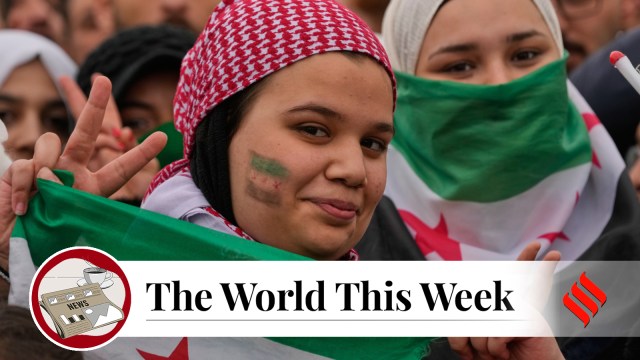 Girls flash victory signs as they gather for celebrations marking the first anniversary of the ousting of former President Bashar Assad in Damascus, Syria, Monday, Dec. 8, 2025. (AP Photo/Hussein Malla)
 The fragile ceasefire between Thailand and Cambodia, the two Southeast Asian neighbours, broke down this week, resulting in an all-out war that is still ongoing. This week also marked one year since the end of the Al-Assad rule in Syria, which is in the process of rebuilding the nation after decades of conflict. The US also released the National Security Strategy 2025, which is being described as President Donald Trump’s ‘Monroe Doctrine’, aiming to reset how America interacts with the rest of the world. The past few days also saw the US moving one step closer to a possible military intervention in Venezuela, with the capture of a sanctioned Iranian oil tanker. Closer to home, Bangladesh, which has been administered by an interim government since August 2024, announced dates for a Parliamentary election.
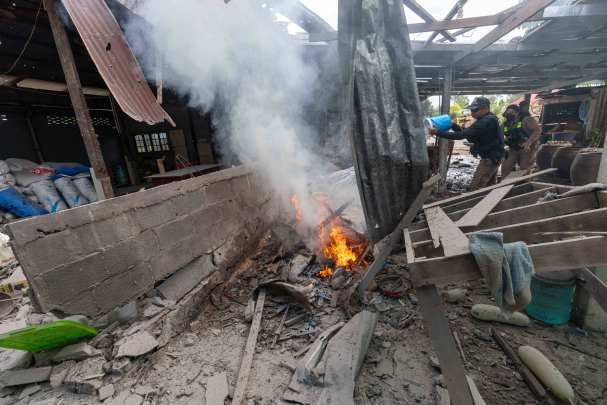
Tensions flared up between Thailand and Cambodia along the border on Sunday (December 7), shattering the ceasefire deal that was agreed upon in July 2025. The latest round of clashes erupted after a skirmish that injured two Thai soldiers. In response, Thailand, according to Cambodia, used unprecedented force, including F-16 fighter jets, domestically produced KB-5E kamikaze drones, and heavy artillery to attack both military and civilian targets.
Location of the clashes
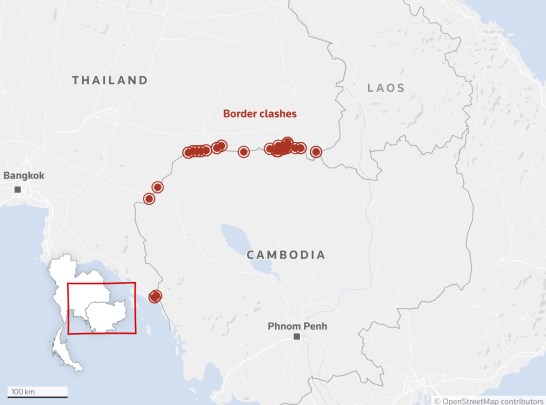
Clashes have been reported from near the Ta Muen Thom and Ta Krabey temple complexes located along the border of Thailand’s Surin and Buriram provinces with Cambodia’s Oddar Meanchey province, Preah Vihear temple area in Cambodia’s Preah Vihear province near Thailand’s Sisaket province, and along the Emerald Triangle which borders Cambodia’s Preah Vihear province, Thailand’s Ubon Ratchathani province, and Laos.
Thailand-Cambodia clash toll
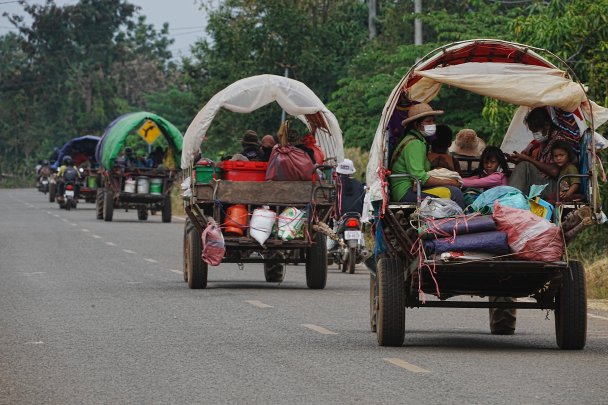
While the exact number of those killed in clashes, which are still ongoing, is unclear, international observers and ground reporting from both sides of the border put the death toll at 20. The clashes have also displaced an estimated 6,00,000 people on both sides of the Thai-Cambodia border.
Negotiation efforts
As the clashes continue, Thailand has ruled out a ceasefire, saying that the previous deal was not working, and added that military action will continue until its sovereignty is no longer challenged.
Past efforts
In July, after five days of intense fighting that killed dozens, Thailand and Cambodia had agreed to an “immediate and unconditional” ceasefire in Kuala Lumpur, mediated by Malaysia, the United States, and China.
In October, Thailand and Cambodia signed the ‘Kuala Lumpur Peace Accord’ initiated by US President Donald Trump, which called for the withdrawal of heavy weapons, demining operations, and the release of prisoners of war.
Why are Thailand and Cambodia fighting?
The two countries have been involved in a long-running dispute over the interpretation of the border demarcation mapped by France during its colonial rule of Cambodia in the early 1900s. Both interpret these maps differently, leading to overlapping claims over several areas, including the sites of ancient Khmer temples like the Preah Vihear, Ta Muen Thom, and Ta Krabey temple complexes, the key flash points.
The US unveiled the 2025 National Security Strategy (NSS) on December 4, and it is centred around Donald Trump’s ‘America First’ agenda, prioritising core national interests, economic nationalism, and non-interventionism.
The 30-page document represents a major reset of American national security doctrine by departing from the post-Cold War emphasis on global engagement and nation-building to focus on ‘America First’.
NSS 2025 says that the US will act abroad primarily when its direct interests are at stake, rather than pursuing ideological goals or expansive global governance.
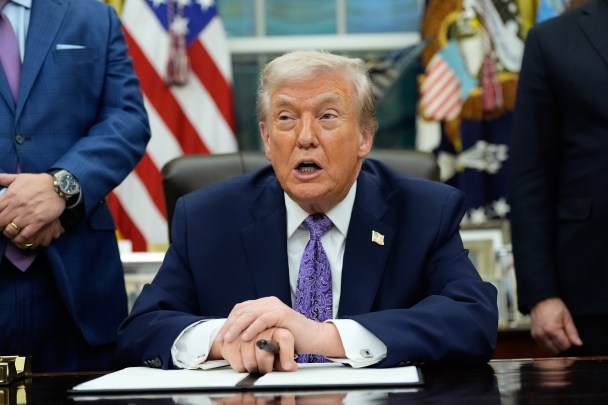
It rejects broad humanitarian missions and long-term nation-building, favouring conditional engagement and “peace through strength”.
The US also wants its traditional allies to shoulder more responsibility for their regional security rather than depending on Washington as the guarantor of last resort by increasing their defence spending.
NSS 2025 envisions the US focusing on key strategic regions, including the Indo-Pacific and the Western Hemisphere.
It also calls for the US to be economically and industrially independent, especially in key sectors such as semiconductors, rare earths, AI, and quantum technologies.
What NSS 2025 says about India
NSS 2025 identifies India as a key partner in US global security and economic cooperation and highlights the importance of deepening the partnership between Washington and New Delhi. It describes India as one of the next century’s key economic and geopolitical battlegrounds. NSS notes that India is the central pillar for an Indo-Pacific free from domination by any single power.
Donald Trump’s ‘Monroe Doctrine’
Many observers and even the White House described the National Security Strategy 2025 as Trump’s ‘Monroe Doctrine’, as it is a revival and reinterpretation of the original Monroe Doctrine.
What is the Monroe Doctrine?
The Monroe Doctrine refers to the US foreign policy announced by President James Monroe in 1823. It declared that the Western Hemisphere was closed to future European colonisation or interference and also pledged that the US would remain neutral and not interfere in existing European colonies or the internal affairs and wars between European powers.
Trump’s addition to the ‘Monroe Doctrine’ NSS 2025 states that the US will “assert and enforce a ‘Trump Corollary’ to the Monroe Doctrine” to keep non-Western Hemisphere powers, especially China and Russia, from gaining influence within the Americas and deny foreign adversaries access or control of strategic assets like ports in the region.
On Monday (December 8), Syria marked the first anniversary of the end of the rule of the Al-Assad family, which began in 1971. Bashar al-Assad, who succeeded his father Hafez al-Assad in 2000, was ousted from power on December 8, 2024, by Hayat Tahrir al-Sham, led by Abu Mohammad al-Julani, also known as Ahmed al-Sharaa.
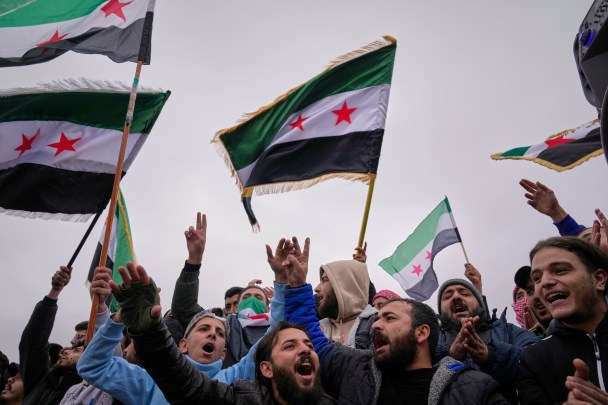
The fall of the al-Assad regime also brought an end to the 13-year-long civil war in Syria, which, according to the Syrian Observatory for Human Rights, had claimed the lives of over 6,17,000 people as of March 2024. According to the United Nations High Commissioner for Refugees (UNHCR), the civil war also resulted in over six million Syrians becoming refugees, while another 7.4 million were internally displaced.
Ahmed al-Sharaa, a former Al-Qaida-linked militant, took over the administration of Syria, and in the months that followed, the US, UK, EU, and several regional countries began engaging with Syria and promised to help rebuild the war-ravaged nation.
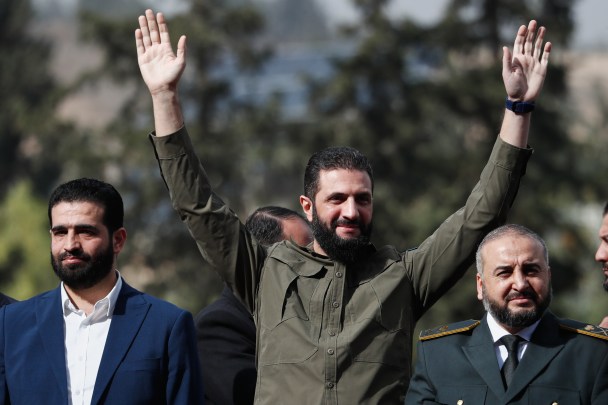
Ahmed al-Sharaa also addressed the UNGA in September 2025, making him the first Syrian President to do so since 1967. He also met with US President Donald Trump in the White House in November, the first by a Syrian head of state since 1946.
Since the fall of al-Assad, nearly 2.9 million displaced Syrians, including about one million refugees from abroad, have returned home.
Bangladesh’s Election Commission on December 10 announced that the country’s next general election will be held on February 12, 2026. This will be the first national general election since the ouster of former prime minister Sheikh Hasina in August 2024. Along with the vote, a national referendum will also be held regarding the ‘July Charter’, the political reform document that emerged from the uprising that ousted the Hasina government.
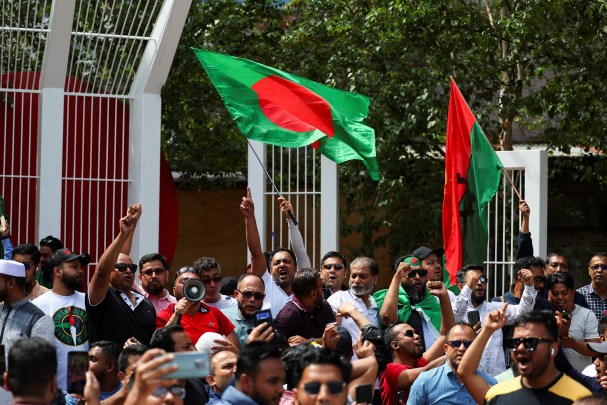
Bangladesh Parliament, Jatiya Sangsad, has a total of 350 seats, of which 300 are elected directly, and the remaining 50 are reserved for women.
According to the figures released by Bangladesh’s Election Commission in November, there are a total of 127.7 million eligible voters in the country, including 64,814,907 men and 62,879,042 women.
The peculiar power-sharing in Yemen, among the Aden-based internationally recognised government, the Sanaa-based Houthi government, and the Southern Transitional Council (STC) broke down this week. This was after the secessionist STC seized most of the provinces of Hadhramaut and Mahra, including oil facilities.
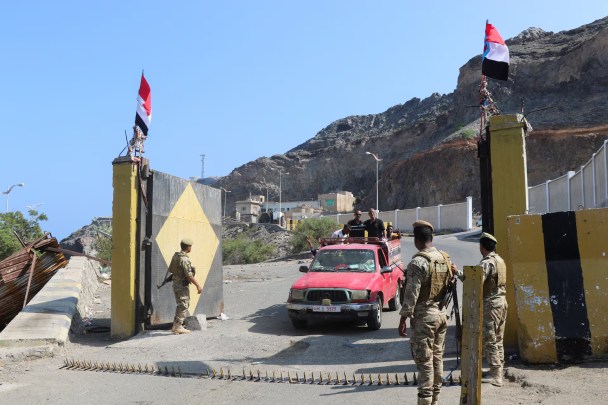
The STC, which was founded in 2017, is backed by the United Arab Emirates and aims to establish an independent South Yemeni state, in line with the erstwhile People’s Democratic Republic of Yemen, which existed from 1967 and unified with North Yemen in 1990.
The STC opposes the Houthis and is part of the internationally recognised government, in which its leader, Aidarus al-Zoubaidi, serves as Vice President.
Recently, the STC launched ‘Operation Promising Future’, a military offensive that has captured all eight governorates that comprised the former South Yemen. The STC is calling for a two-state solution and argues that unification is no longer feasible.
Send your feedback and ideas to bobins.abraham@indianexpress.com
Subscribe to our UPSC newsletter. Stay updated with the latest UPSC articles by joining our Telegram channel – IndianExpress UPSC Hub, and follow us on Instagram and X.
🚨 Click Here to read the UPSC Essentials magazine for October 2025. Share your views and suggestions in the comment box or at manas.srivastava@indianexpress.com🚨
 Share
Share