8 min read

© IE Online Media Services Pvt Ltd



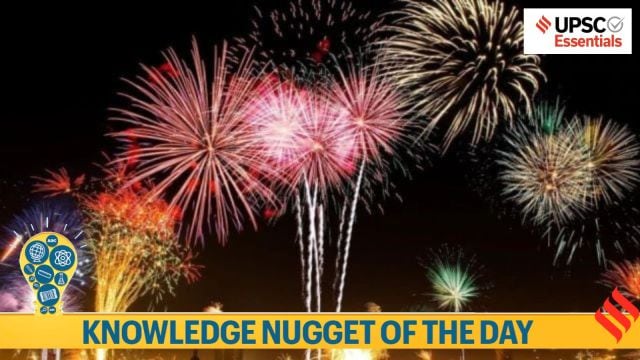 Deepavali, India's spectacular festival of lights, is now inscribed on UNESCO Representative List of Intangible Cultural Heritage of Humanity.
Take a look at the essential events, concepts, terms, quotes, or phenomena every day and brush up your knowledge. Here’s your UPSC Current Affairs knowledge nugget for today on the inclusion of Deepavali on the UNESCO Intangible Cultural Heritage list.
(Relevance: Art and culture are significant components of the UPSC CSE syllabus. The inclusion of Diwali on the UNESCO Intangible Cultural Heritage list is important for the UPSC CSE. Previously, UPSC has asked questions on this theme; thus, knowing about it becomes essential for aspirants to stay updated on these topics and their related developments. )
Recently, India’s nomination for ‘Deepavali, the festival of light’ was inscribed on the UNESCO’s Representative List of the Intangible Cultural Heritage of Humanity for 2025. Apart from Deepavali in India, traditional saree weaving art of Tangail also secured a place in the list. In this context, let’s know about the intangible cultural heritage list in detail.
1. UNESCO’s Intangible Cultural Heritage (ICH) lists living traditions, skills and expressions passed down through generations. These aren’t objects but practices that strengthen identity and diversity and are considered imperative for humanity. It broadly covers five domains:
(i) Oral traditions,
(ii) Performing arts,
(iii) Social practices/rituals/festivals,
(iv) Nature/universe knowledge,
(v) Traditional craftsmanship.
2. The United Nations Educational, Scientific and Cultural Organization (UNESCO) established this list to ensure better protection of important intangible cultural heritages across the world and spread awareness of their significance.
3. Intangible cultural heritage, according to UNESCO, is “traditional, contemporary and living at the same time”, “inclusive”, “representative”, and “community-based”. It is “an important factor in maintaining cultural diversity in the face of growing globalisation” — and “an understanding of the intangible cultural heritage of different communities helps with intercultural dialogue, and encourages mutual respect for other ways of life”.
4. UNESCO’s Intangible Cultural Heritage List now features around 700 elements corresponding to 140 countries. India currently has 16 elements inscribed on the list, including the Kumbh Mela, Durga Puja of Kolkata, Garba dance of Gujarat, yoga, the tradition of Vedic chanting, and Ramlila.
| Intangible Cultural Heritage |
Year of Inscription
|
| Kutiyattam, Sanskrit Theater | 2008 |
| Tradition of Vedic Chanting | 2008 |
| Ramlila, the Traditional Performance of the Ramayana |
2008 |
| Ramman, Religious Festival and Ritual Theatre of the Garhwal Himalayas, India | 2009 |
| Chhau Dance | 2010 |
| Kalbelia Folk Songs and Dances of Rajasthan | 2010 |
| Mudiyettu, Ritual Theatre and Dance Drama of Kerala | 2010 |
| Buddhist Chanting of Ladakh: Recitation of Sacred Buddhist Texts in the Trans-Himalayan Ladakh region | 2012 |
| Sankirtana, Ritual Singing, Drumming, and Dancing of Manipur | 2013 |
| Traditional Brass and Copper Craft of Utensil Making among the Thatheras of Jandiala Guru, Punjab | 2014 |
| Nowruz | 2016 |
| Yoga | 2016 |
| Kumbh Mela | 2017 |
| Durga Puja in Kolkata | 2021 |
| Garba of Gujarat | 2023 |
| Deepavali | 2025 |
5. For the next year’s cycle, India has sent a nomination dossier for Bihar’s Chhat Puja for consideration of the committee.
| Do you Know? |
| UNESCO plays a vital role in safeguarding cultural and natural heritage across the globe. Its primary objective is to identify, protect, and preserve sites that hold outstanding value for humanity. It is guided by the Convention Concerning the Protection of the World Cultural and Natural Heritage, an international treaty adopted by UNESCO in 1972. |
1. Diwali’s inscription on the list elevates the festival’s status, encourages safeguarding its traditions and increases its international visibility as a living cultural expression.
2. In a tangible sense, it will boost tourism and cultural exchanges, and look to ensure a sustainable livelihood for artisans who contribute to keeping its traditions alive.
3. India’s pitch for Deepavali is also aimed at the large Indian diaspora. The Intergovernmental Committee advances the objectives of the 2003 Convention signed by member countries and ensures their effective implementation across member states. It offers guidance on best practices, recommends safeguarding measures and mobilises resources for the Intangible Cultural Heritage Fund.
2. Bagpipes and bagpipe playing in Bulgaria: transmission of knowledge and skills | Bulgaria3
3. Behzad’s style of miniature art | Afghanistan
4. Bisht (men’s Abaa): skills and practices | Qatar – Bahrain – Iraq – Jordan – Kuwait – Oman – Saudi Arabia – Syrian Arab Republic – United Arab Emirates
5. Brussels’ rod marionette tradition | Belgium
6. Christmas Bram and Sambai of Gales Point Manatee, Belize | Belize
7. Commandaria wine | Cyprus
8. Cuarteto: music, dance and lyrics in the city of Córdoba, Argentina | Argentina
9. Deepavali | India
10. Family tradition circus in Chile | Chile
11. Festivity of the Virgen of Guadalupe – Patroness of Sucre | Bolivia (Plurinational State of)
12. Gifaataa, Wolaita people New Year festival | Ethiopia
13. Guruna, a practice of pastoral, socio-cultural and artistic retreats centered on livestock among the Massa | Chad – Cameroon
14. Hadrami Dan gathering | YemenJoropo in Venezuela | Venezuela (Bolivarian Republic of)
15. Koshary, daily life dish and practices associated with it | Egypt
16. Mvet Oyeng, musical art, practices and skills associated with the Ekang community | Gabon – Cameroon – Congo
17. The Confraternity of flowers and palms | El Salvador
18. The practice of Cuban Son | Cuba
19. The zaffa in the traditional wedding | Djibouti – Comoros – United Arab Emirates – Iraq – Jordan – Mauritania – Somalia
20. Traditional Saree weaving art of Tangail | Bangladesh
1. UNESCO’s Memory of the World (MoW) programme, launched in 1992, is an international cooperation strategy aimed at safeguarding, protecting, and facilitating access to and the use of documentary heritage, particularly rare and endangered heritage.
2. Beginning in 1997, the Register has been biennally updated, with the exception of a lengthy gap between 2017 and 2023, with between nine (in 1999) and 78 (in 2017) additions. In any year, at most two submissions from a country are added.
3. This year, manuscripts of the Bhagavad Gita and Bharat Muni’s Natyashastra were added to UNESCO’s Memory of the World Register, taking the total number of inscriptions from India in the list to 14.
📍Natyashastra: Natyashastra is an ancient Sanskrit treatise on performing arts. It is traditionally attributed to the sage Bharata. Comprising 36,000 verses, the “Naṭyashastra embodies a comprehensive set of rules that define natya (drama), abhinaya (performance), rasa (aesthetic experience), bhava (emotion), sangita (music),” the UNESCO citation says.
📍Bhagavad Gita: Bhagavad Gita is a Sanskrit scripture comprising 700 verses that are organised in 18 chapters, embedded in the sixth book (Bhishma Parva) of the epic poem Mahabharata. It is traditionally attributed to the sage Vyasa.
4. Notably, last year, three Indian literary works — Ramcharitmanas, Panchatantra, and Sahṛdayaloka-Locana—were added to UNESCO’s Memory of the World Asia-Pacific Regional Register. Let’s also know about these literary works.
📍Ramcharitmanas: This manuscript was authored by Goswami Tulsidas.
📍Panchatantra: Attributed to Vishnu Sharma, this is an ancient Indian collection of interrelated animal fables in verse and prose.
📍Sahṛdayaloka-Locana: Written by 15th-century Kashmiri scholars Acharya Anandvardhan and Abhinavagupta, it was chosen for its aesthetic significance.
(1) With reference to Manipuri Sankirtana, consider the following statements: (UPSC CSE 2017)
1. It is a song and dance performance
2. Cymbals are the only musical instruments used in the performance
3. It is performed to narrate the life and deeds of Lord Krishna
Which of the statements given above is/are correct?
(a) 1, 2 and 3
(b) 1 and 3 only
(c) 2 and 3 only
(d) 1 only
(2) With reference to India’s culture and tradition, what is ‘Kalaripayattu’? (UPSC CSE 2014)
(a) It is an ancient Bhakti cult of Shaivism still prevalent in some parts of South India
(b) It is an ancient style bronze and brass work still found in the southern part of the Coromandel area
(c) It is an ancient form of dance-drama and a living tradition in the northern part of Malabar
(d) It is an ancient martial art and a living tradition in some parts of South India
| Answer Key |
| 1. (b) 2. (d) |
(Sources: A glowing recognition: How Diwali made it to UNESCO heritage list, Deepavali festival on Unesco Representative List of Intangible Cultural Heritage of Humanity 2025, Bhagavad Gita, Natyashastra manuscripts enter UNESCO register; proud moment: PM Modi)
Subscribe to our UPSC newsletter. Stay updated with the latest UPSC articles by joining our Telegram channel – Indian Express UPSC Hub, and follow us on Instagram and X.
🚨 Click Here to read the UPSC Essentials magazine for November 2025. Share your views and suggestions in the comment box or at manas.srivastava@indianexpress.com🚨

Read UPSC Magazine