4 min read


© IE Online Media Services Pvt Ltd



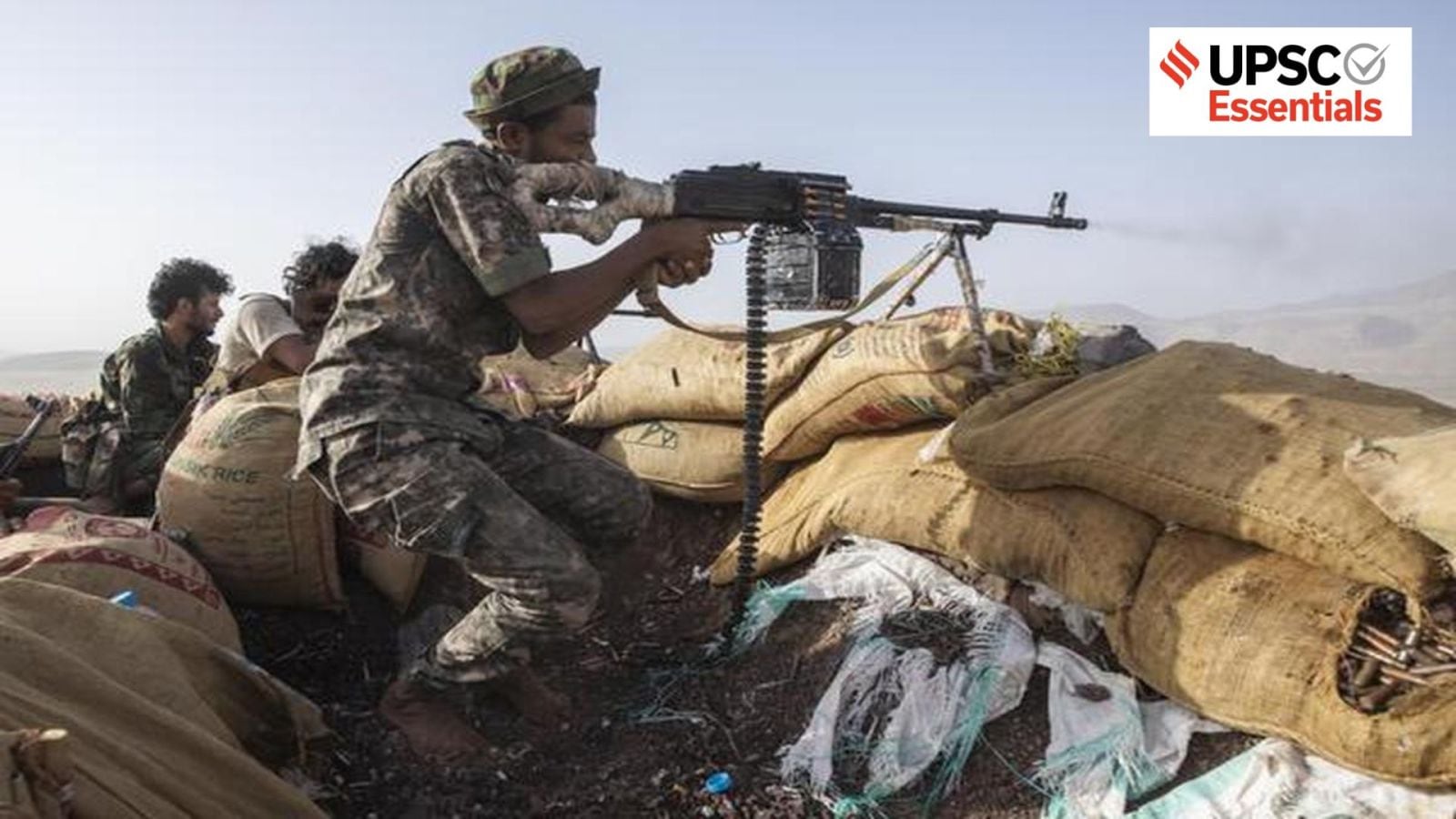 In January 2022, Yemen’s rebels have launched attacks with missiles and drones on the United Arab Emirates, a major escalation for one of the world’s most protracted conflicts. (AP)
Tensions between Saudi Arabia and the UAE flared this week after Riyadh attacked a shipment it believed contained weapons and vehicles from Abu Dhabi destined for Yemen’s separatist group, the Southern Transitional Council (STC).
The attack on Tuesday (December 30) followed the UAE-backed STC’s capture of two southern Yemeni provinces in December – Hadramout, which borders Saudi Arabia, and Al‑Mahra. The tension between the two Gulf powers appears to have dissipated after the UAE agreed to pull its remaining forces out of Yemen and the Saudi-aligned Yemeni government forces entered the captured territories.
However, some analysts are sceptical of the detente. Farea Al-Muslimi, a Gulf and Yemen researcher at the UK-based Chatham House think tank, argues that this will not necessarily ease tensions as the war and the role of the UAE in Yemen will switch from direct interventions to proxy war. “Proxy wars are, in many ways, more destructive than direct wars,” he wrote on X. But what exactly is a proxy war?
Proxy wars involve indirect intervention or engagement by one or more powers in an existing conflict or war to influence its strategic outcome. It usually arises from a relationship between a benefactor (state or non-state actors), who is external to the dynamic of the existing conflict, and the chosen proxies who act as the conduit for the benefactor’s weapons, training, and funding.
A benefactor usually seeks recourse to proxy wars when the conventional or inter-state war is unthinkable (due to factors like nuclear deterrence or escalation), or its costs are too high. Former US President Dwight D Eisenhower once remarked that proxy wars are “the cheapest insurance in the world”. And according to Andrew Mumford, Professor of War Studies, it is the “alluring combination of ‘plausible deniability’ and lower risk” that makes proxy wars attractive to states.
Although some of the most destructive proxy wars occurred during the Cold War, several wars of this nature have continued afterwards. However, the change in the broader landscape – such as from the bipolar, ideological nature to a regionalised, multilateral character – has added complexity to the proxy-war fighting.
Scholars have also drawn attention to the tricky relationship between the benefactor and the proxies. Lionel Beehner, in his Foeign Affairs article, “How Proxy Wars Work”, notes that during the Cold War, how ideological leanings of the “Third World clients” oscillated between the two superpowers. For instance, when the US withheld aid to Nicaragua and Cuba, they became increasingly aligned with the Soviet Union.
In recent times, Syria and Yemen have been among the major theatres where proxy fighting is played out by regional and global powers and their chosen proxies. Lionel Beehner points out that when former Syrian President Bashar al-Assad suffered a setback in 2012, he “exaggerated the jihadist threat to get Russia and Iran to send more arms, funds, and even foot soldiers”.
The fall of Bashar Assad’s government in December 2024 ended his nearly 14-year struggle to hold onto power, and dealt a major blow to Iran – a regional benefactor of the Assad government. The experience of Syria underlines how proxy warfare can become prolonged and, at times, unpredictable. It invites speculation about how the proxy warfare will be played out in Yemen in the near future, especially in view of the cracks within the Saudi-led coalition aiding the internationally-recognised Yemeni government against the Iran-backed Houthi rebels.
We would love to hear what you think about this new initiative. Send your comments at ashiya.parveen@indianexpress.com.
Click Here to read the UPSC Essentials magazine for December 2025. Subscribe to our UPSC newsletter and stay updated with the news cues from the past week.
Stay updated with the latest UPSC articles by joining our Telegram channel – IndianExpress UPSC Hub, and follow us on Instagram and X.


Read UPSC Magazine