


© IE Online Media Services Pvt Ltd
Tags:



Samsung has unveiled its new Galaxy A71 smartphone, giving us a glimpse as to what the company has planned for early 2020. The Galaxy A71 sports a 6.7-inch full HD+ Super AMOLED Infinity-O display with a resolution of 2400×1080 pixels. It is powered by the Qualcomm Snapdragon 730 processor paired with 6GB/8GB of RAM. The device comes with 128GB of internal storage expandable up to 512GB via a microSD card. It runs Google’s Android 10 operating system with the company’s own One UI 2.0 skin on top.
Coming to the optics, the device sports a quad camera setup on the back consisting of a 64MP primary sensor paired with a 12MP secondary sensor, a 5MP depth sensor and another 5MP macro sensor. On the front, it features a 32MP sensor for taking selfies.


Redmi Note 8 Pro is priced at Rs 14,999 for the base variant with 6GB of RAM and 64GB of internal storage. Whereas, the 6GB RAM/128GB internal storage variant is priced at Rs 15,999 and the 8GB RAM/128GB internal storage variant is priced at Rs 17,999. The quad-camera setup on the phone includes a 64MP primary sensor, an 8MP wide-angle lens, a 2MP macro lens, and a 2MP depth sensor. On the front, it features a 20MP sensor placed in the dot-notch for taking selfies.
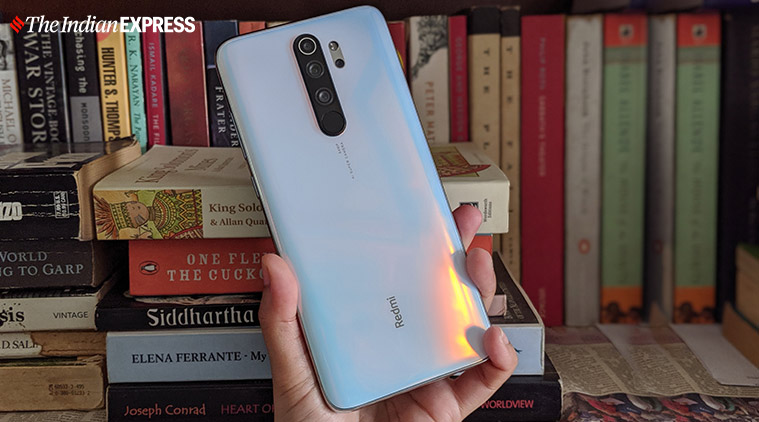
Other specifications include a 6.53-inch full HD+ display with a resolution of 2340×1080 pixels. It is powered by the MediaTek Helio G90T processor paired with 8GB RAM and 256GB internal storage. The device runs Google’s Android 9 Pie operating system with the company’s own MIUI 10 skin on top. All of this is backed by a 4,500mAh battery with support for 18W fast charging.
Realme XT was the world’s first smartphone to launch with a 64MP camera. It is priced at Rs 15,999 for the 4GB RAM/64GB internal storage variant, Rs 16,999 for the 6GB RAM/64GB storage variant and Rs 18,999 for the 8GB RAM/128GB storage variant. It sports a quad-camera setup on the back consisting of a 64MP primary sensor, an 8MP wide-angle sensor, a 2MP macro sensor, and a 2MP depth sensor. On the front, it features a 16MP sensor for taking selfies.
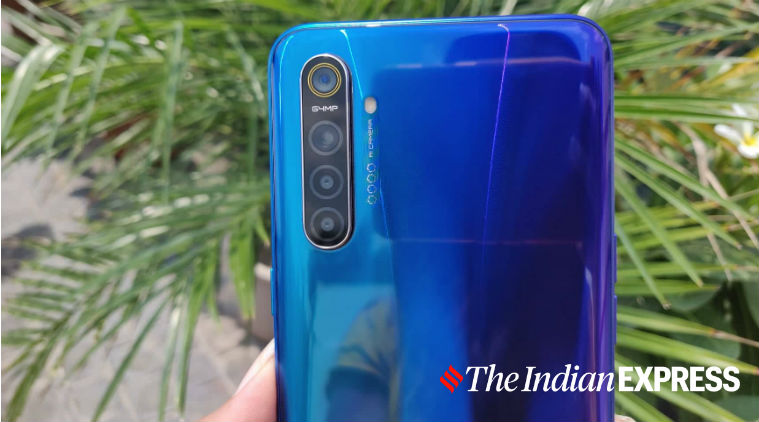
Other specifications include, a 6.4-inch Super AMOLED full HD+ display, Qualcomm Snapdragon 712 processor, Android 9 Pie, 4,000mAh battery and support for the company’s own VOOC 3.0 fast charge technology.
Samsung already offers a smartphone, with a 64MP camera in India, dubbed the Samsung Galaxy A70s. It is priced at Rs 28,999 for the base variant. The device sports a triple camera setup on the back consisting of a 64MP primary sensor, a 5MP depth sensor and an 8MP ultra-wide-angle sensor. On the front, the device sports a 32MP selfie shooter.
The device sports a 6.7-inch Infinity-U Super AMOLED display. It is powered by the Qualcomm Snapdragon 675 processor. The device runs Google’s Android 9 Pie operating system with the company’s own One UI skin on top. All of this is backed by a 4,500mAh battery with support for 25W fast charging.
Realme recently launched another smartphone in India with a 64MP camera setup on the back, the Realme X2 Pro. The device is priced at Rs 29,999 for the 8GB RAM/128GB storage variant and Rs 33,999 for the 12GB RAM/256GB storage variant. It sports a 64MP primary sensor paired with a 13MP telephoto sensor, an 8MP ultra-wide-angle sensor and a 2MP depth sensor.

It is also one of the cheapest smartphones in the country to offer users with a 90Hz display. The device is powered by the Qualcomm Snapdragon 855 Plus processor paired with an Adreno 640 GPU. The device is backed by a 4,000mAh battery with support for the company’s own 50W fast-charging technology.
Lastly, Xiaomi has also launched another smartphone that sports a 64MP primary sensor paired with a 5MP macro sensor, a 2MP depth sensor and an 8MP wide-angle sensor. The 4G variant for the same, comes with a 2MP macro sensor instead of the 5MP macro sensor. On the front, both the 4G and 5G variants sport a dual camera setup consisting of a 20MP sensor and a 2MP sensor. The Redmi K30 is currently only available in China and is yet to make its way into the Indian market.
Redmi K30 sports a 6.67-inch full-HD+ punch-hole display with a 120Hz refresh rate. The 4G variant is powered by the Qualcomm Snapdragon 730G processor, whereas, the 5G variant is powered by the Snapdragon 765G processor.


