Los Angeles | Updated: December 10, 2025 09:15 AM IST
5 min read
Whatsapp
twitter
Facebook
Reddit
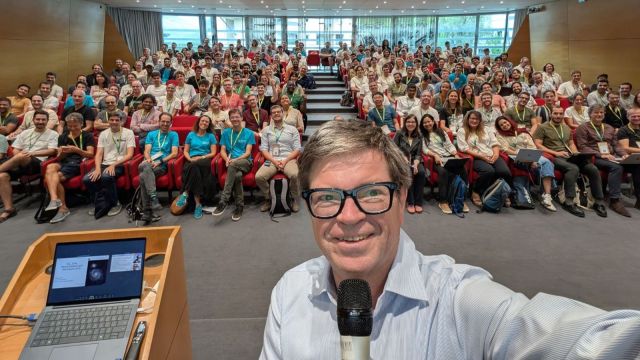
Yann LeCun at the NYU Center for Data Science Seminar earlier this year. (Image: LinkedIn/@yann-lecun)
Yann LeCun, Meta’s chief AI scientist and a professor at New York University, has been vocal about his view that large language models will never achieve human-level reasoning. There may also be friction within Meta regarding his stance on the company’s direction under Mark Zuckerberg, and possibly a sense of being sidelined, which is why he recenbtly left the company to start his own startup in the coming months. The news of the 65-year-old professor, one of the pioneering figures in the artificial intelligence industry, leaving Meta has raised concerns that AI may inevitably come under the control of a few corporate entities, something LeCun never wanted but believes is already beginning to happen.
A pioneer of modern AI
Born in 1960 in Soisy-sous-Montmorency, a small town north of Paris in France, LeCun became fascinated by artificial intelligence after watching 2001: A Space Odyssey. Growing up with an engineer father who introduced him to the world of electronics, his curiosity only deepened. This early interest led him to ESIEE Paris, where he earned an electrical engineering diploma in 1983. He then pursued a PhD in computer science at Université Pierre et Marie Curie, completing his dissertation in 1987 on “Connectionist Learning Models.” The core of his thesis was to establish the theoretical basis for the backpropagation algorithm in neural networks.
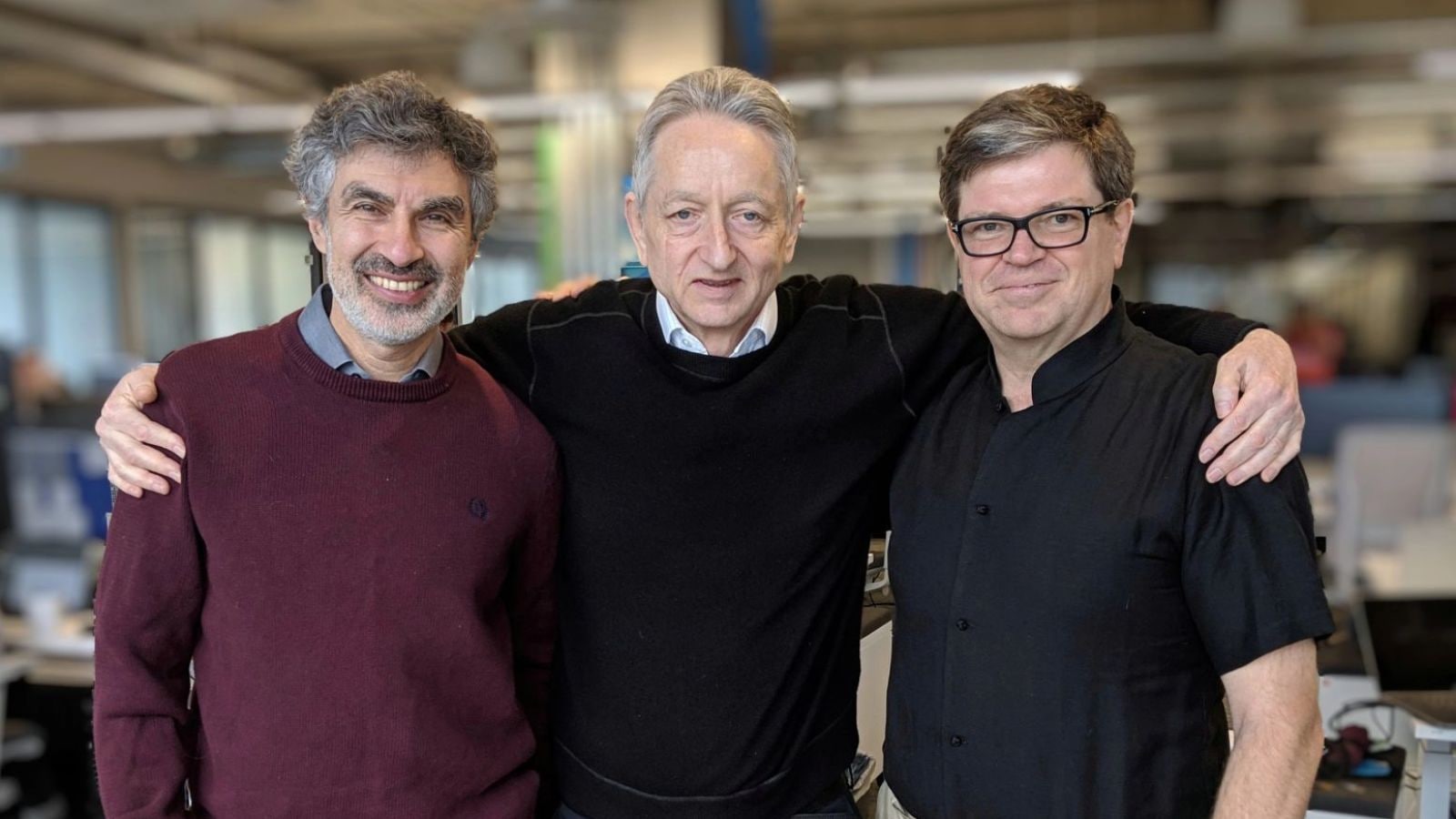
LeCun later completed a postdoc under Geoffrey Hinton, the British-Canadian cognitive psychologist and computer scientist often called one of the “godfathers of AI” at the University of Toronto. LeCun and Hinton won the 2018 Turing Award, computing’s highest award, together for their work on deep neural networks, alongside Yoshua Bengio. All three are credited in develop
From right, Yann LeCun, Geoffrey Hinton and Yoshua Bengio. All three AI pioneers won Turing award in 2018.(Image: LinkedIn/@yann-lecun)
After spending a postdoctoral year with Hinton, LeCun joined AT&T Bell Laboratories, where he developed key technologies such as convolutional neural networks, a breakthrough that allowed computers to process visual information in ways that mimicked human vision. He also worked on the development of DjVu, an image-compression technology that allowed the Internet Archive and other digital libraries to distribute scanned documents online. In 2003, he became a professor at New York University, later founding the NYU Center for Data Science. In 2013, he joined Meta as the chief AI scientist for Facebook AI Research (FAIR).
A supporter of open-source AI
LeCun has been a long-time supporter of open-source AI. In 2023, when his former collaborators Geoffrey Hinton and Yoshua Bengio put their names at the top of a statement calling AI a “societal-scale risk,” LeCun did not participate. He, however, did sign an open letter to US President Joe Biden urging an embrace of open-source AI and declaring that it “should not be under the control of a select few corporate entities.”
Coming from LeCun, this was somewhat surprising, considering he was employed by Meta, a corporate entity. However, Meta has embraced a more open-source approach with AI models compared to Google and OpenAI, though many argue that Meta’s approach is not fully open source.
No matter how one looks at LeCun’s views, he has consistently supported open-source models. In fact, when DeepSeek, the Chinese developer that shocked the world earlier this year with its breakthrough AI model made waves, LeCun called it a big win for open-source rather than framing it as a China vs. US debate. “The correct reading is: ‘open-source models are surpassing proprietary ones,’” he wrote on LinkedIn.
Story continues below this ad
A skeptic of AGI
LeCun has expressed skepticism about the term “Artificial General Intelligence” on many platforms, calling it misleading. Instead, he prefers the term “Advanced Machine Intelligence” over AGI.
“I hate that term,” LeCun told the audience in a 2024 talk at the Columbia School of Engineering and Applied Science. “Human intelligence is not generalized at all. Humans are highly specialized. All the problems we can fathom or imagine are problems we can fathom or imagine.”
While he believes human-level intelligence in machines is achievable and will pave way for practical applications like AI-powered wearable devices, he criticised current large language models (LLMs) for their limitations. According to LeCun, LLMs can generate coherent text but lack true understanding, planning abilities, and meaningful interaction with the physical world, making their intelligence far below even that of a housecat.
Departure from Meta
LeCun’s departure from Meta comes at a time when the company is undergoing a major shift in its AI strategy. Earlier this year, Meta invested $14.3 billion in Scale AI and created Meta Superintelligence Labs under CEO Alexandr Wang, changing LeCun’s reporting role. The reason for the rift is unclear and may never be publicly disclosed, but after Meta’s own large language model, Llama 4, failed to deliver results comparable to OpenAI’s GPT and Google’s Gemini, Zuckerberg’s growing impatience with LeCun’s long-term approach to AI research could be reason which led to the fallout. While LeCun has been skeptical of LLMs, Zuckerberg has moved from fundamental AI research toward product-focused approach at catching up with OpenAI and Google – both of which are leading the AI race and winning users.
Anuj Bhatia is a personal technology writer at indianexpress.com who has been covering smartphones, personal computers, gaming, apps, and lifestyle tech actively since 2011. He specialises in writing longer-form feature articles and explainers on trending tech topics. His unique interests encompass delving into vintage tech, retro gaming and composing in-depth narratives on the intersection of history, technology, and popular culture. He covers major international tech conferences and product launches from the world's biggest and most valuable tech brands including Apple, Google and others. At the same time, he also extensively covers indie, home-grown tech startups. Prior to joining The Indian Express in late 2016, he served as a senior tech writer at My Mobile magazine and previously held roles as a reviewer and tech writer at Gizbot. Anuj holds a postgraduate degree from Banaras Hindu University. You can find Anuj on Linkedin.
Email: anuj.bhatia@indianexpress.com ... Read More


 5 min read



 From right, Yann LeCun, Geoffrey Hinton and Yoshua Bengio. All three AI pioneers won Turing award in 2018.(Image: LinkedIn/@yann-lecun)