


© IE Online Media Services Pvt Ltd
Tags:


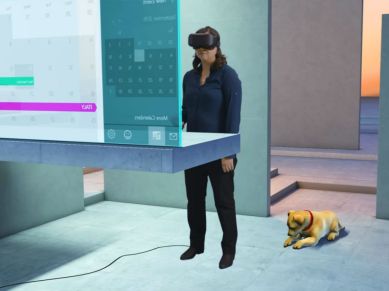
Intel and Microsoft have collaborated on a specification for mixed-reality ready PCs and head mounted displays (HMDs). Microsoft is planning to launch an update to Windows 10 in 2017 that will enable mainstream PCs to run Windows Holographic shell, and the mixed reality applications that are associated with it. Windows Holographic shell will give a user a new experience of multi-tasking in mixed reality, which will blend 2D and 3D apps.
In a blog post, Terry Myerson, Executive Vice President, Windows and Devices Group said, “Our shared goal is to enable our hardware partners to build a broad range of devices for the mainstream consumer and business markets. We are working with several partners on the spec today, and plan to publicly release v1 of the spec at the Windows Hardware Engineering Community (WinHEC) conference in Shenzhen in December.”


Microsoft is also developing the HoloLens – a mixed reality Holographic platform, which is a head-mounted smart-glass that is still under development. Hololens was recently made available to developers and commercial partners of Microsoft earlier this month. Each developer can purchase up to five devices from the Hololens website, priced at $3000 each.
In a recent Intel Developer Forum (IDF) in San Francisco, the company’s CEO, Brian Krzanich shared the tech company’s vision for the future of virtual reality. Krzanich also explained his vision of merged reality, allowing for a new way of physical and virtual interactions with the environment. Intel highlighted its focus on merged reality – opening up new streams of physical and virtual interactions with the environment.


