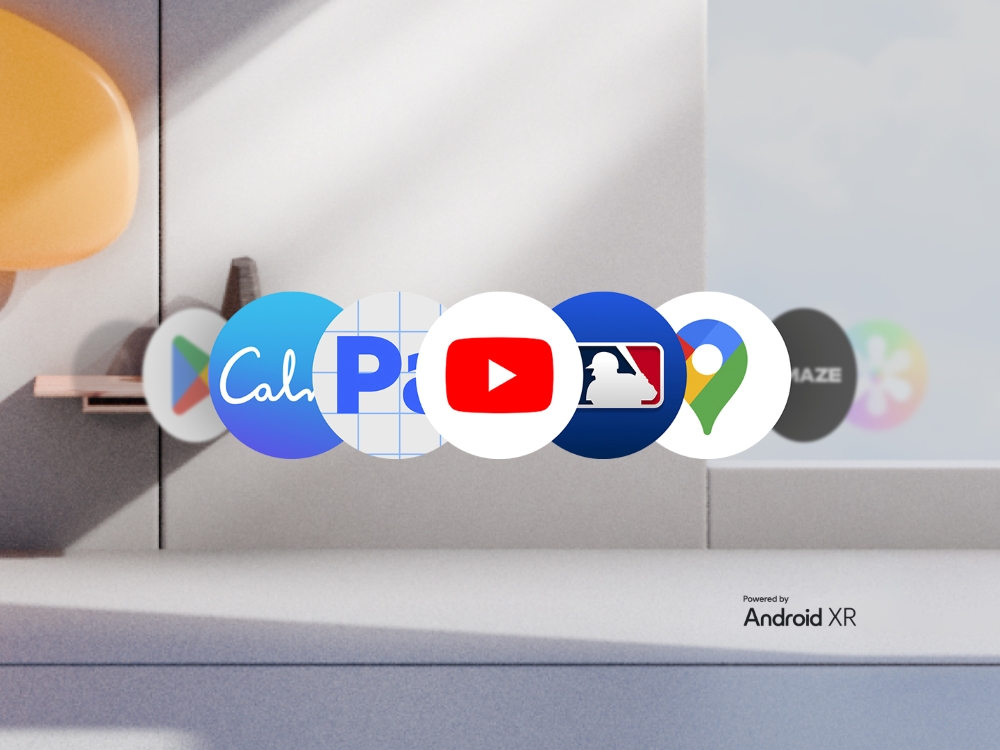
Samsung hopes that its Galaxy XR headset will resonate with consumers, which it developed in partnership with Google, thanks to the implementation of the Gemini assistant. (Image credit: Samsung)
Samsung on Wednesday launched a mixed-reality headset priced at $1,800, half the cost of Apple’s Vision Pro, igniting a price war in the high-end XR headset market.
The Galaxy XR, which debuts this week in the US and South Korea, is being co-developed with Google and Qualcomm. Google is providing the Android XR operating system, while Qualcomm supplies the chip powering the device.
You’ve Read Your Free Stories For Now
Sign up and keep reading more stories that matter to you.
Like the Apple Vision Pro and Meta Quest 3, Samsung’s Galaxy XR is a mixed-reality headset. It functions as a standalone VR device with passthrough mixed reality capabilities, offering both 8K and 3D augmented experiences. The headset delivers immersive virtual environments where apps and content appear to float in the user’s field of view. It features two compact 4K displays and built-in external cameras that allow users to see the real world while wearing the device.
Users can interact with the Galaxy XR through eye tracking, voice commands, or hand gestures. It features a premium design, with curved glass on the front and a tethered battery pack, similar to the Vision Pro. The USB-C-enabled battery provides around 2.5 hours of use per charge. At 545 grams, the Galaxy XR is slightly heavier than the Meta Quest 3 but significantly lighter than the 750 gram Vision Pro. It also includes an adjustable strap for better fit and comfort.
The headset also has a touch-sensitive strip on the right side of the headband, an action button on the top right of the headset, and a volume rocker on the upper left.
The Galaxy XR is the first headset to run Android XR, a new operating system designed specifically for extended reality. It includes XR-optimised versions of YouTube, Google Maps, and Google Meet. The OS also integrates Gemini, Google’s AI assistant, built directly into the system.
At $1,800, Samsung’s Galaxy XR undercuts Apple’s $3,500 Vision Pro in the price. However, both products remain niche and are primarily targeted at early adopters and developers rather than mainstream consumers. Like Apple, Samsung envisions the headset as a device for users to escape into movies, games, and floating digital experiences.
But the Galaxy XR faces the same fundamental challenges as the Vision Pro. These headsets are still too bulky for most people to wear comfortably, and the ecosystem lacks compelling apps or truly immersive content. There isn’t yet a “killer app” to justify the nearly $2,000 investment especially when smartphones remain the most accessible and versatile personal computing devices.
Tech companies, including Apple, have long struggled to convince users to strap a computer to their faces for hours and experience the world through screens and cameras. In the early days of the Vision Pro, there was buzz with videos of people using the device in cars or on the street. But that hype quickly faded as issues like weight, eye strain, and a limited number of use cases became apparent. The Vision Pro has reportedly underperformed commercially. While Apple recently updated the headset, the improvements were modest, an upgraded M5 processor and a redesigned dual-knit band without a price drop in sight, keeping it out of reach for average consumers.
While Samsung and Apple continue to push mixed-reality headsets, other companies like Meta are pivoting toward more accessible smart glasses. Meta has already proved that there is a market for smart glasses with Ray-Ban glasses. However, the company has higher ambitions. It recently introduced the Ray-Ban Display, its first pair of smart glasses with a built-in screen, signalling a shift toward slick smart glasses. Meta no longer emphasises the Metaverse, reflecting a broader industry transition from Metaverse, where virtual reality and a digital second life collide to artificial intelligence.
Samsung and Google still see the Galaxy XR headset as a starting point for a new type of AI-powered eyewear, including upcoming smart glasses, which the company is working on.
Anuj Bhatia is a seasoned personal technology writer at indianexpress.com with a career spanning over a decade. Active in the domain since 2011, he has established himself as a distinct voice in tech journalism, specializing in long-form narratives that bridge the gap between complex innovation and consumer lifestyle.
Experience & Career: Anuj has been a key contributor to The Indian Express since late 2016. Prior to his current tenure, he served as a Senior Tech Writer at My Mobile magazine and held a role as a reviewer and tech writer at Gizbot. His professional trajectory reflects a rigorous commitment to technology reporting, backed by a postgraduate degree from Banaras Hindu University.
Expertise & Focus Areas: Anuj’s reporting covers the spectrum of personal technology, characterized by a unique blend of modern analysis and historical context. His key focus areas include:
Core Technology: Comprehensive coverage of smartphones, personal computers, apps, and lifestyle tech.
Deep-Dive Narratives: Specializes in composing longer-form feature articles and explainers that explore the intersection of history, technology, and popular culture.
Global & Local Scope: Reports extensively on major international product launches from industry titans like Apple and Google, while simultaneously covering the ecosystem of indie and home-grown tech startups.
Niche Interests: A dedicated focus on vintage technology and retro gaming, offering readers a nostalgic yet analytical perspective on the evolution of tech.
Authoritativeness & Trust
Anuj is a trusted voice in the industry, recognized for his ability to de-jargonize trending topics and provide context to rapid technological advancements. His authority is reinforced by his on-ground presence at major international tech conferences and his nuanced approach to product reviews. By balancing coverage of the world's most valuable tech brands with emerging startups, he offers a holistic and objective view of the global technology landscape.
Find all stories by Anuj Bhatia here.
You can find Anuj on Linkedin. ... Read More