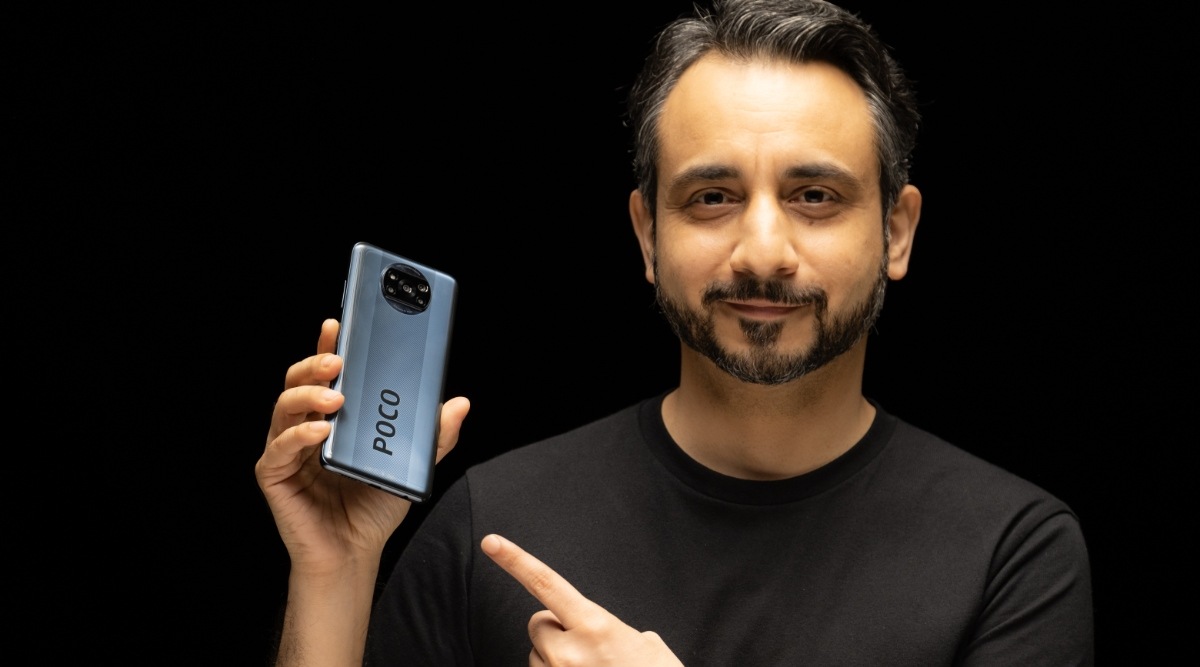
Poco, which is now an independent brand under Xiaomi, has a lot to prove before it can compete with the likes of Realme and Oppo. Ahead of the launch of Poco X3, the brand’s latest smartphone in India, we spoke to Anuj Sharma, the former Xiaomi CMO who now heads Poco India. Sharma candidly talked about creating a space for a new brand in the crowded marketplace, price wars, and much more. Edited excerpts below:
The high competition makes it challenging for even the most successful brands to stand out, especially in a market like India. What is your strategy to take on the competition?
Anuj Sharma: It’s basically sticking to the core philosophy. Just having that core philosophy stay on as we spend close to about two years now is harder than it seems. And a lot of brands have kind of wavered from where they started out but Poco hasn’t, and hence the philosophy of everything that you need and nothing you don’t continues. So it’s all about simplicity and it’s all about reaching out to the smarter consumers and giving them the best that we can. In a way, yes, it sounds very simple and the question that everyone would have is, why can’t everyone do it? Well, because sometimes simplicity is actually the toughest thing to achieve.

If you look at the Indian smartphone market, you will already find a lot of brands competing against each other. Where’s the space for another smartphone brand like Poco?
Anuj Sharma: Since 2012, I’ve been associated with the Indian smartphone industry. I have heard that the feature hone market used to be a lot more chaotic. From a smartphone perspective, I think today we have the least number of brands we’ve had ever. I remember back in 2013, there used to be 40 to 50 known brands, giving people enough options and choice. But since 2017, we have seen a steady decline where the number of brands that have exited or racked up have been a lot more than the new entrants. The number of new brands that have come up, you can literally count them on your fingers now.
People do want choices. When brands become big enough, they try and cater to the lowest common denominator or the masses. And this gives us a perfect opportunity to basically stand for something else and make a mark.
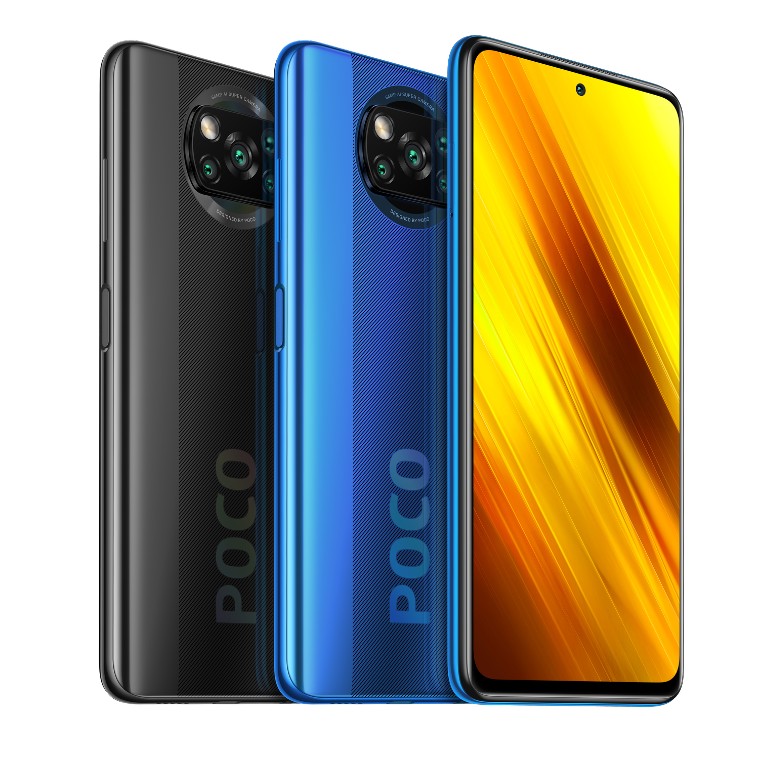
The first sale of Poco X3 is set for September 29
Poco is now an independent company with its own team and resources. How much are you dependent on Xiaomi?
Anuj Sharma: We still depend a lot on the Xiaomi global group’s R&D team. I will be very honest, in today’s world to get on to the negotiation table for certain key components you need the buying power. And that’s probably one of the reasons why you don’t have too many new brands come up. Frankly, if you are not looking at tens of millions of devices, chances are that most of the key suppliers might not even entertain you. And this is where obviously all that supply chain and procurement of the Xiaomi group does definitely help us. The second thing is the MIUI.
Brands often try to create a halo effect around popular products at a larger level. Now that the Poco X3 is out in the market, how are you positioning the product in the market?
Anuj Sharma: What we have learnt from the Poco F1 time to Poco X3 is that when the F1’s price went above Rs 20,000, it alienated a large part of that crowd. Now, of course, with an extended portfolio, we hope to reach out to a lot more of the “tech enthusiasts” and still not looking for the deal seekers, or someone who’s just generally looking for smartphones. We want people to be passionate about the devices.
In the current smartphone market place, how difficult is it for a new brand like Poco to avoid price wars?
Anuj Sharma: It actually depends on how we look at this one. Of course, when you are looking at expansion, and you’re looking at volumes, you have this temptation to drop the price and sell more. But then on the other side, the products that we are creating and who we want to reach out to makes it pretty easy for us to just hold that particular price. For the Poco X3 price, frankly, had been decided by the team almost three months back, and there been no changes to that irrespective of what’s happening in the market. And that probably is the advantage of a small player.
We are not trying millions of X3, we just want to reach the core audience and ensure that they are extremely happy with the product. In that case, that audience is not necessarily looking for the cheapest device out there. They are looking for the best device that serves their needs. By having that narrow focus, I think it’s easier for us to not get into mine’s cheaper than yours kinds of a price point.
Story continues below this ad
Poco X3 is an interesting smartphone from the hardware perspective, after all, it has a 120Hz display and a Snapdragon 732G processor. But it’s not the flagship smartphone we all have been waiting for. So where is the flagship?
Anuj Sharma: No, we have not abandoned giving people a flagship experience and a flagship experience is still going to be on the Poco line. I don’t think we ever do like a flagship phone with all the bells and whistles. I don’t think we are going to go into that direction, it will still have to be a very focused device for the Indian audiences.


 6 min read



 The first sale of Poco X3 is set for September 29