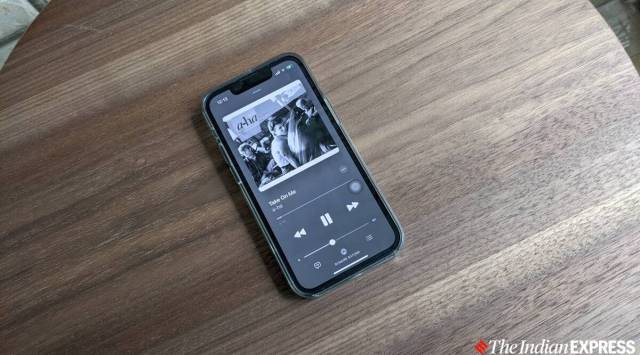
At the time of introduction, Lightning offered several advantages over Apple's old 30-pin dock connector. (Express photo)
With the European Union’s move to standardise a “single charging solution” for all electronics sold in the 27-nation bloc, Apple will most likely have to redesign its iPhones with a USB-C port replacing the lightning connector. However, accessory makers and experts don’t think it is going to be a big deal for Apple.
“If Apple switches the iPhone to USB-C, it won’t be that big of a change,” Midhula Devabhaktuni, Co-founder & CMO, Mivi, tells indianexpress.com. “When they [Apple] moved to the Lightning port, it was a whole new change and people had to adapt to it.” Devabhaktuni, whose Hyderabad-based startup designs and sells audio products as well as charging accessories for iPhones, says USB-C offers faster charging and transfer speeds than competing standards, and finding the cables is easier due to the fact every major Android phone uses a USB-C charging port.
Apple switched to its proprietary Lightning connector in 2012 with the iPhone 5, two years before the USB-C standard was finalised. At the time of introduction, Lightning offered several advantages over Apple’s old 30-pin dock connector, including the support for two orientations, similar to USB-C. The Lightning connector was slimmer, more durable and had several features there were there in USB-C.
Apple was reportedly one of the companies that originally worked on the USB-C standard. Frustrated with the delay in progress, Apple opted to go with its own proprietary connector. If Apple had to completely abandon its Lightning chargers for USB-C, it could have done that when it launched the iPhone X in 2017. But Cupertino had other plans and iPhones still sport the Lightning port even though Macs and iPads use the USB-C chargers.
EU lawmakers seem to believe that since USB-C is a universal cable for all smartphones it will help reduce electronic waste. Apple, meanwhile, argues that switching from Lightning to USB-C will produce more e-waste since over a billion iPhones are on the old cable now.
That’s not all. David Mitchell, an analyst at Gartner explains why it might not be as universal as it is being touted: “Inherently, in USB-C right now, there is a fair amount of confusion over different variants of USB-C… Sometimes a particular USB-C cable works and sometimes it doesn’t work, depending upon the actual use case. It’s not quite as universal as many believe it to be.”
Devabhaktuni seems to agree: “We see a lot of confusion between people buying a micro-USB cable, versus a Type-C cable, or a Type-C versus a micro-USB. But with a Lightning cable, it’s very rare to see any kind of confusion.”
Insiders say the reason Apple is not adding a USB-C port on its iPhones is the fear that users might charge the device with other unregulated chargers which might result in depletion of battery faster for Apple products along with overheating.
The point people often miss is that Apple has an established but controlled accessories network for the iPhone. Under the MFi certification programme, which stands for Made for iPhone/iPod and iPad, makers of accessories must have their hardware approved by Apple. It’s a stringent process, but once it is MFi-certified, the product is safe to use. Switching to USB-C for the iPhone means Apple has to take a hit on a profitable Lightning accessories business, plus it could create confusion in the minds of consumers over USB-C and Lightning.
“There is no possible threat to anyone but surely people will now have an option to buy a lower cost USB-C charger from other brands as Apple accessories tend to be on the higher price band,” says Aksh Chauhan, COO, Cashify. According to Chauhan, Apple devices have been one of the highest traded inventory on the Cashify Platform and it adds a lot of value to their ecosystem.
With the new rules taking effect in 2024, Apple seems to be under some pressure given its long product development process which makes it hard to incorporate drastic design changes at a later stage of product development. While Apple could switch to the USB-C port, it could also make the wireless charger standard for newer phones and cut the cable completely. The trouble there is that wireless adoption is rather slow due to the high cost of chargers and technical challenges. Wireless charging is already supported on all iPhone models.
Anuj Bhatia is a seasoned personal technology writer at indianexpress.com with a career spanning over a decade. Active in the domain since 2011, he has established himself as a distinct voice in tech journalism, specializing in long-form narratives that bridge the gap between complex innovation and consumer lifestyle.
Experience & Career: Anuj has been a key contributor to The Indian Express since late 2016. Prior to his current tenure, he served as a Senior Tech Writer at My Mobile magazine and held a role as a reviewer and tech writer at Gizbot. His professional trajectory reflects a rigorous commitment to technology reporting, backed by a postgraduate degree from Banaras Hindu University.
Expertise & Focus Areas: Anuj’s reporting covers the spectrum of personal technology, characterized by a unique blend of modern analysis and historical context. His key focus areas include:
Core Technology: Comprehensive coverage of smartphones, personal computers, apps, and lifestyle tech.
Deep-Dive Narratives: Specializes in composing longer-form feature articles and explainers that explore the intersection of history, technology, and popular culture.
Global & Local Scope: Reports extensively on major international product launches from industry titans like Apple and Google, while simultaneously covering the ecosystem of indie and home-grown tech startups.
Niche Interests: A dedicated focus on vintage technology and retro gaming, offering readers a nostalgic yet analytical perspective on the evolution of tech.
Authoritativeness & Trust
Anuj is a trusted voice in the industry, recognized for his ability to de-jargonize trending topics and provide context to rapid technological advancements. His authority is reinforced by his on-ground presence at major international tech conferences and his nuanced approach to product reviews. By balancing coverage of the world's most valuable tech brands with emerging startups, he offers a holistic and objective view of the global technology landscape.
Find all stories by Anuj Bhatia here.
You can find Anuj on Linkedin. ... Read More


 5 min read