3 min read
© IE Online Media Services Pvt Ltd



 The new feature is part of Google Chrome's Safe Browsing feature. (Express Photo)
Google Chrome, the most used web browser in the world will now warn users when they download password-protected files from sketchy sources. The previous warning messages are replaced with new ones, which give additional information about the type of risk so users can make more informed decisions.
Google says it has introduced a “two-tier” download warning system which is based on “AI-powered malware verdicts from the existing Google Safe Browsing functionality. This means for lower confidence verdicts and unknown risk, Chrome will show a “Suspicious download blocked” message but if you happen to download files with high risk to users, you will get a “Dangerous download blocked” message.
The company says the minor changes “have resulted in significant changes in user behaviour”, with fewer users now bypassing these warning messages. Users who have enabled the Enhanced Protection mode in Safe Browsing will now be prompted to share the contents of the files to Safe Browsing so the company can scan them for possible threats. Google claims that it analyses the content of a file only for security purposes and that they are deleted sometime after a verdict is reached.
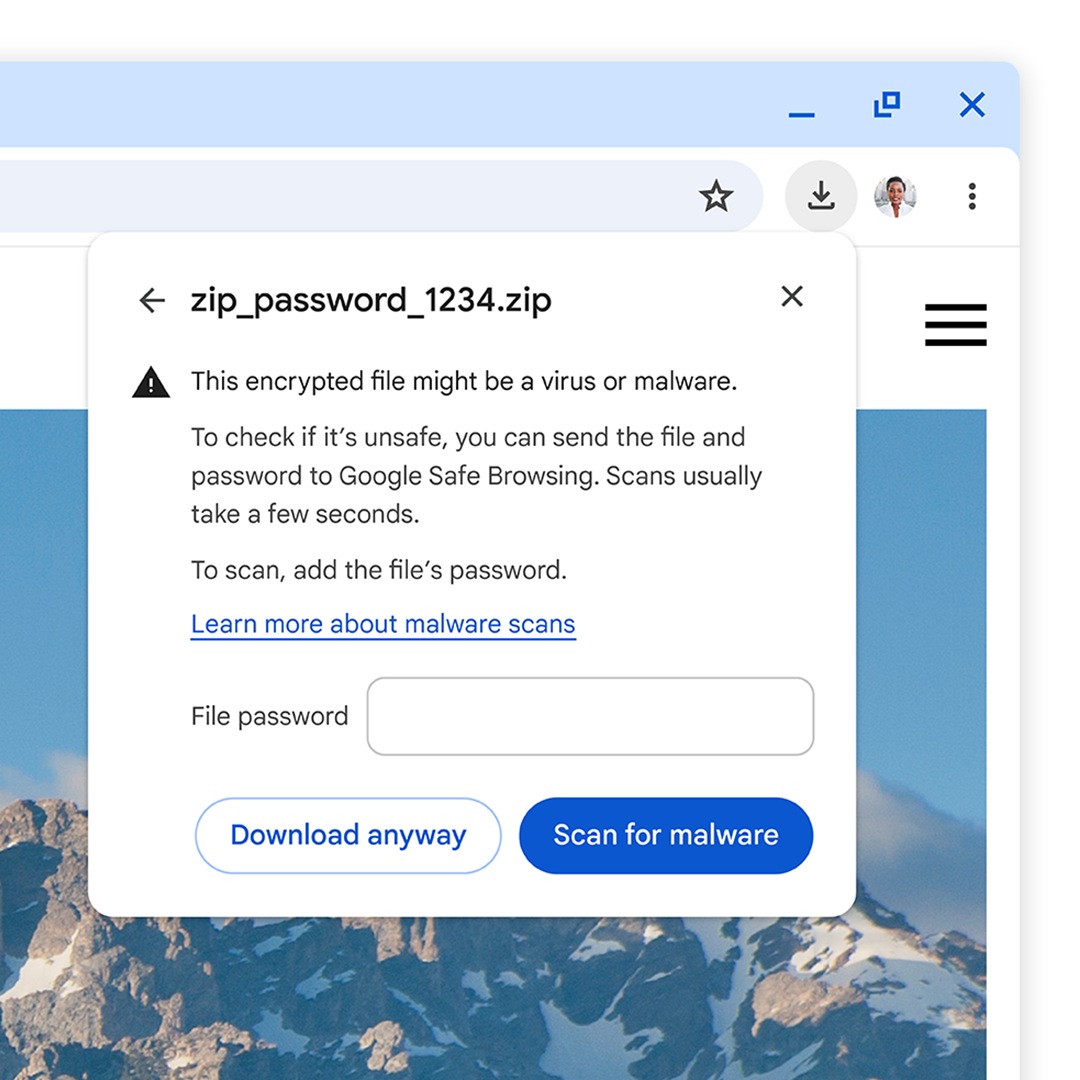 Google Chrome can now scan password protected archives for malware. (Image Source: Google)
While suspicious files only account for a small fraction of the total downloads, these additional scans seem to help catch new malware that Safety Browsing might have missed out on. Google claims that files they are shared by users for deep scanning are “over 50x more likely to be flagged as malware.”
If you download a password-protected archive (.zip or .rar) with Enhanced Protection or Standard Protection turned on in Safe Browsing, Chrome will now ask the file password so it can be sent to Google for scanning. The Chrome security claims that “only the metadata of the archive contents are checked” and that the file is deleted afterwards.
While this may be a pretty useful feature for those downloading sketchy archives from the internet, some companies might ask employees to avoid downloading files from Chrome to prevent potential data leaks. These changes come after Google announced that it will be moving the download bar from the bottom of the screen to the top right of the Chrome address bar.