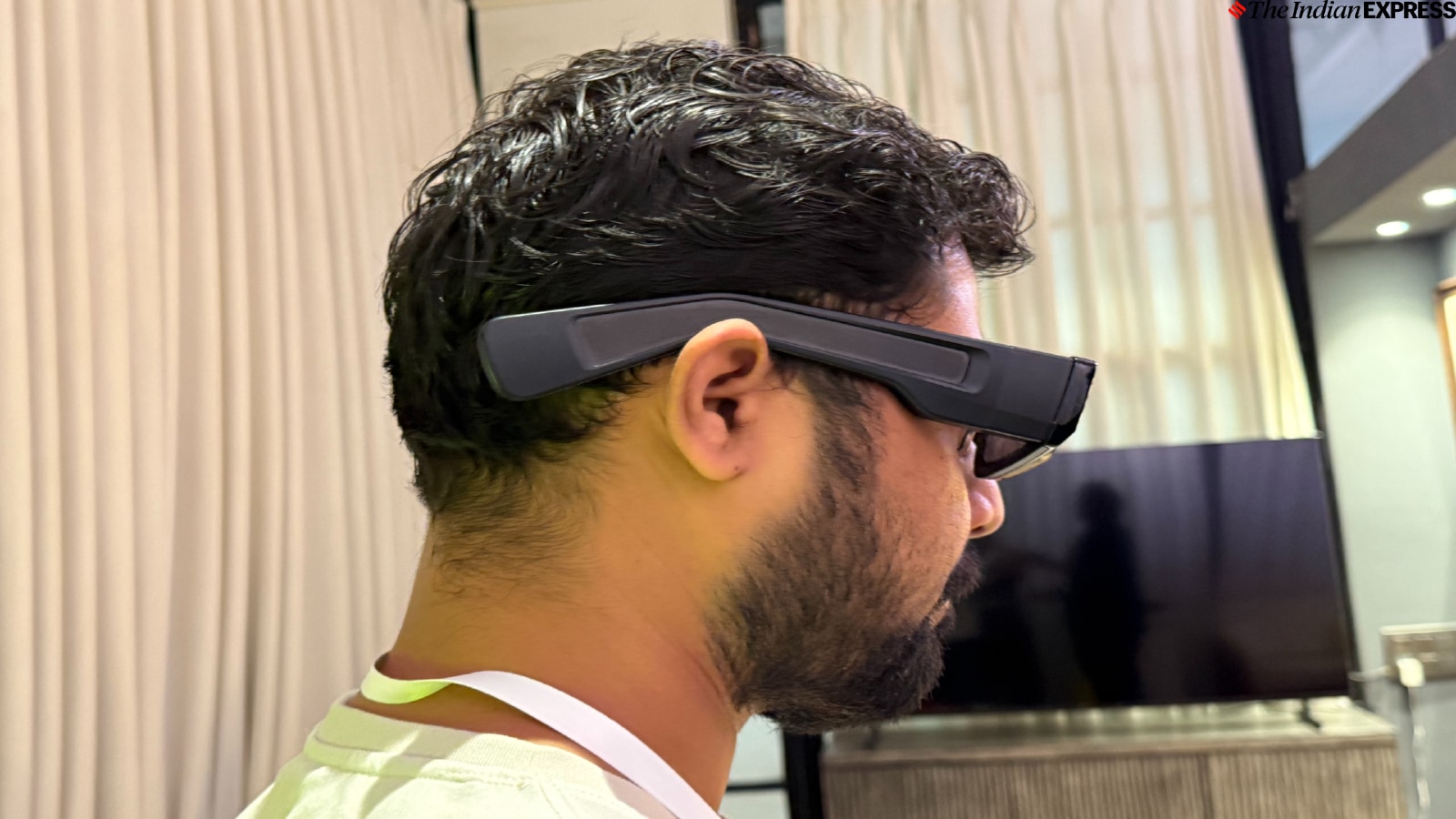
Snap will launch the sixth-generation of its augmented reality glasses in 2026. (Image credit: Anuj Bhatia/Indian Express)
Snap’s co-founder and CEO, Evan Spiegel, announced that the company plans to launch a new pair of lightweight augmented reality glasses in 2026, as it races to build the next computing platform.
Speaking at the Augmented World Exhibition in California, Spiegel described the Specs as “the most advanced personal computer in the world,” offering a combined view of the digital and physical worlds—a key step toward his goal of one day providing a hands-free alternative to the smartphone.
You’ve Read Your Free Stories For Now
Sign up and keep reading more stories that matter to you.
Spiegel remained light on details, including the exact launch timeline and the cost of the Specs, but said the new glasses will be lighter and smaller than previous versions.
The consumer-focused Specs will run on the company’s Snap operating system. Snap said that developers will be able to include Google’s Gemini AI models into programs they develop for the smart glasses. Previously, developers could only use OpenAI’s GPT family of AI models to build AR apps for the smart glasses.
“We believe the time is right for a revolution in computing that naturally integrates our digital experiences with the physical world, and we can’t wait to publicly launch our new Specs next year,” Evan Spiegel, co-founder and CEO of Snap Inc, said in a statement. “We couldn’t be more excited about the extraordinary progress in artificial intelligence and augmented reality that is enabling new, human-centered computing experiences.”
The AR glasses represent nearly a decade of development and billions of financial investment at Snap. (Image credit: Anuj Bhatia/Indian Express)
Snap, the company behind the popular Snapchat app, debuted its first smart glasses—dubbed Spectacles—in 2016. These early models featured circular frames and were primarily designed for capturing photos and videos. They lacked any augmented reality capabilities and were similar to the earlier versions of Meta’s Ray-Ban smart glasses.
Snapchat’s Spectacles were fun and stood out for resembling real, fashionable sunglasses more than typical smart glasses. In the following years, Snap released updated versions of Spectacles, but in 2021, the company shifted its focus toward augmented reality. This pivot was driven by a desire to bridge the digital and physical worlds, seamlessly integrating virtual elements with the tangible environment. The AR-focused Spectacles adopted a black, sharp-angled rectangular design and were noticeably thicker than earlier models.
Story continues below this ad
The Santa Monica, California-based company released the fifth-generation Spectacles in September of last year. However, they were intended only for developers who committed to paying $99 a month for a year.
Snap is among several companies developing high-tech smart glasses and is working to get them on people’s faces as quickly as possible, with the ultimate goal of replacing smartphones. Meta is another major player betting on smart glasses as the foundation of the next-generation computing platform.
Meta already sells its popular Ray-Ban smart glasses equipped with cameras and speakers, but although they currently lack augmented reality capabilities. Last year, the company unveiled Orion—a pair of smart glasses that resemble thick, black reading glasses but feature lenses capable of displaying text messages, video calls, and even YouTube videos within the user’s field of vision.
Augmented reality, however, is already present in both Snap’s fifth-generation Spectacles and Meta’s Orion prototype. Both companies aim to shift AR from a niche, experimental technology to a mainstream phenomenon.
Earlier this year, Google joined the fray by announcing its own entry into the space through a $150 million partnership with Warby Parker, which plans to release its own smart glasses sometime next year. Apple, too, has dabbled in the AR space in recent years with its Vision Pro mixed-reality headset, but the company has yet to launch sleek smart glasses.
Tech companies have been trying for years to develop AR wearables, but they have failed to excite consumers. However, they hope that AR glasses will eventually become a mobile, hands-free computer that could rival the smartphone and become the default way to communicate and interact online. If smart glasses do become mainstream, companies like Snap hope to be major players in this emerging industry, which would also help reduce their dependency on competitors like Apple and Google.
Anuj Bhatia is a seasoned personal technology writer at indianexpress.com with a career spanning over a decade. Active in the domain since 2011, he has established himself as a distinct voice in tech journalism, specializing in long-form narratives that bridge the gap between complex innovation and consumer lifestyle.
Experience & Career: Anuj has been a key contributor to The Indian Express since late 2016. Prior to his current tenure, he served as a Senior Tech Writer at My Mobile magazine and held a role as a reviewer and tech writer at Gizbot. His professional trajectory reflects a rigorous commitment to technology reporting, backed by a postgraduate degree from Banaras Hindu University.
Expertise & Focus Areas: Anuj’s reporting covers the spectrum of personal technology, characterized by a unique blend of modern analysis and historical context. His key focus areas include:
Core Technology: Comprehensive coverage of smartphones, personal computers, apps, and lifestyle tech.
Deep-Dive Narratives: Specializes in composing longer-form feature articles and explainers that explore the intersection of history, technology, and popular culture.
Global & Local Scope: Reports extensively on major international product launches from industry titans like Apple and Google, while simultaneously covering the ecosystem of indie and home-grown tech startups.
Niche Interests: A dedicated focus on vintage technology and retro gaming, offering readers a nostalgic yet analytical perspective on the evolution of tech.
Authoritativeness & Trust
Anuj is a trusted voice in the industry, recognized for his ability to de-jargonize trending topics and provide context to rapid technological advancements. His authority is reinforced by his on-ground presence at major international tech conferences and his nuanced approach to product reviews. By balancing coverage of the world's most valuable tech brands with emerging startups, he offers a holistic and objective view of the global technology landscape.
Find all stories by Anuj Bhatia here.
You can find Anuj on Linkedin. ... Read More