2 min read
© IE Online Media Services Pvt Ltd



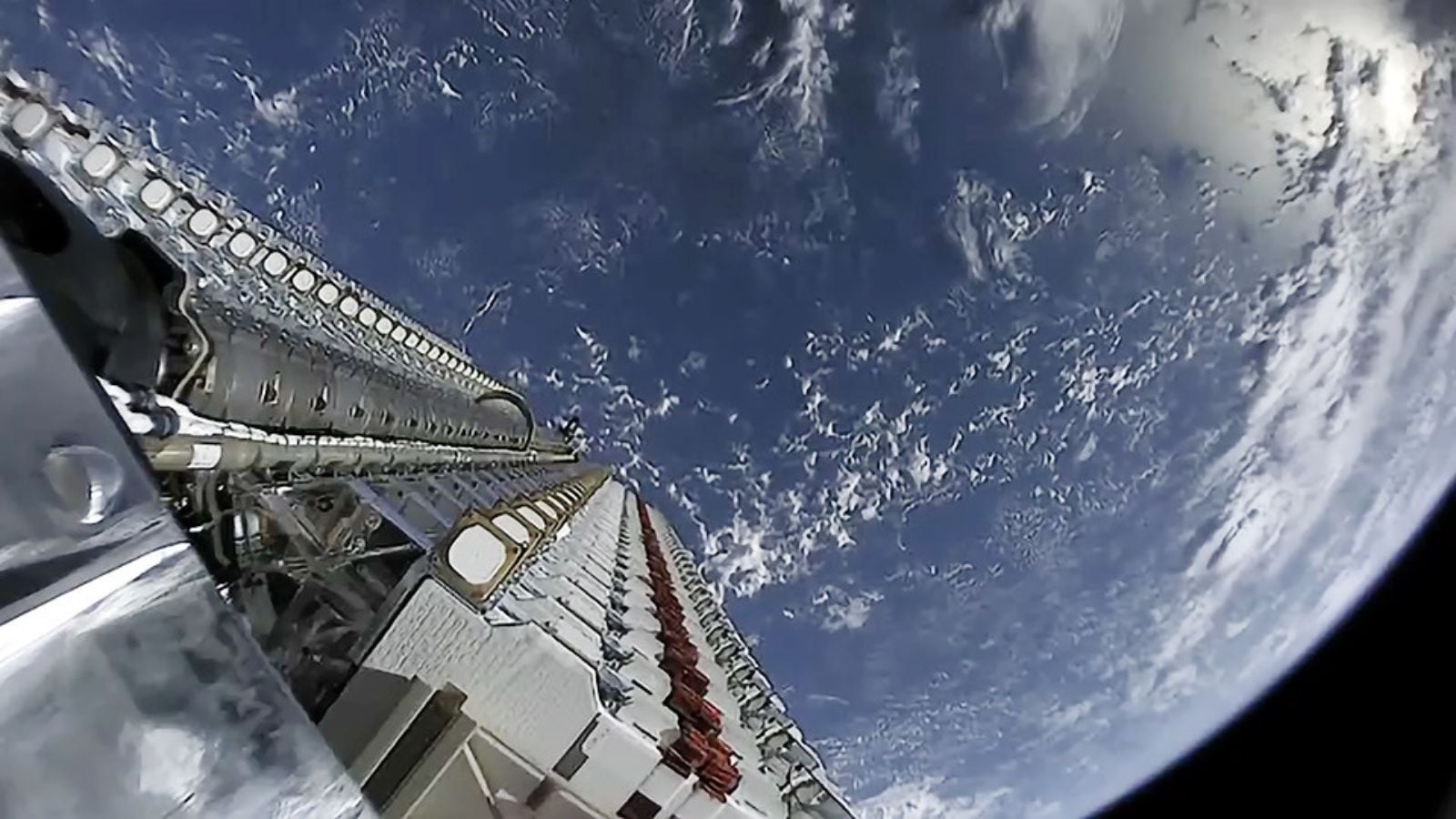 60 Starlink satellites stacked together before deployment on May 24, 2019. (SpaceX via Flickr)
 Elon Musk-led SpaceX on Tuesday said it will deorbit 100 early-version 1 Starlink satellites as part of its efforts to keep “space safe, sustainable and accessible, protecting astronauts and satellites in orbit and the public on the ground.”
The company’s Starlink satellites provide relatively low-latency internet by orbiting in a low-Earth orbit (LEO) less than 600 kilometres above the planet. The company claims that its satellites will deorbit naturally in 5 years or less in case one fails in orbit. But SpaceX has already initiated the controlled deorbiting of 406 out of the nearly 6,000 satellites it has launched so far. 95 per cent of those satellites have already descended from orbit while 17 are non-manoeuvrable. But those satellites are being extensively tracked to make sure they don’t collide with other satellites.
“The satellites will follow a safe, circular, and controlled lowering operation that should take approximately six months for most of the vehicles. A controlled, propulsive deorbit is much shorter and safer than a comparable ballistic deorbit from an equivalent altitude. All satellites will maintain manoeuvrability and collision avoidance capabilities during the descent. Additionally, these deorbiting satellites will take manoeuvre responsibility for any high-risk conjunctions consistent with space safety and sustainability best practices,” said the company in a statement.
Space junk poses a threat to both other satellites as well as astronauts in orbit, like those on the International Space Station or on China’s Tiangong space station. At typical orbital speeds of around 35,000 kilometres per hour, a piece of debris the size of a plum will have a momentum similar to a car driving on the highway. Also, pieces of debris often collide with each other, causing them to fragment into even more pieces.