2 min read
© IE Online Media Services Pvt Ltd



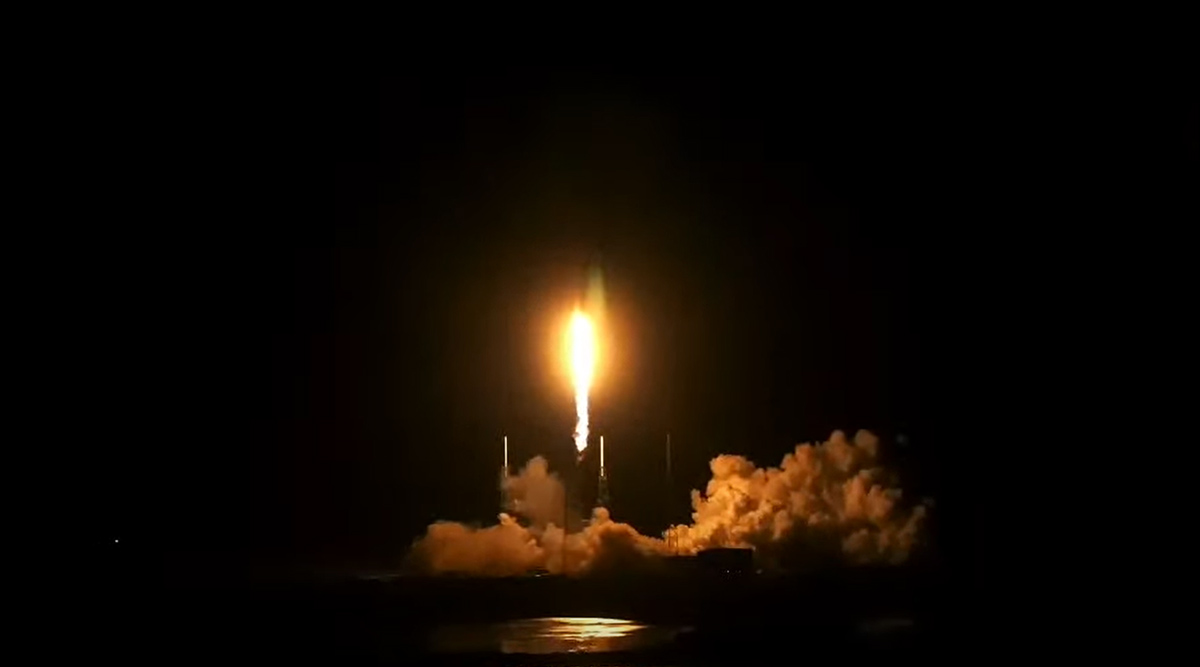 NASA's TEMPO instrument launched atop a SpaceX Falcon 9 rocket on Friday. (Image credit: NASA)
 NASA’s high-resolution air pollution monitoring instrument TEMPO lifted atop a SpaceX Falcon 9 rocket from the Cape Canaveral Space Force Station in Florida at 10 AM IST on Friday.
The Tropospheric Emissions: Monitoring of Pollution (TEMPO) instrument is on its way to a geostationary orbit where it will monitor major air pollutants across North America. TEMPO will take important scientific observations, including that of ozone, nitrogen oxide, sulphur dioxide and formaldehyde levels
TEMPO is a payload on the satellite Intelsat 40E. The satellite separated from the rocket about 32 minutes into launch. It will only begin its science activities in late May or early June, according to NASA.
The space agency says that TEMPO will be the first space-based instrument that is capable of measuring air quality over North America hourly during the daytime with a resolution of several square miles. The current limit is about 100 square miles, or about 258 square kilometres.
Using TEMPO data, scientists will be able to study rush hour pollution, the potential for improved air quality alerts, the impact of lightning on the ozone layer, the movement of pollution from forest fires and volcanoes and even the effects of fertiliser application.
According to the 2022 “State of the Air” report by the American Lung Association, more than 40 per cent of Americans, which is over 137 million people, live in places with failing grades for unhealthy levels of particle pollution or ozone. This presents an increase of nearly 2.1 million people over the previous year’s report.
“The TEMPO mission is about more than just studying pollution – it’s about improving life on Earth for all. By monitoring the effects of everything from rush-hour traffic to pollution from forest fires and volcanoes, NASA data will help improve air quality across North America and protect our planet,” said NASA Administrator Bill Nelson, in a press statement.
TEMPO will join South Korea’s Geostationary Environment Monitoring Spectrometer and the European Space Agency’s Sentinel-4 satellite to become an air quality monitoring satellite constellation that will track pollution across the Northern Hemisphere.