2 min read

Journalism of Courage



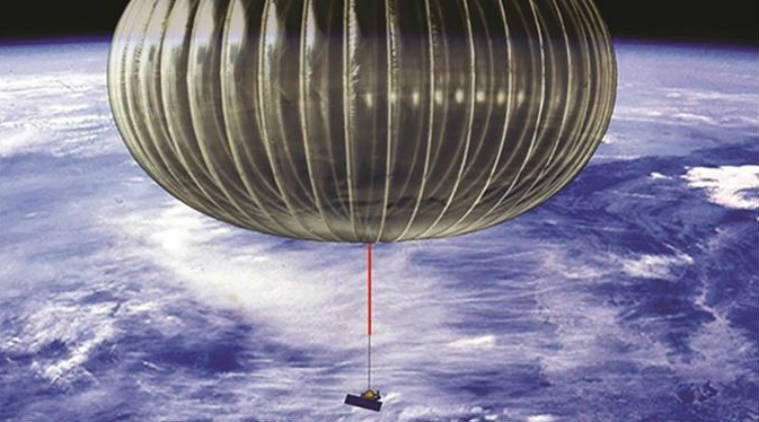 EUSO-SPB is designed to detect high-energy cosmic rays originating from outside our galaxy as they penetrate the Earth’s atmosphere. (Source: NASA)
NASA has postponed the third launch attempt of its super pressure balloon (SPB) from Wanaka, New Zealand, on Monday due to poor weather at ground and surface levels.
“Wind speeds were just slightly above those required for launch, and with the uncertainty for precipitation in the area, the team made the decision to postpone for the day,” NASA scientists said in a blog post. No launch attempt is scheduled for Tuesday.
NASA will announce by 2 p.m., on Tuesday, whether or not Wednesday’s weather will support a launch attempt. The first attempt to launch the balloon — designed to carry a pioneering telescope to detect ultra-high-energy cosmic rays from near space — was cancelled due to unacceptable stratospheric wind conditions.
The second attempt was cancelled due to a mechanical issue with a crane used for launch operations, which has since been resolved. The purpose of the flight is to test and validate the SPB technology with the goal of long-duration flight at mid-latitudes. In addition, the University of Chicago’s Extreme Universe Space Observatory on a Super Pressure Balloon (EUSO-SPB) is a mission of opportunity flying on the 2017 SPB test flight.
Also Read: NASA’s Kepler space telescope discover Venus twin around dim star
EUSO-SPB is designed to detect high-energy cosmic rays originating from outside our galaxy as they penetrate the Earth’s atmosphere. As these high-energy particles enter the atmosphere, they interact with nitrogen molecules in the air and create a UV fluorescence light. EUSO-SPB will be looking downward at a broad swathe of the Earth’s atmosphere to detect the UV fluorescence from these deep space cosmic rays coming in from above.