Journalism of Courage
 2 min read


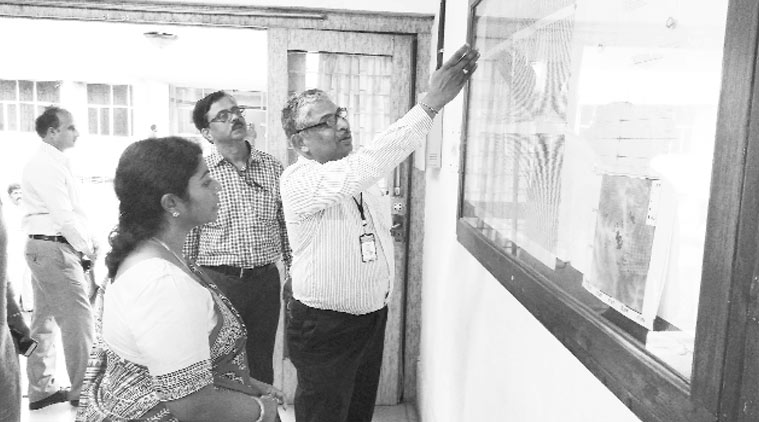 NGRI lab is working on determining the recurrence interval of ‘great’ quakes.
By: D Srinagesh, Chief Scientist, NGRI
NGRI has a long history of carrying out scientific investigations on earthquakes. Precursor study is one of the obvious areas of earthquake research but there are a number of other studies that enrich our knowledge of earthquakes.
Our team has been working on a project which deals with mapping of earthquake sources, the elastic wave propagation and ground motion amplification at various sites within India. The project has a number of objectives and one such is including an estimation of horizontal ground motion within the Indo-Gangetic plains due to large earthquakes in Himalaya, like the one that happened in Nepal on April 25, 2015. One of our other objectives is to determine the recurrence interval of ‘great’ earthquakes, those of magnitude 8 and above, in the Himalayan region.
Earthquakes are one of the least understood natural occurrences. We do not have much information about the events that have happened in the past. Our project, which has about 20 scientists and equal number of students, tries to fill that gap. Earthquakes, especially the big ones, leave imprints that are evident even after centuries. We are trying to find these imprints in different parts of the Himalayas and, using carbon-dating methods, trying to put a date on them.
Similar kind of studies have been done by others as well. A group of scientists had concluded, after extensive studies in the Northeast, that events like the great Shillong earthquake of 1897 had a recurrence cycle of about 400-600 years in that region.
If one scans the global seismicity catalogues for the last hundred years, the big earthquakes of magnitude 8 and above do not happen more than once a year on an average globally. However, the actual location of such large earthquakes occurring in near future cannot be predicted.
Seismology is a very young science. The advent of high-fidelity seismological instruments, large data and sophisticated computational facilities is leading us to understand the earthquake processes. It needs to be built up and that is what we are trying to do.