


Tags:


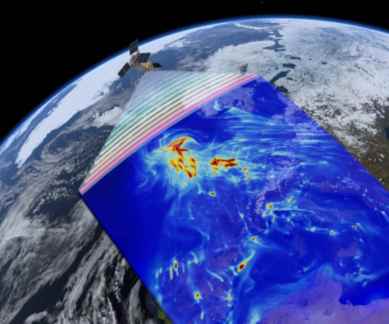
A European satellite tracking the levels air pollutants around the world has beamed back new views of the Earth’s atmosphere, including images of pollution drifting away from power plants in India. The worst of this pollution runs from north of Patna in Bihar to south of Raipur in Chhattisgarh, scientists said. The Sentinel-5P satellite is designed to make daily global maps of the gases and particles that pollute the air.
The first sample images released by mission scientists show plumes of nitrogen dioxide flowing away from power plants and traffic-choked cities. S5P has even captured the ash and sulphur emissions from Agung volcano on the Indonesian island of Bali, which is in the midst of a big eruption. Researchers from the Netherlands Met Office (KNMI) still need to complete five months of calibration work to get the satellite’s data ready for public use.


Sentinel-5P is the latest spacecraft in a fleet of Earth observers being commissioned by the European Union and the European Space Agency. It was launched into an 824 kilometre high orbit by a Russian rocket on October 13 this year. It carries an instrument called Tropomi – a spectrometer that observes the reflected sunlight coming up off the Earth, analysing its many different colours. This helps detect the presence of trace gases such as nitrogen dioxide, ozone, sulphur dioxide, methane, and carbon monoxide in the atmosphere.


