


© The Indian Express Pvt Ltd
Tags:


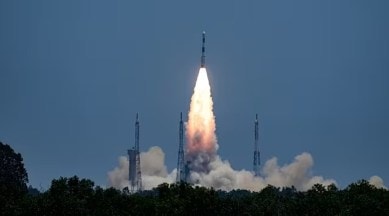
As India’s first solar mission Aditya L1 continues its 110-day journey towards the L1 point which is 1.5 million kilometres away, the Indian Space Research Organisation (ISRO) on Sunday updated that a Trajectory Correction Manoeuvre (TCM) was performed earlier in the week.
The space agency said this was “originally provisioned” for.


“TCM ensures that the spacecraft is on its intended path towards the Halo orbit insertion around L1. The Spacecraft is healthy and on its way to Sun-Earth L1,” ISRO said.
One of the seven instruments on-board — the magnetometer — will be turned on again “within a few days,” they said. The instrument is meant to study the interplanetary magnetic field.
Another instrument called Supra Thermal and Energetic Particle Spectrometer (STEPS), which is meant to measure high temperature, energetic particles in the solar wind, has also been sending data, it said. STEPS comprises six sensors, each observing in different directions.
The spacecraft left the Earth’s sphere of influence eight days ago — the second spacecraft by the Indian space agency after Mangalyaan that has left the Earth’s sphere of influence.
The L1 point that lies at only 1% of the distance between Earth and the Sun has been selected as it allows for an unobstructed view of the Sun as no celestial body can come in between to cause an eclipse. The point also allows us to study the Sun without interference of the dust found in Earth’s atmosphere or the atmosphere and magnetic fields itself that do not allow some of the harmful radiations like UV radiation from the Sun to enter the Earth.


