This is an archive article published on June 12, 2018
Xiaomi Redmi 6 vs Redmi 5: What’s the difference?
Xiaomi Redmi 6 doesn't look radically different from the Redmi 5, but there are some key changes under the surface. Here's a quick comparison between the Redmi 6 and Redmi 5.
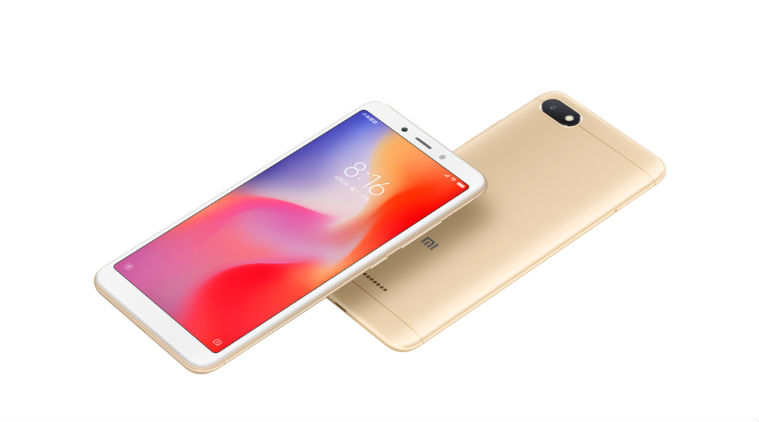
Xiaomi Redmi 6 vs Redmi 5 comparison: Specifications, price, features, and more.
With the Redmi 5, Xiaomi’s Redmi series took a big step forward in design and performance, with an 18:9 aspect ratio display and a snappy Snapdragon 450 processor. The newly announced Redmi 6 looks and feels like an evolved, refined version of the Redmi 5. But the good news is that the Redmi 6 is a step-up from the Redmi 6 with a dual-camera setup and the latest MediaTek Helio P22 processor. Of course, you are getting a better-positioned budget smartphone. The question remains, will you ditch your Redmi 5 for the Redmi 6? Here’s a quick comparison between the two devices that will help you figure out whether it’s worth upgrading from a Redmi 5 or an older smartphone.
Xiaomi Redmi 6 vs Redmi 5: Design, display
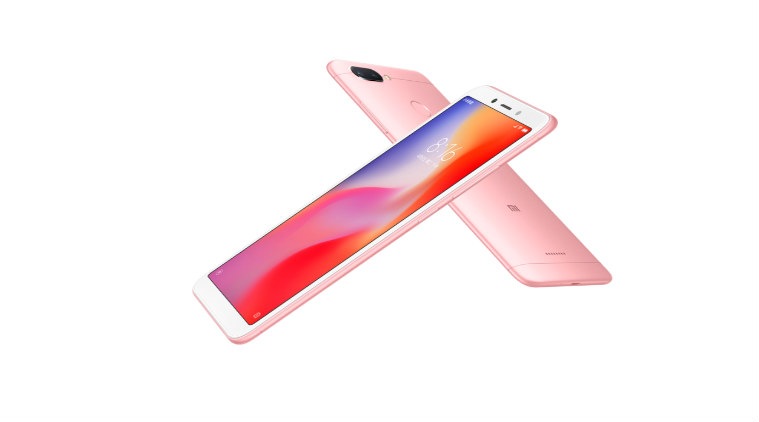
Xiaomi Redmi 6 has a slightly altered design compared to the Redmi 5. But frankly, it will not make a huge difference in your purchasing decision. Both phones feature a polycarbonate pack panel with a brushed metal surface. The design of the Redmi 6 has a reflection of Redmi Note 5, which I feel is a welcome move.
The original Redmi 5 had a 5.7-inch HD+ (1440 x 720) 18:9 display, and I felt it was a standout feature of the device. The big change here is that the Redmi 6 has a smaller 5.4-inch HD+ (1440 x 720) display and an aspect ratio of 18:9. Even though you’re getting a slightly smaller display, Redmi 6 has a higher pixel density of 295ppi as opposed to 282ppi on the Redmi 5.
Xiaomi Redmi 6 is powered by MediaTek’s Helio P22 SoC, which is an octa-core processor using a 12nm process. The company claims the processor consumes 48 per cent less power than comparable 28nm chipsets. Compared to the Redmi 6, Xiaomi Redmi 5 came with a Snapdragon 450 processor based on the 14nm process.
Redmi 6 comes in two variants; one with 3GB RAM and 32GB of internal memory and the other with 4GB RAM and 64GB of internal storage. And yes, it does come with a microSD card slot. Redmi 5 was launched in three variant: 2GB RAM + 16GB internal storage, 3GB RAM + 32GB of internal storage, and 4GB RAM + 64GB internal storage. This phone too had microSD support.
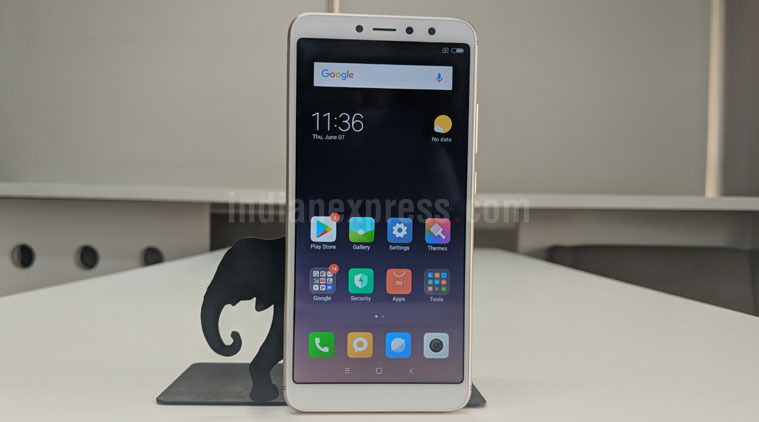
Redmi 5 runs on MIUI 9 which is based on Android 7.1.2 Nougat.
Speaking of software, Redmi 6 runs on MIUI 10 which is based on Android 8.1 Oreo. This is the latest version of MIUI. Redmi 5 runs on MIUI 9 which is based on Android 7.1.2 Nougat. Both phones include all essential connectivity options including dual-SIM, 4G VoLTE, and Bluetooth connectivity.
Redmi 6 has a rear-mounted fingerprint scanner and a non-removable 3000mAh battery. Redmi 5, on the other hand, came with a slightly bigger 3300mAh battery. The latter phone also had a rear-mounted fingerprint scanner.
Perhaps the biggest highlight of the Redmi 6 has to be a dual-camera setup on the back. This is the first smartphone in the Redmi series to boast rear-facing dual cameras. The dual-camera setup includes a 12MP primary snapper and a 5MP secondary camera. Xiaomi claims the camera not just improves the photo quality, it reduces noise, in low-light conditions. Plus, the company has added several AI modes that enhanced the picture quality. On the front, there’s a 5MP selfie snapper with a built-in AI portrait mode.
Redmi 5 had an impressive camera, although it only came with a single 12MP camera on the back. And on the front, it featured a 5MP camera for taking self-portraits.
Xiaomi Redmi 6 has a slightly altered design compared to the Redmi 5.
Xiaomi Redmi 6 vs Redmi 5: Price
Xiaomi Redmi 6 is priced at Yuan 799 (or approx Rs 8,000) for the 3GB RAM model, while the 4GB RAM version comes for a cost of Yuan 999 (or approx Rs 11,000). Redmi 6 is till now limited to the Chinese market. Redmi 5, on the other hand, is already available in India. The 2GB RAM +16GB storage variant is priced at Rs 7,999, the 3GB RAM + 32GB storage will cost Rs 8,999, and the 4GB RAM + 64GB storage model costs Rs 10,999.
Anuj Bhatia is a seasoned personal technology writer at indianexpress.com with a career spanning over a decade. Active in the domain since 2011, he has established himself as a distinct voice in tech journalism, specializing in long-form narratives that bridge the gap between complex innovation and consumer lifestyle.
Experience & Career: Anuj has been a key contributor to The Indian Express since late 2016. Prior to his current tenure, he served as a Senior Tech Writer at My Mobile magazine and held a role as a reviewer and tech writer at Gizbot. His professional trajectory reflects a rigorous commitment to technology reporting, backed by a postgraduate degree from Banaras Hindu University.
Expertise & Focus Areas: Anuj’s reporting covers the spectrum of personal technology, characterized by a unique blend of modern analysis and historical context. His key focus areas include:
Core Technology: Comprehensive coverage of smartphones, personal computers, apps, and lifestyle tech.
Deep-Dive Narratives: Specializes in composing longer-form feature articles and explainers that explore the intersection of history, technology, and popular culture.
Global & Local Scope: Reports extensively on major international product launches from industry titans like Apple and Google, while simultaneously covering the ecosystem of indie and home-grown tech startups.
Niche Interests: A dedicated focus on vintage technology and retro gaming, offering readers a nostalgic yet analytical perspective on the evolution of tech.
Authoritativeness & Trust
Anuj is a trusted voice in the industry, recognized for his ability to de-jargonize trending topics and provide context to rapid technological advancements. His authority is reinforced by his on-ground presence at major international tech conferences and his nuanced approach to product reviews. By balancing coverage of the world's most valuable tech brands with emerging startups, he offers a holistic and objective view of the global technology landscape.
Find all stories by Anuj Bhatia here.
You can find Anuj on Linkedin. ... Read More


 4 min read


 Xiaomi Redmi 6 vs Redmi 5 comparison: Specifications, price, features, and more.
 Redmi 5 runs on MIUI 9 which is based on Android 7.1.2 Nougat.
 Xiaomi Redmi 6 has a slightly altered design compared to the Redmi 5.