New Delhi | Updated: December 2, 2024 08:21 AM IST
4 min read
Whatsapp
twitter
Facebook
Reddit
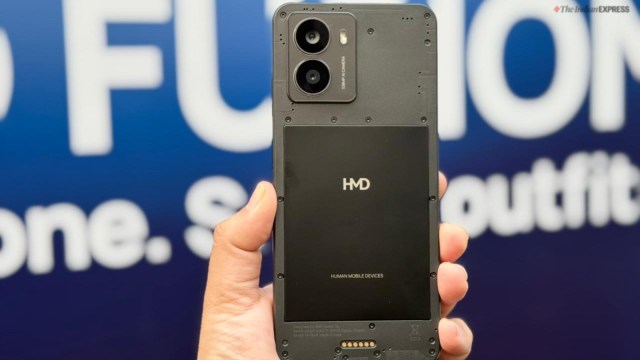
The pogo pins are used to attach smart outfits. (Image credit: Anuj Bhatia/The Indian Express)
HMD aims to revive the modular smartphone initiative with Fusion, not just as a concept but as a real product. The mid-range Android smartphone looks and feels like a regular phone but is designed to be modular and repairable. The Fusion is priced at Rs 15,999 and will hit the market on November 29 in India.
First teased at the Mobile World Congress earlier this year and later showcased at the Internationale Funkausstellung (IFA) Berlin, Fusion is a smartphone that aims to bring modularity to the mainstream. Despite multiple attempts by other brands in the past, modular phones never gained traction. However, HMD, which also manufactures Nokia-branded phones, hopes the modular concept will succeed with Fusion this time around.
While Apple’s MagSafe system has already popularised attaching accessories to the back of smartphones, HMD (short for Human Mobile Devices) reimagines and simplifies the concept of modularity. Instead of following the path taken by Google, Motorola, and LG—who all attempted and failed—HMD has refined the modular approach to ensure it works effectively.
Fusion launches in India with two smart outfits. (Image credit: Anuj Bhatia/The Indian Express)
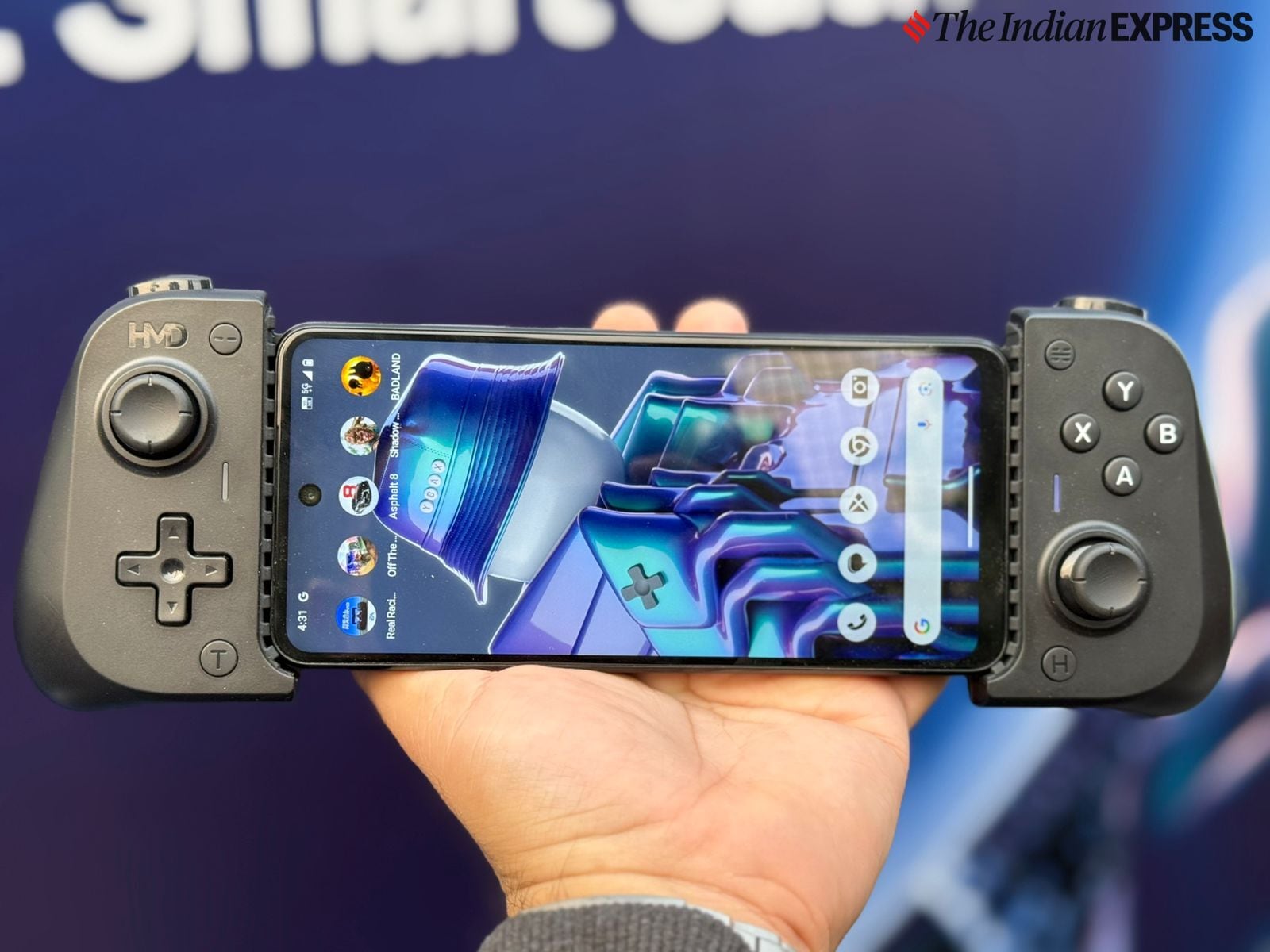
The Fusion features pogo pins on the back of the device, supporting what HMD refers to as “Outfits.” These open-source smart Outfits are essentially cases that transfer both power and data. To start, HMD has developed a few smart Outfits. One includes a light ring around the camera module, another transforms the smartphone into a handheld console with a game controller Outfit, and a third adds wireless charging support. There’s also a more advanced rugged Outfit that offers IP68 water resistance, an SOS button, and a push-to-talk button. HMD is encouraging third-party developers to design open-source smart Outfits for the phone.
The Fusion itself isn’t a flagship device in the league of the iPhone 16 or Galaxy S24. Instead, it offers mid-range specifications, including a Snapdragon 4 Gen 2 processor, a 90Hz display, a 108-megapixel camera, and a 5000mAh battery. It will receive two Android OS upgrades and three years of security updates.
Additionally, the device is user-repairable—accessing its internals only requires removing screws, and doing so won’t void the warranty.
The phone can double as a gaming handheld. (Image credit: Anuj Bhatia/The Indian Express)
HMD no longer competes with the likes of Apple, Samsung, and OnePlus in the high-end smartphone category. Instead, its smartphones fall into the mid-range segment and have recently leaned toward being more unconventional and experimental to stand out from the crowd. A few weeks ago, it launched Skyline, a do-it-yourself (DIY) smartphone that can be fully repaired at home.
Story continues below this ad
The Fusion arrives at a time when smartphones have become boring, and the market is no longer growing at the rapid pace it once did. With the Fusion, HMD joins Nothing’s sub-brand CMF in bringing modular smartphones back into the conversation, albeit with a less ambitious approach. However, it remains to be seen whether devices like the HMD Fusion and CMF Phone 1 (review) will pave the way for more advanced modular smartphones in the future.
Anuj Bhatia is a seasoned personal technology writer at indianexpress.com with a career spanning over a decade. Active in the domain since 2011, he has established himself as a distinct voice in tech journalism, specializing in long-form narratives that bridge the gap between complex innovation and consumer lifestyle.
Experience & Career: Anuj has been a key contributor to The Indian Express since late 2016. Prior to his current tenure, he served as a Senior Tech Writer at My Mobile magazine and held a role as a reviewer and tech writer at Gizbot. His professional trajectory reflects a rigorous commitment to technology reporting, backed by a postgraduate degree from Banaras Hindu University.
Expertise & Focus Areas: Anuj’s reporting covers the spectrum of personal technology, characterized by a unique blend of modern analysis and historical context. His key focus areas include:
Core Technology: Comprehensive coverage of smartphones, personal computers, apps, and lifestyle tech.
Deep-Dive Narratives: Specializes in composing longer-form feature articles and explainers that explore the intersection of history, technology, and popular culture.
Global & Local Scope: Reports extensively on major international product launches from industry titans like Apple and Google, while simultaneously covering the ecosystem of indie and home-grown tech startups.
Niche Interests: A dedicated focus on vintage technology and retro gaming, offering readers a nostalgic yet analytical perspective on the evolution of tech.
Authoritativeness & Trust
Anuj is a trusted voice in the industry, recognized for his ability to de-jargonize trending topics and provide context to rapid technological advancements. His authority is reinforced by his on-ground presence at major international tech conferences and his nuanced approach to product reviews. By balancing coverage of the world's most valuable tech brands with emerging startups, he offers a holistic and objective view of the global technology landscape.
Find all stories by Anuj Bhatia here.
You can find Anuj on Linkedin. ... Read More


 4 min read



 Fusion launches in India with two smart outfits. (Image credit: Anuj Bhatia/The Indian Express)
 The phone can double as a gaming handheld. (Image credit: Anuj Bhatia/The