6 min read
© IE Online Media Services Pvt Ltd



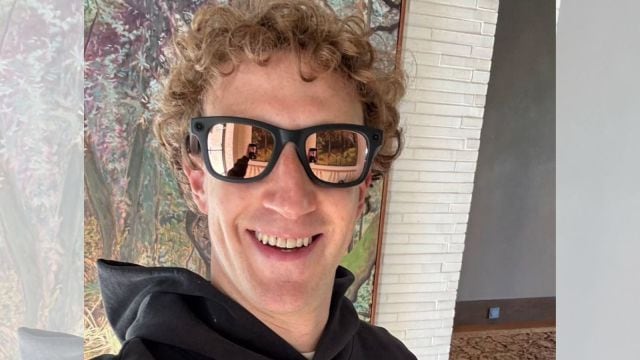 Meta CEO Mark Zuckerberg had outlined his vision for personal superintelligence in July this year. (Image: Instagram/Mark Zuckerberg)
Meta is cutting roughly 600 jobs in its Meta Superintelligence Labs (MSL) division after it spent billions recruiting top researchers from other AI research labs and companies. The layoffs are expected to impact only the MSL division, which is the umbrella entity focused on the social media giant’s AI efforts and reportedly comprises around 3,000 employees.
The job cuts within the MSL unit were confirmed in an internal memo by Alexandr Wang, Meta’s chief AI officer, on Wednesday, October 22, according to a report by Business Insider. The affected employees appear to be working out of Meta’s offices in the US and EMEA (Europe, the Middle East, and Africa) regions.
“Earlier today, we made some changes to MSL to move us toward being the most agile and talent-dense team in the industry. By reducing the size of our team, fewer conversations will be required to make a decision, and each person will be more load-bearing and have more scope and impact,” Wang was quoted as saying.
The layoffs come on the heels of an aggressive hiring spree by chief executive Mark Zuckerberg, who has sought to fill Meta’s ranks with top AI researchers since bringing Wang, the former CEO of Scale AI, onboard earlier this year.
Notably, these job cuts do not affect Meta’s newest hires who are part of the core team tasked with developing ‘personal superintelligence’. So, who is exactly affected by the layoffs? Why now? And what does it mean for Meta’s AI ambitions?
MSL was established in June this year after Zuckerberg brought ScaleAI’s top talent, including Wang, to the company and simultaneously invested over $14.3 billion in the data labelling startup. The MSL unit has been tasked with spearheading Zuckerberg’s aim of creating ‘personal superintelligence’, a term coined by the tech billionaire to describe AI systems that could eventually surpass human capabilities.
In a blog post outlining his vision, Zuckerberg wrote, “We believe in putting this power in people’s hands to direct it toward what they value in their own lives […] This is distinct from others in the industry who believe superintelligence should be directed centrally towards automating all valuable work, and then humanity will live on a dole of its output.”
Over the past few months, the MSL division at Meta has become one of its most important and expensive bets as it has spent millions of dollars stacking the unit with AI engineers and researchers hired from OpenAI, Google DeepMind, Apple, and other companies.
These lavish million-dollar pay packages for newer MSL members reportedly sparked tensions within the company, especially among those who have been at Meta since before its superintelligence push.
In August, Zuckerberg split MSL into four sub-units, namely: FAIR, which is focused on AI research, another group working on artificial superintelligence (ASL), a third group working on developing AI products, and a fourth one involved in AI infrastructure projects such as data centres and AI hardware.
The job cuts are part of Meta’s restructuring efforts as it looks to clean up the organisational bloat resulting from multiple groups working on AI-related projects, that were spread out across the sprawling tech company. They are also aimed at fine-tuning and expediting the development of Meta’s AI products, as per a report by The New York Times.
It is important to note that the core team, led by Wang and made up mostly of outside hires, is not affected by the layoffs. This core team is internally referred to as TBD. It is the unit currently managing Meta’s large language models (LLMs) that are powering all of the company’s chatbots and other AI products.
As for the 600 AI researchers and engineers who have been laid off, Meta said it will try and fit them into new roles at the company. “We are supporting the majority of those impacted in finding new roles at the company. We have spun up a tiger team of recruiters to help this group find the right match for their expertise and land in roles through an expedited hiring process,” Wang said.
A handful of employees also exited MSL on their own last month. While most of these employees were long-time researchers and engineers involved in building Meta’s core AI infrastructure, the list also included recent hires.
In addition to the 600 job cuts in MSL, Meta has also laid off more than 100 employees in its risk review team, which is largely responsible for ensuring that the company’s products are in compliance with privacy rules set by regulators including the US Federal Trade Commission, as per NYT. Meta will now primarily rely on automated systems to conduct these compliance reviews of its products.
Meta executives have emphasised that the cuts do not mean they are retrenching on AI efforts, and that personal superintelligence remains among Zuckerberg’s top priorities for the company.
“This by no means signals any decrease in investment. In fact, we will continue to hire industry-leading Al-native talent. Our goal is to enable MSL to move faster. We remain excited about the models we are training, our ambitious compute plans, and the products we are building, and I’m confident in our path to superintelligence,” Wang reportedly said in the memo.
These layoffs also come in the backdrop of rising fears among investors and other stakeholders, who worry that the AI boom is turning into a bubble.
Recently, OpenAI co-founder Andrej Karpathy grabbed headlines after he revised his estimated timelines for an AI company or research lab to achieve artificial general intelligence (AGI). “They don’t have continual learning. You can’t just tell them something and they’ll remember it. They’re cognitively lacking and it’s just not working. It will take about a decade to work through all of those issues,” Karpathy said.