5 min read


© The Indian Express Pvt Ltd



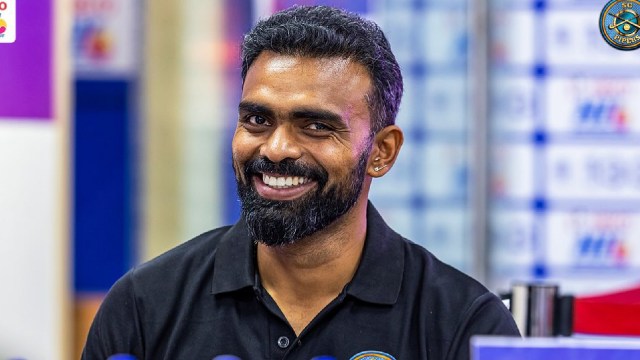 Sreejesh insisted that while winning a medal after a gap of 9 years at the Junior World Cup was a creditable achievement, he is aware it could have been better.(SG Pipers/File)
It has been just over a week since India won the bronze medal at the FIH Junior World Cup in Chennai, and PR Sreejesh has already taken off his head coach’s hat and put on the administrator’s one, that of Team Director with Hockey India League (HIL) franchise SG Pipers.
In just over a year since retiring from international hockey, Sreejesh has had to learn to shuttle between these dual roles. As was sometimes seen during the Junior World Cup, it meant enduring periods of frustration when he came to terms with the fact that he can’t actually influence proceedings in the middle as much as he could while donning the gloves and pads, standing between the posts.
There hasn’t been time to shut down and recharge, so much so that on the day after the World Cup got over, he was already doing an assessment for the next batch.
Has this been more hectic than his playing days?
“I don’t know, but I am enjoying it so far. Actually, I was ready for it; that is the most important thing,” Sreejesh told reporters in the Capital. “I knew of challenges lying ahead when I was thinking about taking up these jobs. Some things are not in your control; that’s when I feel it can be a bit frustrating. But you have to learn and progress. That’s my philosophy right now.”
While doing better in HIL is his immediate focus – SG Pipers finished last in both the men’s and women’s tournaments earlier this year – he is also thinking about the 2027 edition of the Junior World Cup.
“I need to start from scratch. That is going to be a big challenge for me. When I was a player, it was always a progression. You go from 1 to 10, then you reach from 10 to 20, and so on. But here, you reach 20 (with one group of players), now you are back to 1. You need to start all over again.”
The HIL is by no means a break, but during the league, Sreejesh won’t have to wrack his brain with day-to-day coaching. “Here I learn and these two months, I can work on myself to prepare for the next two years. I hope this gives me a fresh look at my plans,” he said, adding that he can imbibe a lot from the head coaches roped in by the franchise– Tim Oudenaller and Sofie Gierts.
“I’m putting my brain into something else. So, that is going to be a great refreshment for my mind. In these two months, I will enjoy the administrative role.”
While the franchise was hit by player withdrawals before the start of the last HIL season, the planning and preparation has been more concerted this time around. And as director, he wants the men’s team to be in podium contention and the women’s team to reach the final.
“We indicated to the coaches that we are looking to finish on the podium. The HIL is meant to develop hockey in India, for sure. But when corporates invest in hockey, they need to get something in return. We don’t want them to be disappointed. We struggled a lot last year. I have experienced such things as a player and know how emotionally draining it can be. In our conversations with the players, we told them it’s important that they enjoy this tournament, but they can’t take it easy,” Sreejesh said.
Sreejesh insisted that while winning a medal after a gap of 9 years at the Junior World Cup was a creditable achievement, he is aware it could have been better.
“Bronze is good. I’m happy that these guys have something in their hands after this Junior World Cup,” the two-time Olympic medallist said. “But they need to realise what they could have done in the semifinal. I had a discussion with Birendra Lakra (assistant coach) and told him: ‘Brother, the first thing that we are going to do after the HIL is over and the junior team comes to the camp is show them all these matches. And we are going to ask them what difference they felt after watching the three matches in the league phase and the three knockout matches.
“In 2027, some of these people are going to play the Junior World Cup and will face the same challenges.”
That assessment is not just for the players but for coach Sreejesh too.
“I too felt I could have done much better. My decisions could have been better tactically regarding crucial calls during a period of the game. That’s my self-analysis. In the Argentina match, the indirect variations that we did back-to-back worked (in the final quarter comeback). Or, when instead of giving Rohit the last flick, we went to Anmol (for the fourth goal vs Argentina)… these are areas where I felt like my decisions were good. But in the semifinal, we could have done things differently. It’s a lesson. It’s only one year of my coaching experience.”